Oct 9, 6:01 AM
Synthesizing Sight: Basel’s Pragmatic Gene Therapy Breakthrough
A Swiss-led trial uses optogenetics and digital goggles to return functional contours to the blind, proving that high-tech compromises can yield real-world gains.
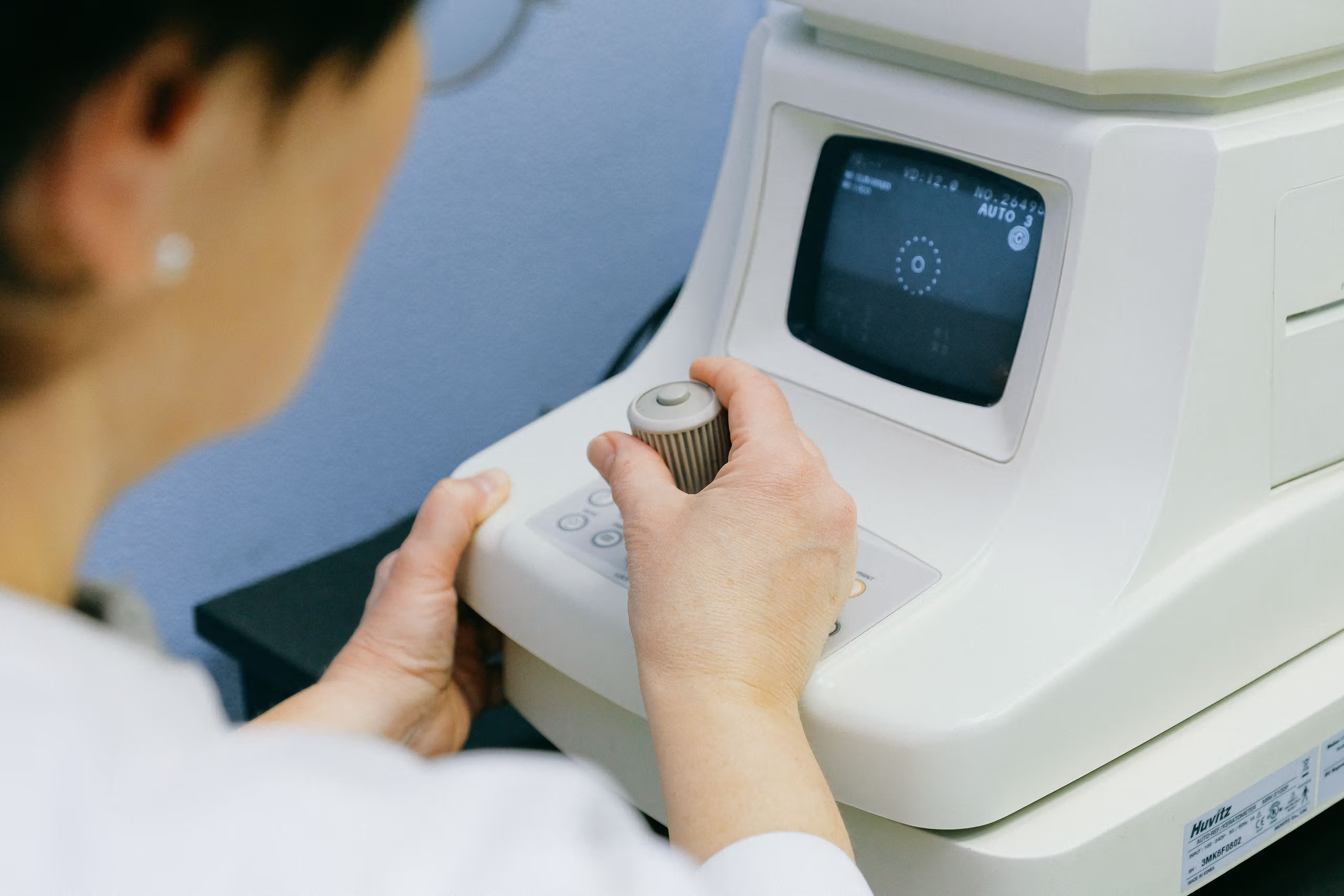
Modern medicine regularly peddles miracles, but genuine progress usually arrives in cumbersome installments. In Basel, scientists are now offering sight to the blind—provided one accepts a definition of sight that involves genetically engineered cellular trickery, heavy electronic goggles, and weeks of grueling brain retraining.
The latest results, published in the New England Journal of Medicine, detail an ambitious trial targeting Retinitis pigmentosa, a degenerative condition that systematically destroys the eye's light-sensing apparatus. Led by Botond Roska of the Institute of Molecular and Clinical Ophthalmology Basel (IOB) and José-Alain Sahel from the University of Pittsburgh, researchers bypassed the root genetic defects entirely. Instead of attempting to repair broken genes across diverse patient profiles, optogenetic therapy delivers light-sensitive proteins directly into surviving retinal cells, turning dormant biological real estate into makeshift light receptors.
The technical mechanics demand considerable patience. A specialized pair of goggles translates the surrounding world into precise light signals tailored to stimulate these newly sensitized cells. The human brain, unaccustomed to such synthetic inputs, must learn to interpret the raw data from scratch. As data evaluated by trial co-author Stefan Futterknecht demonstrates, neuroplasticity rewards effort: subjects who spent more time wearing and practicing with the goggles achieved noticeably superior vision results.
Out of ten trial participants, seven registered a clear increase in light sensitivity. Four out of eight successfully identified the contours of smaller everyday items, such as matchboxes or doorways. While reading printed text or recognizing a passing face remains impossible, discerning an exit or locating an object on a table offers a tangible regain of daily independence. The study also confirmed that the therapy is entirely harmless.
This trial builds on initial work conducted five years ago in Paris on a single patient, who returned anonymously for this expanded, blinded study. That the mechanism holds up across patients with varying genetic origins of Retinitis pigmentosa suggests broad therapeutic utility rather than a narrow niche success story.
The enterprise reflects the familiar Swiss formula of concentrated resources and elite institutional backing. Founded in 2017 through a joint effort by the University of Basel, the University Hospital Basel, and pharmaceutical giant Novartis, the IOB operates precisely where high capital meets clinical focus.
Nobody is pretending that full vision has been restored. Researchers acknowledge that natural sight remains a distant objective, with current work centered on refining the optical proteins so patients might eventually navigate without hardware. For now, however, translating darkness into functional shapes represents a remarkably useful practical advance.
Written by Andreas Hofer andreas.hofer@alpineweekly.com