Calm Returns to Mexico After Cartel Violence – But Few Expect Lasting Peace
From Guadalajara to Cancún, tensions ease following El Mencho’s death, though fears of power struggles persist
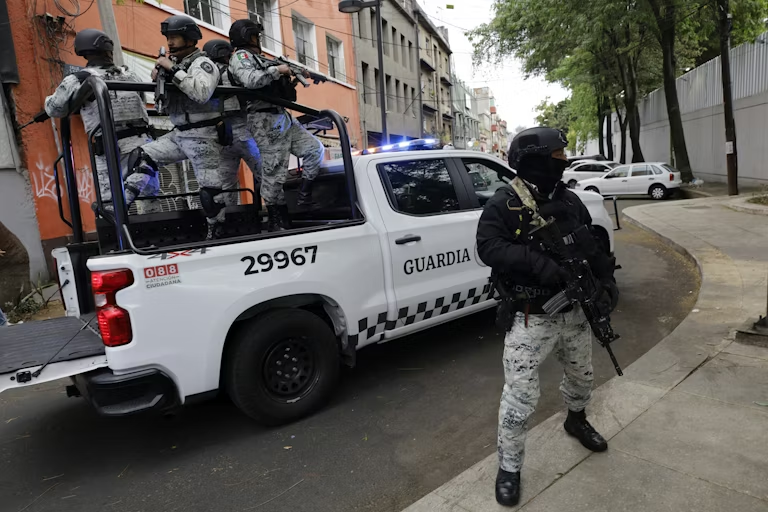
Mexico is tiptoeing back toward an uneasy quiet after a wave of violence swept the nation on Sunday in the wake of cartel boss “El Mencho” being killed.
Government data paints a grim picture: clashes left 34 Jalisco cartel members, 25 National Guard soldiers, and three civilians dead across several states. The heart of this chaos. Jalisco itself, the stronghold for El Mencho’s organization. His real name was Nemesio Oseguera Cervantes, and his legacy looms large there.
Guadalajara,Jalisco’s capital and soon-to-be host for four World Cup matches, sits just about 120 kilometers from where security forces finally caught up with him. Since then, Guadalajara has mostly settled down. That said, sporadic reports keep surfacing about vehicles torched on the city fringes,a stark reminder that peace here is always fragile.. According to Darwin Franco, a journalist based in town, locals have grown almost numb to living under the shadow of violence. Disappearances and homicides are so common that few are holding out hope that losing one kingpin will weaken the cartel much at all.
On the contrary: most expect infighting to ramp up as rival factions jockey for power. Up north in Monterrey, another city prepping for World Cup crowds,the situation has stayed calm by comparison. No significant outbreaks of violence were logged there. Lawyer Jaime Noyola credits this relative tranquility to officials rolling out Monterrey’s special World Cup security plan early on. Plus, with its location only around 200 kilometers from the US border, major highways are crawling with federal forces these days.
Psychologist Martín Domínguez suggests that taking down El Mencho might actually have boosted public trust in Mexico's security forces (at least for now). Still, he points out another side effect: all eyes fixed on this high-profile operation risk drawing attention away from Monterrey's day-to-day challenges, think pollution headaches, overburdened infrastructure, surging migration numbers and water shortages that never seem to end. Meanwhile in Tamaulipas,a neighboring state hugging Texas, the unrest didn’t go unnoticed either, but flared briefly before simmering down again. Journalists described roads blocked off by flaming vehicles on Sunday; then Tuesday brought an attack on a police station leaving one officer injured. Most trouble spots clustered along the border region with Texas itself.
Contrast that with things further east near Altamira and Tampico along Mexico’s coast: observers say it stayed calm there throughout all this turmoil. Why.. The word locally is simple economics,the Jalisco cartel reportedly uses those corridors for fuel smuggling operations they’re not keen to disrupt while business is good anyway. Down along Caribbean hotspots like Cancún, Tulum and Playa del Carmen. Incidents did flare up, but were limited, roughly fifteen cars set ablaze overall; authorities swooped in quickly arresting nine suspects while Quintana Roo state launched a massive police response and temporarily locked down main roads into Cancún itself.
For a brief window Sunday both US and Canadian governments issued travel warnings,they walked them back later that same day once things stabilized somewhat. Of course online rumors ran wild during those tense hours; local journalist Cecilia Solis says misinformation ricocheted through social media stoking even more anxiety among residents than what was happening outside their doors. Now though. Life feels almost normal again, for now at least. Yet here’s something worth remembering: just because streets look quieter doesn’t mean Mexico has turned any lasting page toward peace or stability after El Mencho’s death.
Taking out one leader rarely brings true calm,instead it tends to redraw battle lines within criminal groups themselves... Sooner or later new conflicts fill whatever vacuum remains.