US-Iran Nuclear Talks Conclude With ‘Significant Progress,’
Oman signals further negotiations ahead as military tensions and sanctions pressure frame high-stakes diplomacy
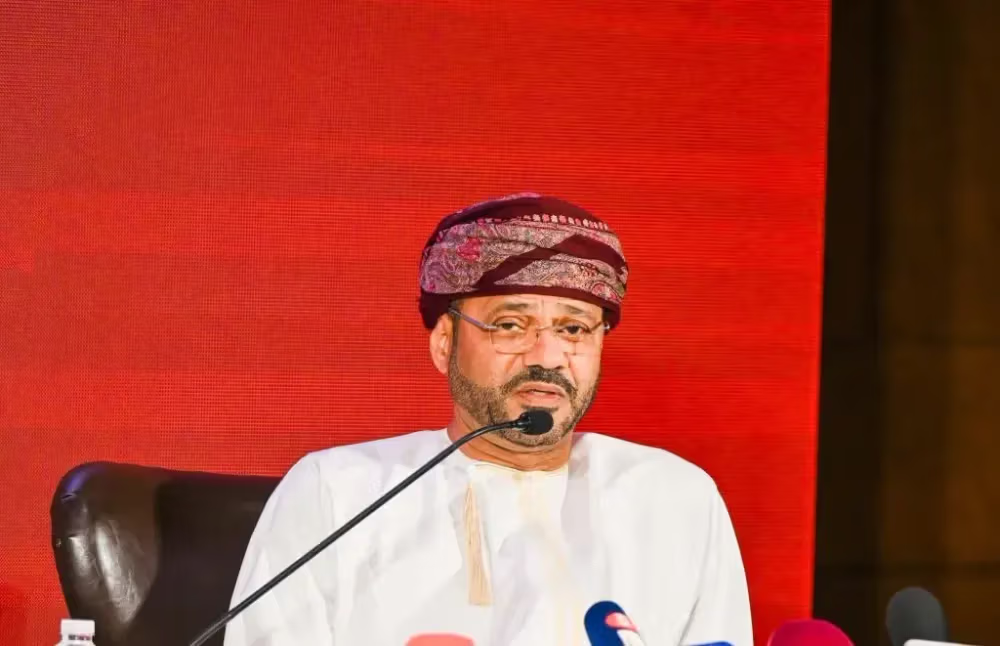
Indirect negotiations between the United States and Iran over Tehran’s nuclear programme concluded in Geneva with what the mediator described as “significant progress,” raising cautious hopes of a diplomatic breakthrough while leaving key questions unresolved.
Oman’s foreign minister, Badr Albusaidi, who has acted as an intermediary in the talks, said discussions would resume after both delegations return to their capitals for consultations. Technical-level meetings are expected to take place next week in Vienna, he added.
Neither Washington nor Tehran immediately issued detailed statements following the latest round, the third in a matter of weeks.
The negotiations are unfolding against a backdrop of escalating rhetoric and military signalling. Donald Trump has warned that the United States could strike Iran if a deal is not reached, while also saying he prefers a diplomatic solution. In recent weeks, the US has significantly increased its military presence in the Middle East, deploying two aircraft carriers along with additional warships, fighter jets and refuelling aircraft.
Iran has said it would respond to any attack with force.
The stakes are high. Last year, the US joined Israel in bombing three Iranian nuclear sites during a brief conflict. At the time, Trump said the facilities had been “obliterated.” Iran says its enrichment activities were halted after the strikes but has not granted inspectors from the International Atomic Energy Agency full access to the damaged locations.
For decades, the United States and Israel have accused Iran of seeking to develop a nuclear weapon. Tehran insists its nuclear programme is for peaceful purposes, though it remains the only non-nuclear-armed state enriching uranium to near weapons-grade levels.
As in previous rounds, the Iranian delegation was led by Foreign Minister Abbas Araghchi, while the US team included special envoy Steve Witkoff and Jared Kushner.
According to Iranian state media, Tehran’s negotiators reiterated that Iran will not relinquish its right to enrich uranium on its own territory. Iranian officials have also rejected proposals to transfer their stockpile of enriched uranium abroad. However, diplomats familiar with the talks have suggested that Iran may be prepared to consider adjustments to the scale and monitoring of its programme, though no details have been made public.
One idea reportedly under discussion is the creation of a regional uranium enrichment consortium, a concept that has surfaced in earlier negotiations. Another concerns the fate of Iran’s estimated 400 kilograms of highly enriched uranium, as well as potential verification mechanisms.
In return, Iran is seeking relief from economic sanctions that have severely strained its economy. Critics of the Iranian government argue that lifting sanctions without broader reforms would strengthen the ruling establishment.
Washington, for its part, has pressed for firm guarantees that Iran will not develop nuclear weapons. In a recent address to Congress, Trump said Iran must explicitly commit to never acquiring such arms. Hours before that speech, Araghchi posted on social media that Iran would “under no circumstances ever develop a nuclear weapon,” describing the current talks as an “historic opportunity.”
Major differences remain. Iran has rejected US calls to discuss limits on its ballistic missile programme or to curtail its support for regional groups including Hamas, Hezbollah and the Houthis — issues that Benjamin Netanyahu has said must be part of any durable agreement.
US media reports, citing unnamed administration officials, have suggested that Trump has considered targeted strikes on Iran’s Revolutionary Guards or nuclear infrastructure if talks collapse. Military leaders have reportedly warned of the risks of escalation and a potentially prolonged conflict.
For now, the emphasis remains on diplomacy. Whether the “significant progress” cited by Oman can be translated into a concrete framework for an agreement will likely become clearer after the next round of technical negotiations in Vienna.
Written by Sandy van Dongen