Oct 9, 8:00 PM
Cracks in the Isthmus
A massive 7.6-magnitude earthquake disrupts Panama and triggers Pacific-wide tsunami alerts, exposing the limits of official reassurance.
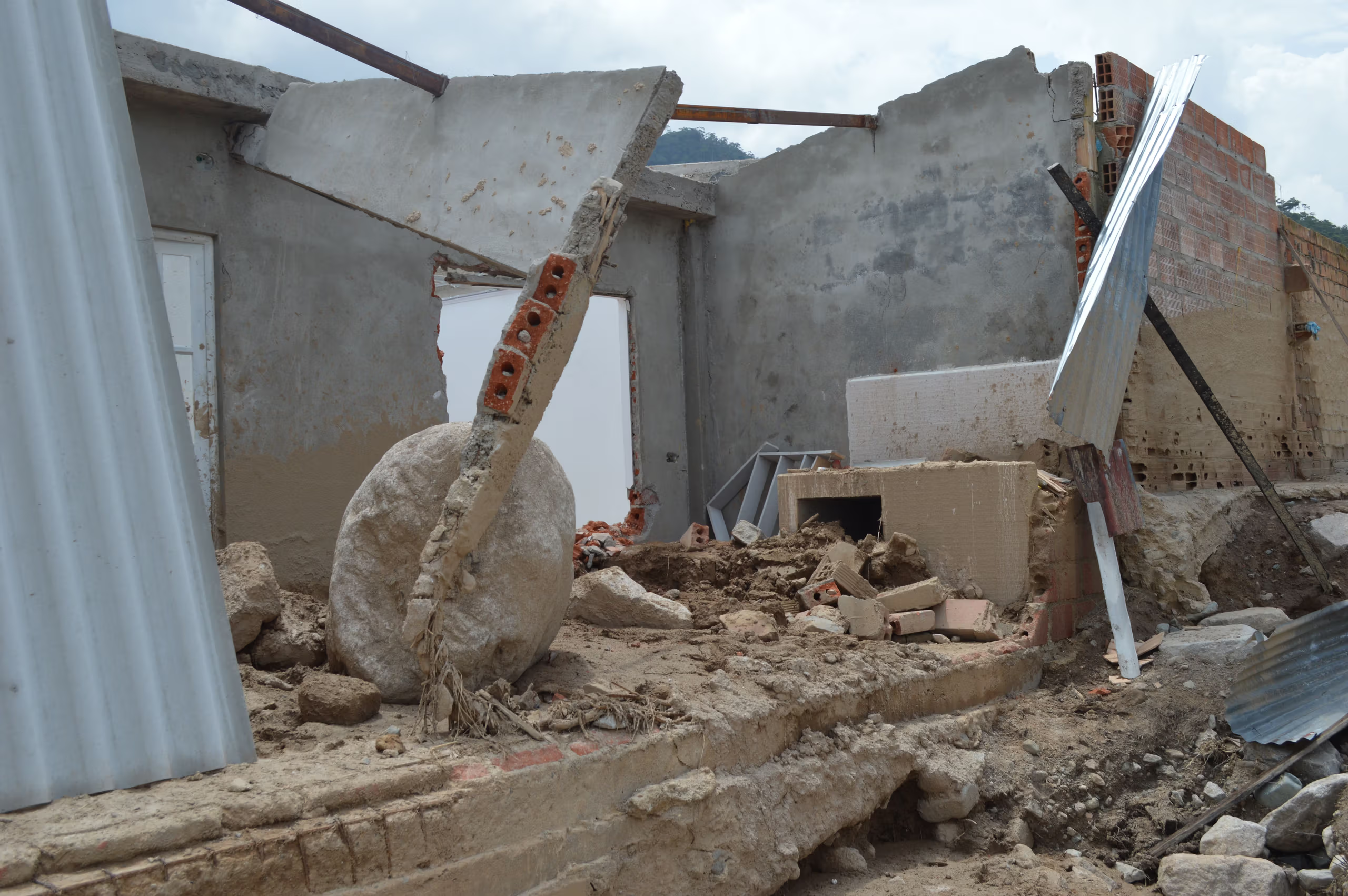
When the earth shifts on a massive scale, the immediate response of political authorities often follows a familiar script: call for order and urge the public to remain composed. Nature, however, rarely pays attention to official directives. A powerful 7.6-magnitude earthquake struck Panama's southern coast just before one o'clock in the afternoon, offering a grim demonstration of how quickly modern infrastructure and urban routine can be rendered fragile.
Centered roughly 14 kilometers southwest of the remote community of Pitaloza Arriba and near the southern town of Tonosí, the initial shock shook the region with devastating force. According to data from the US Geological Survey and the Institute of Geosciences of the University of Panama, the primary quake was almost immediately accompanied by intense seismic activity. A secondary 6.0-magnitude tremor struck shortly after at 1:22 p.m., part of a rapid sequence that saw at least 13 aftershocks recorded in less than an hour.
Across the nation, the physical consequences were immediate and visible. Buildings, schools, and residential homes were rapidly evacuated as the tremors rattled the capital, Panama City, sending visibly shaken residents into the streets to await news. Local reports from the newspaper La Prensa highlighted severe structural destruction in Penonomé, where the landmark St John Baptist Cathedral suffered significant damage. West of the capital, the force of the quake physically severed a primary highway, leaving the asphalt sheared entirely in half.
Political leaders were quick to manage the narrative. President José Raúl Mulino instructed a key minister to advocate for composure, later posting on social media that what happened should not be used to generate alarm and disorder. Yet controlling public sentiment is a difficult task when the disruption extends far beyond national borders.
The primary shock wave triggered potential tsunami threats across vast stretches of the Pacific coastline. Hazardous wave warnings were issued for a long corridor of nations, including Costa Rica, Nicaragua, El Salvador, Guatemala, Mexico, Ecuador, and Peru. While the specific warning for Chile was officially lifted later in the afternoon at 4:18 p.m., the broad geographic reach of the alert underlined how a single localized rupture along Panama's southern coast can momentarily freeze an entire continental seaboard.
Written by Thorben Thiede thorben.thiede@alpineweekly.com