
Oct 9, 8:01 PM
When State Retribution Demands an Audience
A proposal to broadcast a military firing squad execution tests the boundaries between justice and public spectacle in Washington.
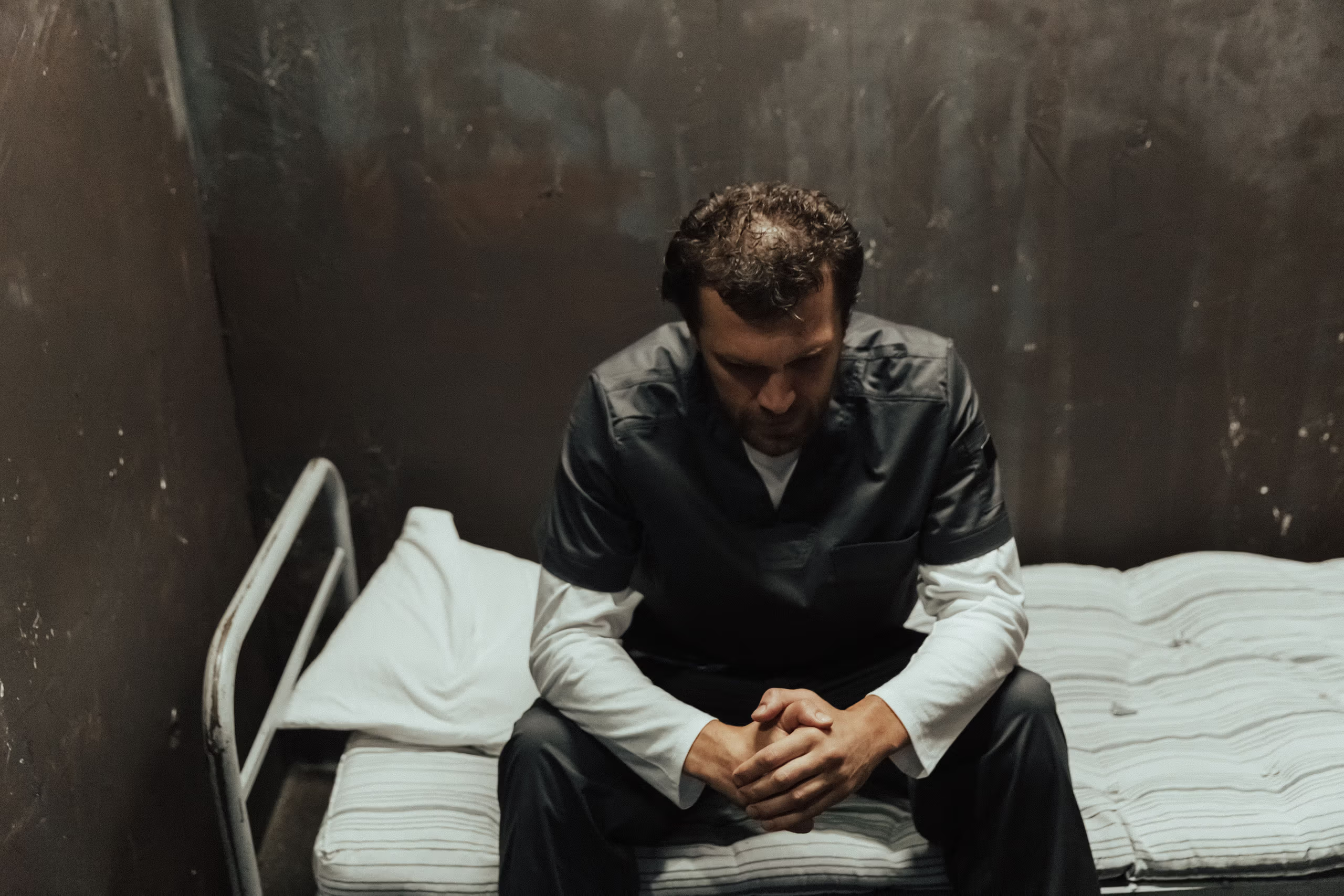
When government policy begins to echo dystopian reality television, even senior members of the administration start quietly backing toward the exit. The Pentagon’s plan to broadcast the execution of Fort Hood shooter Nidal Hasan via a live online stream has accomplished a rare feat in Washington: uniting Republicans, Democrats, religious leaders, and international bodies in collective revulsion. Even Vice-President JD Vance publicly expressed skepticism over whether the digital spectacle will ever air, adding that he certainly has no plans to tune in.
The case itself carries undeniable gravity. In 2009, Hasan, a former army major tasked with treating soldiers for mental health issues, turned his weapon on the very personnel he was assigned to care for, killing 13 unarmed service members and injuring 32 others. Vance rightly characterized the rampage as the deadliest terrorist attack on American soil outside of September 11. Yet the planned mechanism for his punishment—a military firing squad, the first since the end of World War Two and the military's first execution in over six decades—was apparently deemed insufficient on its own. Defence Secretary Pete Hegseth escalated the situation by announcing that the execution would be streamed live for the public, arguing that citizens need to understand the serious consequences of such crimes.
Transforming the machinery of state justice into a public broadcast crosses a line that civilized societies spent centuries establishing. Republican Senator John Curtis pointed to the history of Rome, warning that watching bloody spectacles corrupts the public and cultivates a appetite for execution as entertainment. Curtis urged the administration to reconsider, noting that victims deserve justice administered with solemnity and that broadcasting a death diminishes the public without serving as an effective deterrent. From across the aisle, Democratic Senator Chris Murphy was even more direct, describing the idea as disgusting and comparing the proposed broadcast to public killings carried out by the Islamic State.
The pushback extends beyond Capitol Hill. The US Conference of Catholic Bishops condemned the plan, expressing shock and great sorrow at the decision to make the execution a public broadcast. Meanwhile, the UN human rights office stated that livestreaming the event would amount to a public execution and violate the absolute prohibition of torture.
Whether the Pentagon retreats from its broadcast plan remains a administrative question. For now, Vance’s open detachment signals that even within the White House, the appetite for broadcasted military executions is considerably thinner than the Secretary of Defence imagined.
Written by Andreas Hofer andreas.hofer@alpineweekly.com


