Feb 9, 2:01 PM
Washington’s Aging Leadership Fuels Fresh Calls for Mandatory Retirement Rules
As more U.S. politicians stay in office well past traditional retirement age, a growing bipartisan debate questions whether power in Washington is being held for too long.
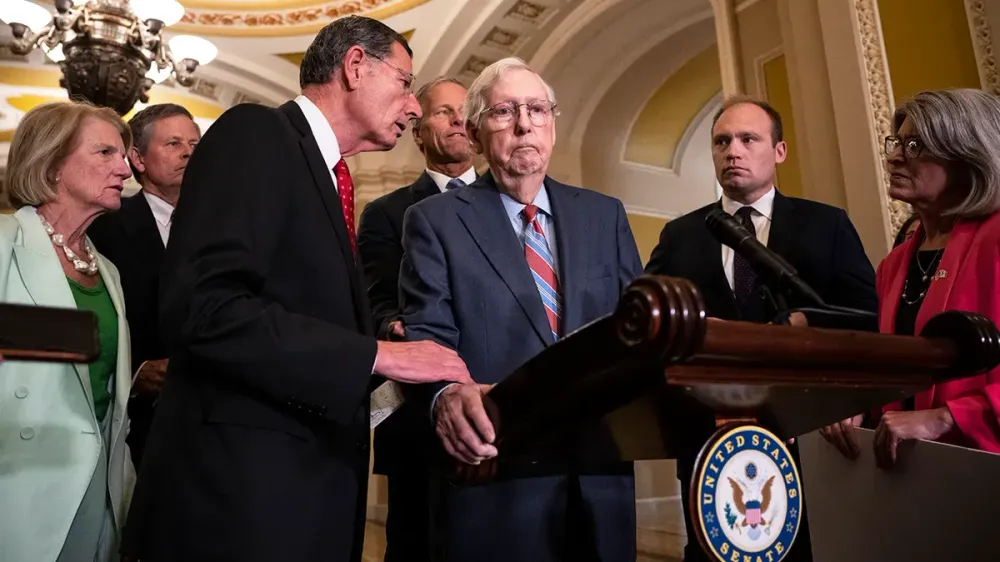
Washington is once again confronting an uncomfortable question it has tried to avoid for years: how old is too old to govern?
Across the federal government, senior officeholders are remaining in power far beyond the age at which most Americans retire. Presidents, lawmakers and judges are increasingly serving into their late seventies, eighties and even nineties, reigniting a debate over whether age limits should be imposed to make room for younger leadership.
The issue cuts across party lines. President Donald Trump turns 80 this year, while Joe Biden left the White House at 82. In Congress, some of the longest-serving members are well into their late eighties and nineties, and deaths in office are no longer rare events. The aging profile of Washington has become so pronounced that it now stands out even compared with other power centers, including corporate America, where executive age limits are common.
Public opinion appears to be shifting. Recent polling shows strong support for a maximum age for the presidency as well as for seats in the House and Senate. Similar views extend to the judiciary, where the average age of federal judges continues to climb and nearly half of Supreme Court justices are now in their seventies.
The renewed discussion has been amplified by prominent political figures. Former Chicago mayor and longtime Democratic strategist Rahm Emanuel has proposed a mandatory retirement age of 75 for presidents, cabinet members, members of Congress and federal judges. He has framed the idea as part of a broader ethics overhaul, arguing that entrenched power contributes to conflicts of interest, slow decision-making and public distrust. Emanuel has acknowledged that the number itself is not based on medical science, but says it would force regular leadership renewal.
Others point to recent high-profile cases as cautionary tales. Several lawmakers in recent years struggled with health or cognitive issues while remaining in office, sometimes prompting behind-the-scenes efforts to limit their responsibilities rather than open discussions about stepping aside. Critics argue that such situations damage public confidence and leave voters with little transparency.
Still, resistance remains strong. Incumbency carries significant advantages, both politically and institutionally. Senior lawmakers often control key committees, wield influence over federal spending and deliver tangible benefits to their states and districts. Supporters of experienced leadership argue that navigating the federal system takes years, if not decades, and that arbitrary age cutoffs risk discarding valuable expertise.
Former South Carolina governor Nikki Haley, who raised similar concerns during her unsuccessful 2024 presidential bid, has taken a slightly different approach. Rather than hard age limits, she proposed mandatory mental competency tests for politicians over 75, arguing that voters should be better informed rather than restricted from choosing older candidates.
The generational tension is increasingly visible within party politics. In several recent primaries, younger challengers have framed their campaigns around the idea that Washington no longer reflects the country it governs. Meanwhile, veteran politicians counter that longevity brings stability, especially in times of global uncertainty.
What is clear is that Congress is aging faster than the population it represents. Over the past four decades, the average age in both chambers has risen steadily, turning Capitol Hill into what some former lawmakers jokingly describe as the world’s most interesting retirement community.
Whether that perception becomes politically costly remains to be seen. For now, calls for age limits enjoy broad public support but face steep obstacles in a system designed to protect incumbents. Without a constitutional amendment or lawmakers voting to shorten their own careers, meaningful change is unlikely in the near term. Still, the debate itself signals a growing impatience with a political class that many Americans believe is staying on stage long after the curtain was supposed to fall.