Mar 4, 3:25 PM
Von der Leyen’s expanding foreign policy role questioned amid Iran war
Critics say the European Commission president is stepping beyond her mandate as she takes an increasingly visible role in global crises
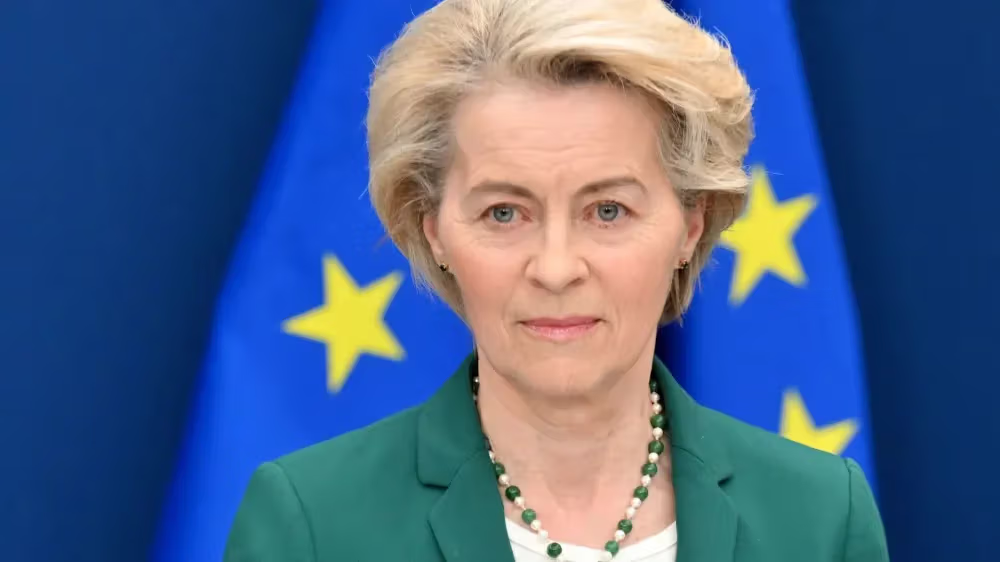
Iran’s ongoing war has kicked off a lively argument in Brussels about just how far Ursula von der Leyen is pushing the boundaries of her position in foreign affairs.
Critics are sounding the alarm, saying she keeps edging into territory that EU treaties have historically left to national governments. Von der Leyen wasted no time weighing in after US strikes on Iran last weekend, she was one of the first European figures to speak out, calling the situation “greatly concerning.”
Since then, it’s been statement after statement from her camp and a flurry of calls with leaders across both Europe and the Gulf. For those keeping score, detractors claim this pattern signals a slow, but steady stretch of presidential power beyond what’s officially set down in EU law. Here’s the thing: when it comes to foreign policy, responsibility technically sits with Kaja Kallas,the bloc’s High Representative for Foreign Affairs and Security Policy.
The Commission itself. Mostly tasked with drawing up new laws, looking after the budget, and making sure countries stick to agreed rules. Meanwhile António Costa heads up the European Council, that’s where official representation happens at leader level for security issues.
Yet despite these formal lines, von der Leyen has clearly put herself front and center on Iran,not just meeting Gulf royals, but also floating ideas like a “credible transition” for Iran (a phrase you won’t find rubber-stamped by all 27 member states).. She even called an unusual gathering, a so-called “Security College”,pulling together every commissioner regardless of whether they deal directly with defense or not.
This move turned some heads inside Brussels’ labyrinthine institutions; plenty within the Commission admit they’re still hazy on what this new format actually means or who gave it its mandate.
Some MEPs aren’t pulling punches. Marc Botenga accused von der Leyen of muscling into turf that isn’t hers, warning she could be undermining her own authority by acting without clear backing. Nacho Sánchez Amor chimed in too: posting online to ask what exactly a “security college” is anyway,and suggesting maybe there’s a backdoor rewrite happening (“treaty mutation,” as he put it) minus any open debate. Legal minds are raising eyebrows as well.
Alberto Alemanno argued that when von der Leyen picks up the phone to discuss regime change with Gulf leaders, she steps well outside her legal remit, and straight into ground reserved for individual nations under existing treaties. Still, not everyone sees overreach here,some argue she’s simply stepping up because someone has to fill an institutional gap when crises erupt and member states freeze or bicker over next moves.
Guntram Wolff points out that von der Leyen tends to become more visible precisely because getting consensus among 27 countries can take forever; he credits her proactive stance during Russia's invasion of Ukraine with nudging Europe towards firmer action.. So what's at stake here. The real issue runs deeper than personalities, it comes down to how Europe should structure its foreign policy playbook going forward.
As Wolff bluntly puts it: right now you’ve got two presidents plus one High Representative all jostling for space at the top table; wouldn’t things run smoother if there were just one figurehead making those big calls. That question isn’t going away anytime soon.