Feb 9, 9:45 AM
Starmer Loses Key Adviser as Epstein Revelations Shake UK Politics
Chief of staff Morgan McSweeney resigns after backlash over ambassadorial appointment linked to newly released Epstein documents.
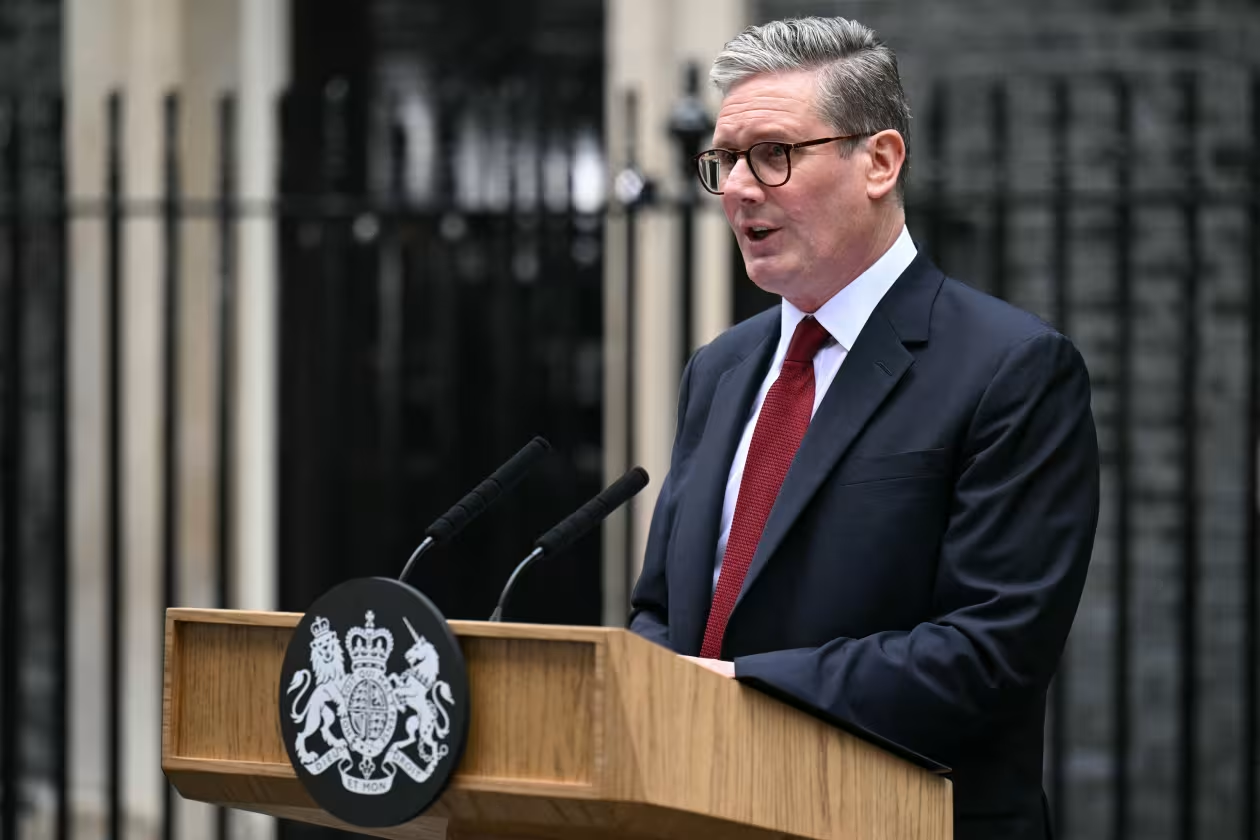
Britain’s government was hit by fresh turbulence over the weekend after Prime Minister Keir Starmer lost one of his closest advisers amid mounting political fallout from newly released documents linked to Jeffrey Epstein.
Morgan McSweeney, Starmer’s chief of staff and a central figure behind Labour’s return to power in 2024, stepped down on Sunday. His resignation followed sustained criticism over his role in recommending the appointment of Peter Mandelson as the United Kingdom’s ambassador to Washington — a decision that has since become deeply controversial.
The pressure intensified after files released by the US Department of Justice detailed Mandelson’s continued contact with Epstein years after the financier’s first conviction for sex offences. The documents also showed Mandelson shared government-related communications with Epstein after allegations against him were already widely known. These disclosures were factual findings contained in official records, though interpretations of their significance vary across the political spectrum.
Starmer acknowledged last week that Mandelson had misrepresented the nature of his relationship with Epstein during the vetting process and publicly apologised for approving the appointment. Mandelson was removed from his diplomatic post in 2025 once further details of his past associations emerged. He has not commented on the latest developments, though he has previously expressed regret for not responding sooner to allegations involving Epstein.
McSweeney said he accepted responsibility for advising the prime minister on the appointment and concluded that remaining in his role was no longer tenable. His departure was framed as an act of accountability rather than a reflection of any formal wrongdoing. Starmer responded by thanking McSweeney for his service and contribution to the Labour Party.
The resignation leaves a noticeable gap at the centre of Downing Street. McSweeney was widely regarded as one of Labour’s most effective strategists and had longstanding professional ties to Mandelson, a senior figure from the party’s New Labour era. Whether his exit will help stabilise the government or further fuel internal dissent remains uncertain.
The controversy arrives at a delicate moment for Starmer, whose approval ratings have slipped in recent months. Some Labour lawmakers had already been questioning his leadership before the Epstein-related revelations surfaced, and the episode has given critics fresh ammunition. Senior cabinet figures, however, have publicly urged the prime minister to stay focused on domestic priorities such as the cost-of-living crisis.
Starmer has pledged to release documentation from the ambassadorial vetting process to demonstrate how Mandelson’s statements differed from the information later made public. That disclosure is expected to draw further scrutiny rather than close the matter entirely.
Politically, the timing is awkward. Labour faces a by-election later this winter and nationwide local elections in May, both of which are likely to be treated as informal verdicts on Starmer’s leadership. Opinion polls currently show the party trailing Reform UK, adding to the sense that the coming months could prove decisive.
For now, McSweeney’s resignation may draw a line under one chapter of the scandal. Whether it also prevents the story from widening — or becoming a symbol of deeper unease within Labour — is a question the prime minister will soon have answered at the ballot box.