Oct 15, 4:02 PM
The Limits of Executive Spectacle
Donald Trump backtracks on broadcasting the firing squad execution of Fort Hood shooter Nidal Hasan.

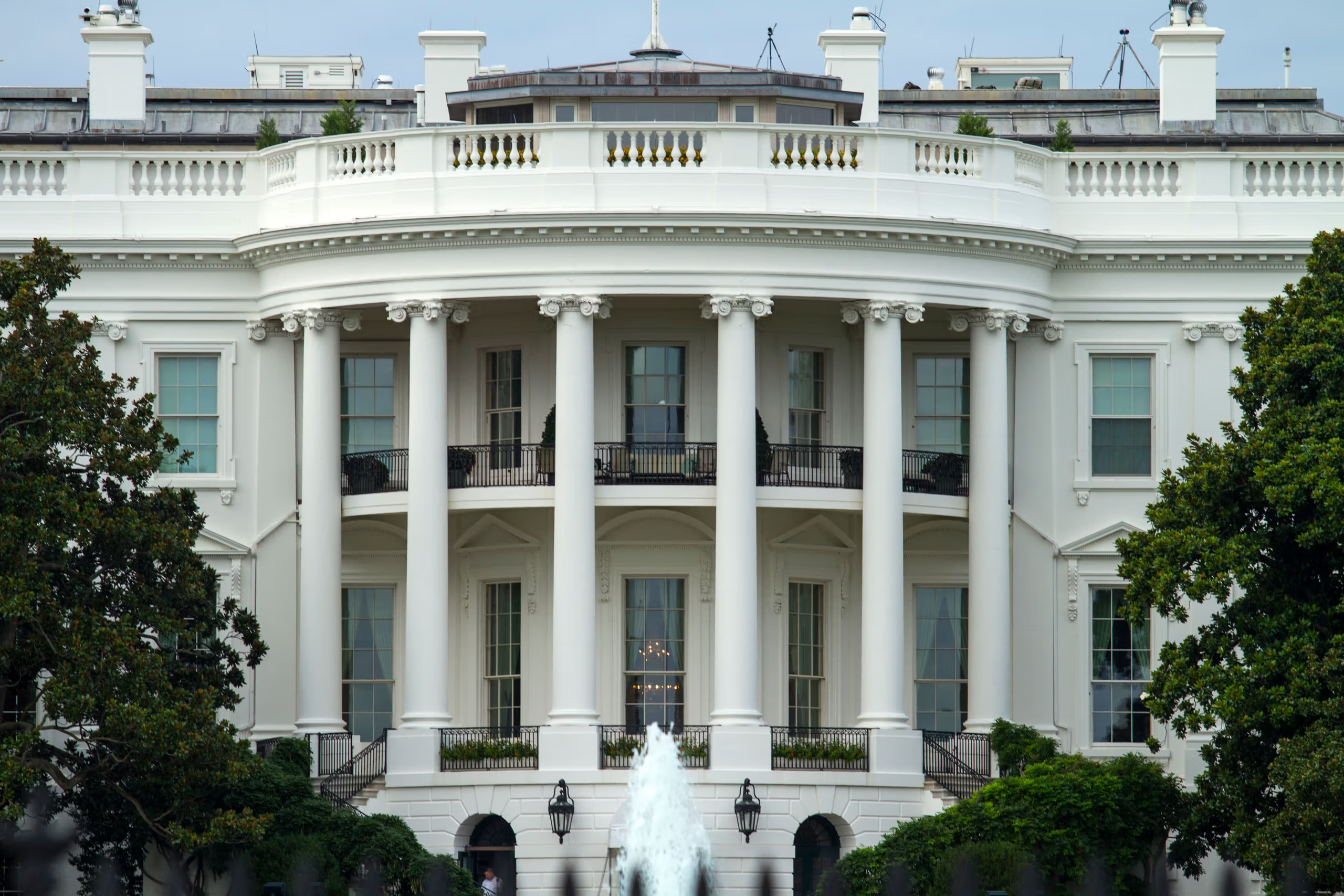
The White House has apparently discovered that even in an age of total transparency, there are limits to what makes good television. President Donald Trump has cancelled plans to broadcast the upcoming execution of Nidal Hasan live on the internet. What was originally pitched as a demonstration of state power and deterrence has collapsed under the weight of swift domestic and international condemnation.
The sentence itself remains unchanged. On December 3, 2026, the former US Army psychiatrist is scheduled to face a firing squad, marking the first US military execution in more than six decades. Under military law, such extreme measures require presidential approval following appellate court review. Hasan’s crimes are undisputed; on November 5, 2009, he opened fire in a crowded medical facility at Fort Hood, Texas, killing 13 unarmed soldiers and wounding 32 others in the deadliest non-combat attack ever recorded on a domestic military installation. During his 2013 court-martial, Hasan admitted his guilt, offered apologies for his mistakes, and claimed he acted to protect Muslims and the Taliban from the American military.
The proposal to broadcast his final moments online exposed a sharp divide within the administration itself. Defence Secretary Pete Hegseth initially championed the broadcast, maintaining that people need to understand that there's serious consequences for these types of things. Meanwhile, Vice-President JD Vance publicly questioned whether the broadcast would occur at all and stated he would not tune in. Trump, having initially offered absolute approval for the scheme, eventually bowed to mounting backlash, observing that many very good and well meaning people would rather not watch him die.
The international response was predictably harsh. Rights groups and the United Nations condemned the proposed broadcast, with the UN calling the plan abhorrent. Global practice offers uncomfortable context: out of more than 2,700 executions across 17 nations last year, public executions were documented in only two countries, with Amnesty International recording eleven in Iran and six in Afghanistan during 2025.
While the general public will be spared the livestream, the administration has ensured that the victims' families retain private access. Trump affirmed that the families can still view the execution in person, declaring that they deserve to witness JUSTICE!. Hasan will still face his firing squad as scheduled; the only difference is that the spectacle will remain behind closed doors.
Written by Martina Kirchner martina.kirchner@alpineweekly.com