
Oct 7, 10:01 AM
The Architecture of Fear: How Trauma Redefined Israel's Political Center
Three years after the Hamas attacks, national insecurity has systematically dismantled the moderate middle, turning extreme positions into standard policy.
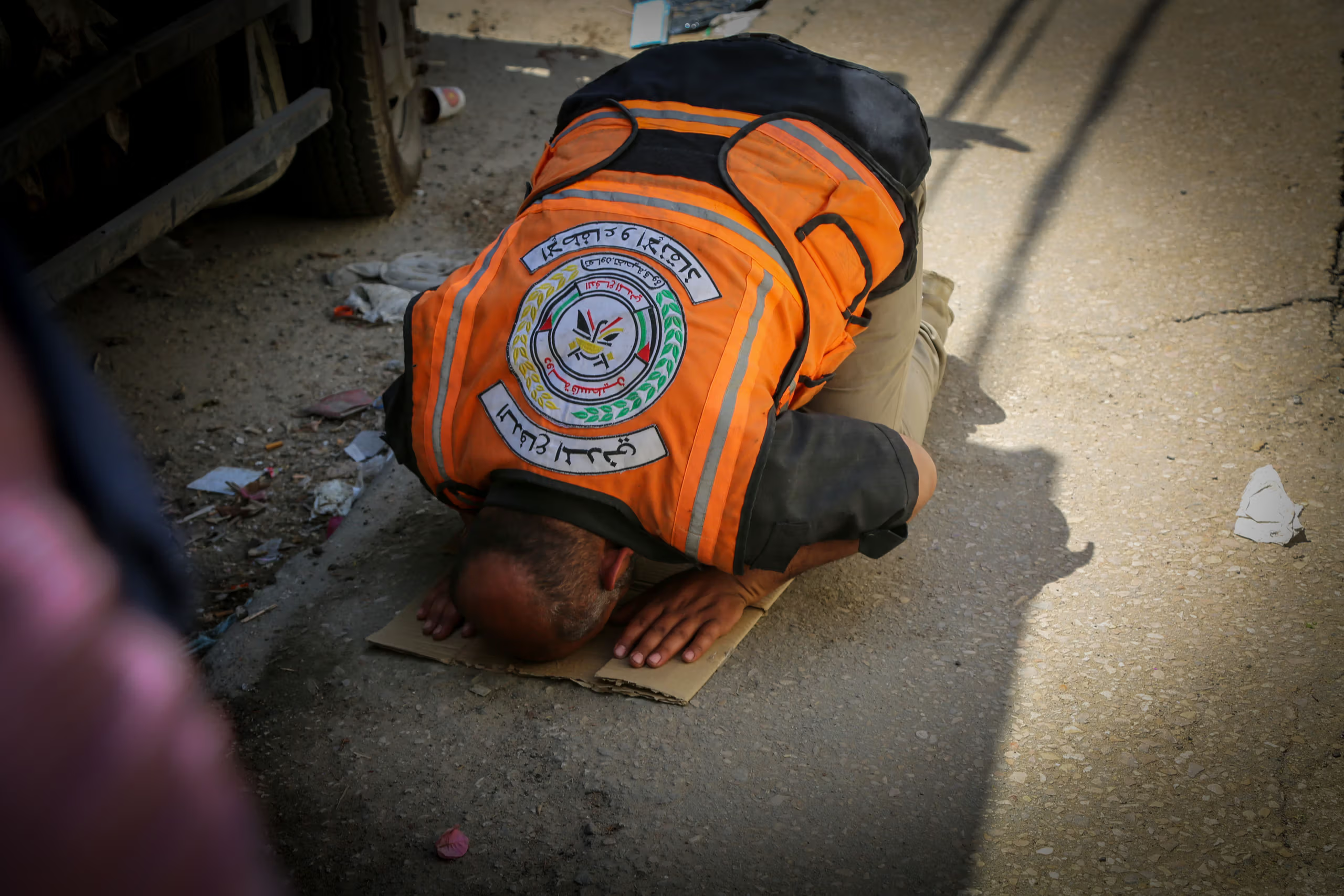
The collapse of security doctrine on October 7, 2023, did not merely breach border fences; it permanently altered the psychological currency of Israeli politics. When Hamas attackers killed nearly 1,200 people and dragged some 250 hostages into Gaza, the long-standing national dogma of technological invincibility crumbled in a single morning. For an electorate accustomed to viewing its intelligence state as an impenetrable shield, the political fallout was predictable: nuance became a luxury no one could afford.
Three years on, the trauma has been systematically weaponized. Prime Minister Benjamin Netanyahu and his coalition partners recognized early that persistent anxiety is the most effective lubricant for radical policy shifts. What was once dismissed as fringe messianism has comfortably settled into the mainstream. Figures like National Security Minister Itamar Ben-Gvir have transformed state authority into an instrument for arming settler factions across the West Bank, while former Defense Minister Yoav Gallant set an uncompromising rhetorical tone early in the conflict by describing enemies in Gaza as human animals.
The empirical record reflects a society fundamentally realigned by perceived existential threat. Public opinion polls reveal an extraordinary hardening of posture: a May 2025 survey by sociologist Tamir Sorek indicated overwhelming support among Israelis for expelling Gaza's population, alongside backing for extreme military measures in populated areas. With over 74,000 Palestinian deaths reported in Gaza and human rights group B'Tselem documenting 1,107 fatalities in the West Bank amid escalating settler violence, the boundaries of acceptable policy have expanded beyond recognition.
The political left, historically the main advocate for a two-state framework, has effectively dissolved into ideological irrelevance. Sociologist Yehouda Shenhav-Shahrabani notes that political actors deliberately leveraged post-attack trauma to unravel decades of Jewish-Palestinian dialogue, regressing collective trust by a century. Meanwhile, experts like Tel Aviv University's Daniel Bar-Tal observe that the shock of potential intelligence failures before the attack disrupted the national psyche permanently, cementing a siege mentality.
What remains is a political landscape where security panic dictates strategy and systemic repression is rebranded as elementary self-preservation. Israel's international isolation deepens as regional operations expand, yet internal political incentives point in only one direction. In a political system where fear serves as the primary currency, moderation looks remarkably like negligence.
Written by Thorben Thiede thorben.thiede@alpineweekly.com


