Oct 8, 6:02 PM
Revolutionary Theatre in Paris Masking Public Sector Failure
Jean-Luc Mélenchon's hard-left party exploits youth unrest while state institutions crumble.
When French politicians run out of viable ideas to fix their failing public services, they inevitably retreat into revolutionary mythology. The hard-left leader Jean-Luc Mélenchon proved this once again on Thursday, taking to social media to proclaim that the Place de la Bastille had been retaken. What actually took place on the streets of Paris, however, looked less like a noble historical uprising and more like another standard chapter in the country’s chronic institutional dysfunction.
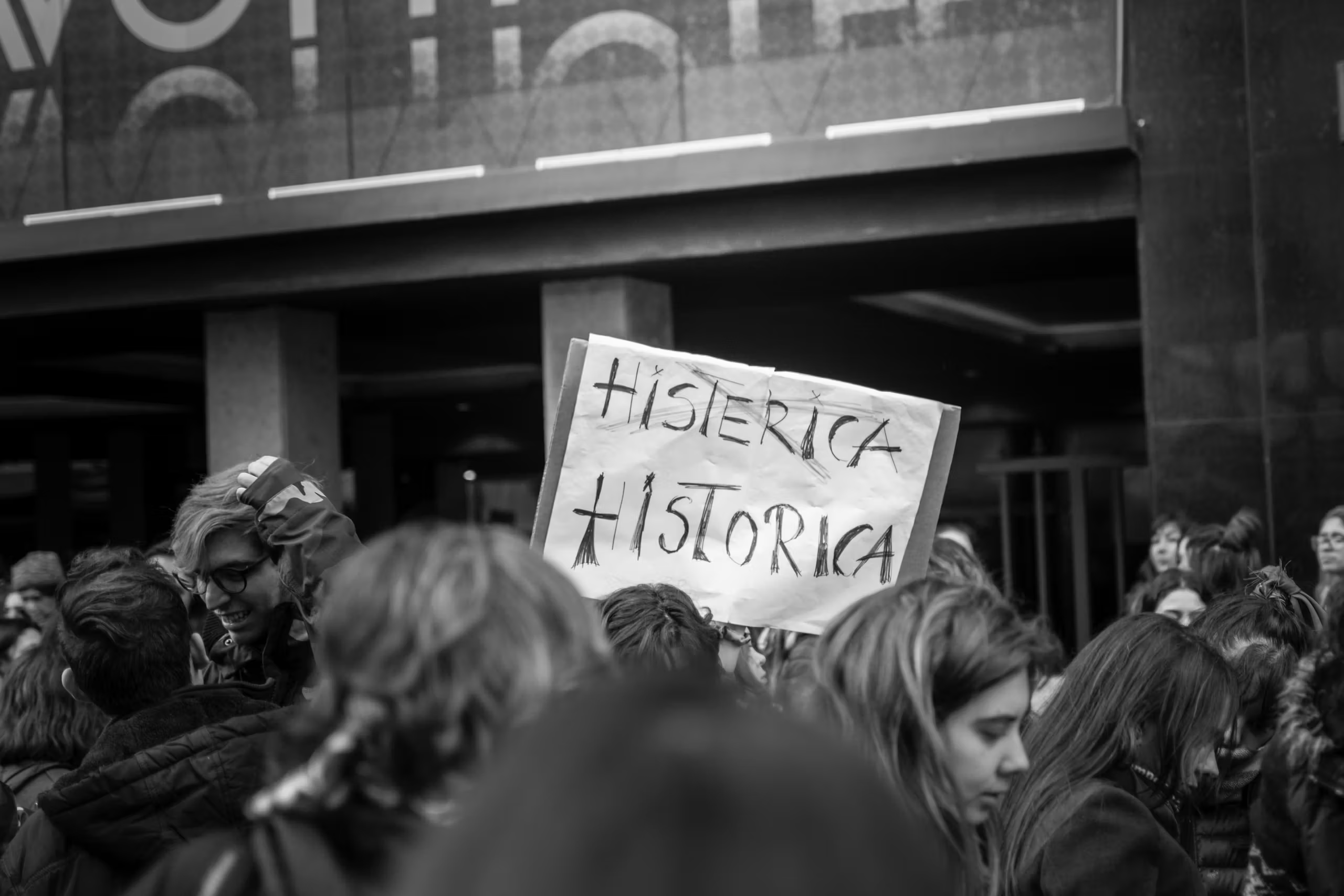
The gathering at the iconic Parisian square was the culmination of a student movement that began in mid-September in the city's suburbs. What started as complaints about overcrowded classrooms, endless school hours, and absent teachers quickly transformed into a nationwide wave of civil unrest. On Thursday, the Education Ministry reported that 375 schools were forced to close either fully or partially.
While the demonstration at Place de la Bastille began without violence, it predictably devolved into chaos. Law enforcement deployed tear gas and water cannons after clashes broke out. According to the Interior Ministry, authorities have made more than 6,600 arrests since late September, with the vast majority of those detained being minors under the age of 18.
Rather than addressing the fiscal and administrative mismanagement plaguing the education sector, the political class has opted for its preferred sport: political exploitation. Opponents of France Unbowed have accused Mélenchon and his party of stoking civil tension and weaponising adolescent frustration for their own ideological agenda. Although Mélenchon insists the demonstrations were organized independently by students, his public praise for the youth movement and his calls to join forces with trade unions for further protests on October 13 reveal a clear strategy to turn public school grievances into political street power.
Evoking the storming of the Bastille in 1789—a historical symbol of resistance against royal tyranny—is a convenient distraction. It allows self-styled revolutionaries to frame administrative failure as an epic struggle against tyranny. Yet throwing tear gas at teenagers will not hire better teachers or balance school budgets, nor will socialist posturing fix state institutions. France remains trapped in a cycle where systemic problems are met with street disorder, leaving structural reform as distant as ever.
Written by Martina Kirchner martina.kirchner@alpineweekly.com