
Oct 12, 6:01 PM
Paper Truces and Real Blackouts
Washington's attempt to broker an energy ceasefire collides with the reality of winter military strategy.
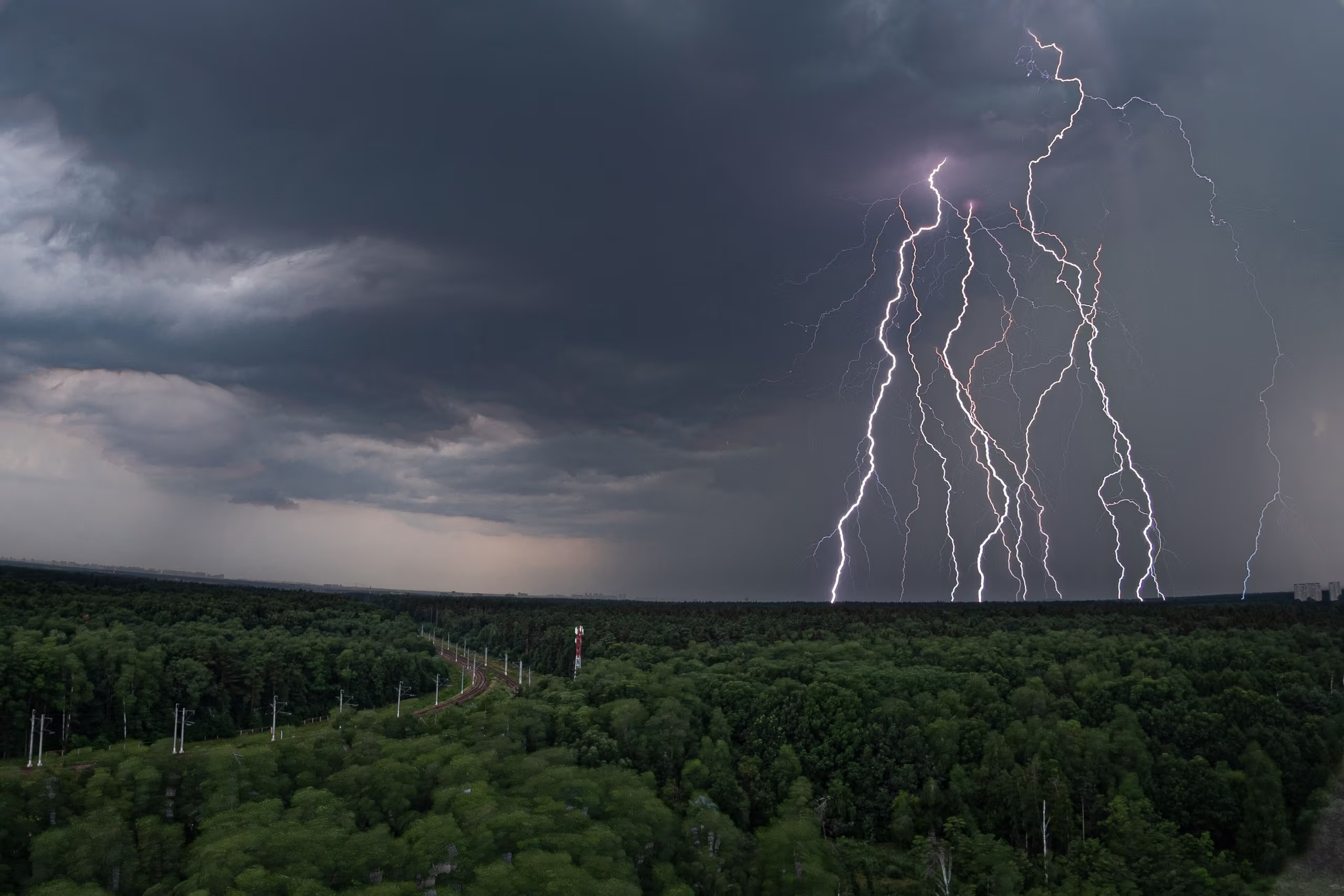
When Washington decides to orchestrate peace, reality often refuses to adhere to the script. US President Donald Trump recently declared an immediate energy ceasefire between Ukraine and Russia, tied to a transaction to import Russian diesel ahead of the upcoming American midterm elections. Yet, within hours of the announcement, the paper agreement met the predictable reality of operational strategy.
According to Ukrainian President Volodymyr Zelensky, Russian forces struck six energy facilities shortly after the truce was announced. Zelensky stated that gas stations and power grid installations were targeted, leaving 33 people injured. Ukraine's state grid operator, Ukrenergo, subsequently implemented electricity rationing and reported power cuts across Kharkiv, Donetsk, and Zaporizhzhia due to damaged equipment. In Izyum, strikes destroyed regional power grids, precipitating local blackouts.
This military activity fits a broader pre-winter trajectory. Both belligerents have escalated targeting of energy infrastructure in recent months. According to data tracking conflict incidents, attacks on energy networks have surged significantly compared to the previous year. Ukrainian forces have launched strikes deep inside Russian territory aimed at reducing Moscow's capacity to finance military operations, while Russian authorities maintain that energy facilities are legitimate targets because they directly support Ukrainian military infrastructure.
The American diplomatic push appears closely bound to domestic considerations. By temporarily waiving sanctions on Russian diesel to secure imports and temper domestic fuel prices, Washington sought to align its foreign policy with immediate economic interests. Russian Foreign Minister Sergei Lavrov noted that Kyiv did not deserve the respite a truce would bring, while Zelensky questioned the sanctions waiver, describing it as a gift to Moscow.
From European officialdom, the response followed well-worn scripts. In Brussels, where the bureaucratic apparatus excels at issuing conditional commentary, EU foreign policy chief Kaja Kallas remarked that the European Union would welcome a ceasefire only if it takes effect on the ground, observing that Moscow had yet to demonstrate compliance. Meanwhile, in Tallinn, where local leadership routinely adopts the most hawkish posture available, Estonia's foreign minister flatly declared that the ceasefire was not working.
Whether a temporary energy pause can ever function without robust enforcement mechanisms remains doubtful. For now, grand executive announcements in Washington have yielded little change on the ground, where military strategic necessity continues to dictate the pace of conflict.
Written by Thorben Thiede thorben.thiede@alpineweekly.com


