Oct 14, 6:02 AM
Moralizing as a Distraction Mechanism in Berlin
When partisan governance fails, moral outrage becomes the preferred substitute for fiscal discipline.
When political arguments in Berlin run out of substance, moral indignation is usually the first resort. The latest display of this familiar reflex unfolded on public television, where the Social Democratic Party’s leadership attempted to transform internal turmoil into a high-minded crusade against their own coalition partner.
Following the departure of Labor Minister Bärbel Bas, SPD co-leader Lars Klingbeil and Mecklenburg-Vorpommern Prime Minister Manuela Schwesig launched a rhetorical offensive against the Christian Democrats. Klingbeil claimed conservative criticism of Bas was indecent and poisoned the political discourse, while Schwesig escalated the vocabulary to label opposition statements subterranean, unworthy, and inhuman.
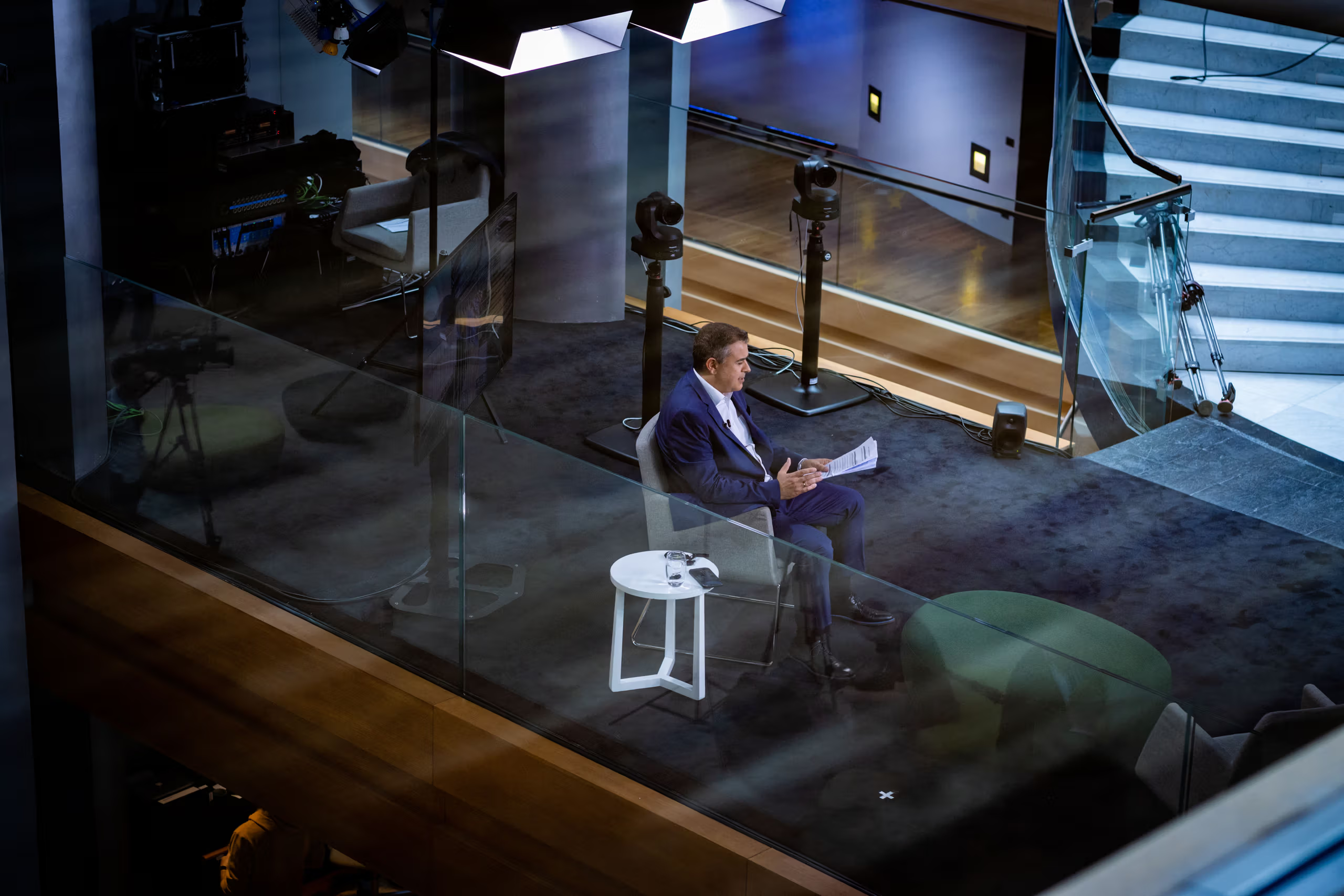
The performance backfired under the studio lights of Markus Lanz's talk show. In a rare moment of direct pushback on public broadcasting, Lanz turned the accusations back on the SPD leadership, pointing out that weaponizing such extreme language is precisely what degrades political debate. Journalist Eva Quadbeck concurred, noting that branding opposition critique as inhuman crossed acceptable boundaries and served as a transparent maneuver to divert attention from the SPD's own internal disarray.
Indeed, the timeline reveals that the conservative comments regarding Bas—who had stepped away in late September citing palliative care support and a subsequent bereavement—did not exceed standard political commentary. Instead of addressing governance, the ruling party opted to construct a narrative of victimhood.
Even former SPD chairman Sigmar Gabriel offered a sober reality check for his party colleagues. Observing the coalition's public warfare, Gabriel warned that such self-indulgent bickering leaves voters baffled and serves no purpose other than boosting the opposition, specifically the AfD. His critique extended to the political class's obsession with defensive rhetoric, remarking that months have been spent arguing over firewalls while no one actually focuses on putting out the fire.
Gabriel pointed toward what should be obvious for any disciplined administration: cutting the bloated federal budget to free up capital for municipal infrastructure, school renovations, and housing. Yet structural fiscal discipline requires actual administrative work, whereas accusing one's coalition partner of inhumanity requires only a microphone. As long as the governing alliance prioritizes rhetorical escalation over budgetary arithmetic, the political center will continue to erode under the weight of its own theatrical hostility.
Written by Thomas Nussbaumer thomas.nussbaumer@alpineweekly.com