Feb 9, 7:16 AM
Iran Signals Missile Power as Washington Weighs Diplomacy and Force
Tehran is refusing limits on its missile arsenal, betting that uncertainty over its firepower will deter a US strike and push negotiations instead.
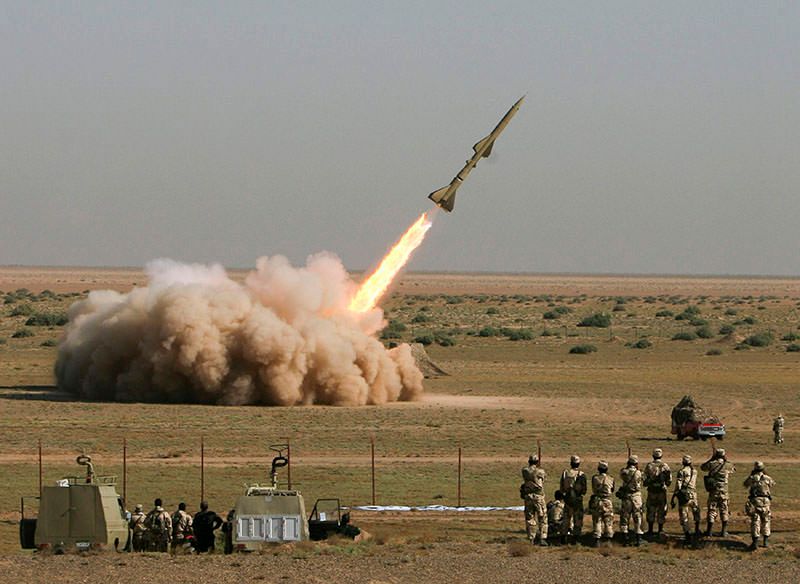
As diplomatic contacts resume between Washington and Tehran, Iran is making one message unmistakably clear: its missile program is not up for negotiation. While US officials are pressing for restrictions as part of a broader deal to prevent renewed conflict, Iranian leaders are signalling that their growing missile capability is precisely what they believe keeps war at bay.
The standoff comes less than a year after a brief but intense confrontation involving Iran, Israel and the United States. During that conflict, Iran launched hundreds of missiles toward Israeli targets. While the strikes caused limited strategic damage, they offered Tehran a chance to test its arsenal under real combat conditions. Iranian forces also observed how many projectiles managed to evade Israeli and US missile defenses as the fighting progressed — a lesson that appears to be shaping current calculations.
Despite Israeli airstrikes that hit launch sites and storage facilities, much of Iran’s missile stockpile survived. Analysts estimate that Tehran still possesses roughly 2,000 medium-range ballistic missiles capable of reaching targets across the Middle East, along with large numbers of short-range systems and anti-ship weapons that could threaten US bases, Gulf infrastructure and maritime traffic.
Iranian officials have openly warned that any new attack ordered by President Donald Trump would be met with wider missile strikes across the region. These warnings are framed as deterrence rather than escalation, with Tehran portraying its missile force as a substitute for conventional air power and nuclear weapons — both areas where it remains weaker.
US military planners appear to be taking the threat seriously. Plans for a potential January strike were reportedly delayed after concerns that American forces in the region were not sufficiently positioned to manage both an initial attack and an Iranian response. Since then, the Pentagon has been reinforcing missile defense systems across the Gulf and neighboring countries.
Talks held in Oman are intended to test whether diplomacy can still prevent a military clash. The US position includes demands that Iran curb uranium enrichment, limit its missile development and cut support for allied armed groups in the region. Iran, however, has publicly stated it will only discuss nuclear issues, rejecting missile restrictions outright.
Israeli leaders have echoed Washington’s concerns. Ahead of a planned meeting with Trump, Prime Minister Benjamin Netanyahu has argued that any agreement with Iran must address ballistic missiles and regional proxy forces. Tehran has shown no sign of shifting its stance.
Within Iran, hardline voices are presenting the missile program as proof that pressure tactics have failed. Officials have claimed — without independent verification — that the US returned to negotiations because of fears over Iran’s retaliatory capacity rather than goodwill. Public displays of new missile models in recent days have reinforced that message at home and abroad.
The missile program itself is the product of decades of isolation. Unable to purchase advanced weapons systems, Iran developed its arsenal by reverse-engineering foreign technology and expanding domestic production. Over time, missiles became central to its military doctrine, used directly and through allied groups in Iraq, Yemen, Lebanon and Gaza. Supporters inside Iran argue that this network provides strategic depth; critics say it increases the risk of regional escalation.
What remains uncertain is whether Iran’s confidence will prevent conflict or provoke it. The US has warned that failure to reach a deal will carry serious consequences, while Tehran appears to be betting that ambiguity over its missile accuracy and reach will give Washington pause.
For now, both sides are talking — and deploying. In a region where miscalculation has often proved costly, the balance between deterrence and confrontation is once again being tested, missile by missile.