Feb 12, 2:38 PM
Europe’s Asylum U-Turn: A Late Dose of Reality in Brussels’ Fantasy World
After years of denial and paralysis, the European Parliament is cautiously tightening asylum rules — not out of conviction, but because political reality is finally forcing its way in.
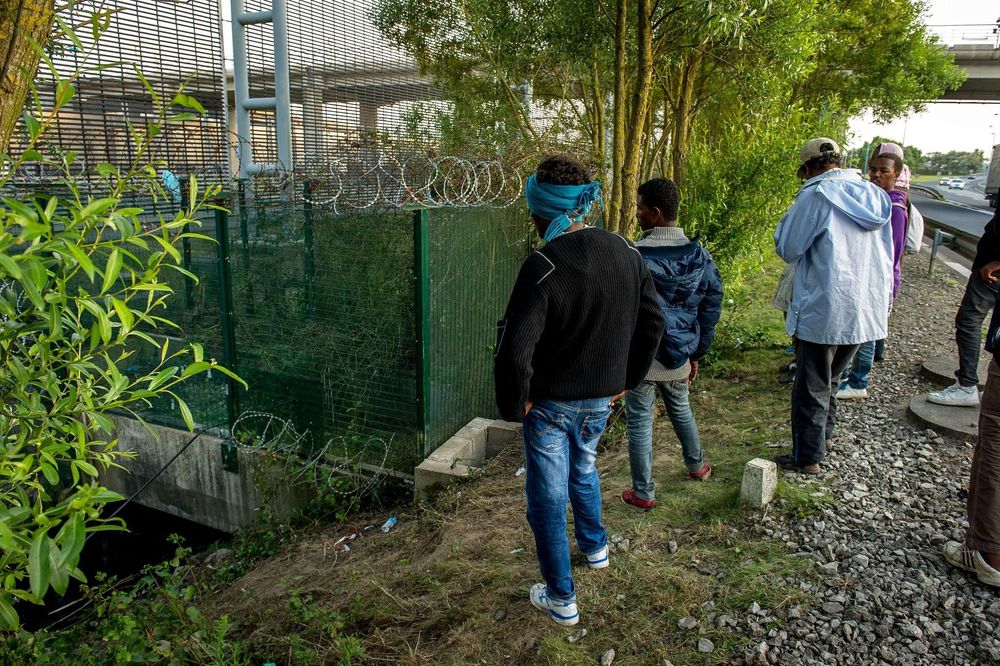
For years, European asylum policy has resembled a form of political escapism — a carefully constructed cloud-cuckoo land in which moral posturing replaced governance and good intentions were expected to substitute for control. Now, belatedly, cracks are appearing in that fantasy. The European Parliament’s recent vote to tighten asylum rules suggests that even in Brussels, reality can no longer be postponed indefinitely.
Conservative and right-wing parties voted together in favour of stricter controls, a development that would still be treated as scandalous in some national capitals. In Brussels, however, even parties that bitterly oppose one another at home suddenly discovered the virtues of pragmatism. One can only ask why cooperation deemed unthinkable in Berlin becomes acceptable once translated into EU technocratic language.
The taboo against voting alongside the right is largely a German obsession, marketed to voters as historical sensitivity. In practice, it has often functioned as political branding at the expense of effective policy. The Brussels vote quietly exposed this contradiction.
At the heart of the reform are two key changes. First, the EU expanded its list of “safe countries of origin” to include states such as Morocco, Tunisia, Colombia and Kosovo. Asylum claims from these countries will still be legally possible, but the process will be faster and rejection more likely. What is striking is not the decision itself, but how long it took to reach it. These are hardly war zones; many Europeans holiday there without a second thought. A country does not need to resemble Switzerland to be broadly safe enough to return to.
More controversial is the second pillar: allowing asylum seekers to be transferred to safe third countries while their claims are processed. Known popularly as the “Rwanda model,” the idea has been debated for years amid outrage, legal disputes and moral grandstanding. The logic is straightforward, if politically uncomfortable. If asylum applications can be handled closer to countries of origin, the incentive to risk dangerous journeys to Europe diminishes — and with it, the business model of human smugglers.
Supporters frame this as a humanitarian measure that could reduce deaths at sea. That may even be true. But the real motivation is more prosaic: deterrence and control. Few would attempt to cross continents knowing that arrival in Europe could end with a flight straight back out.
In truth, outsourcing asylum procedures is an admission of failure. It signals that the EU, after years of lofty declarations, has proven largely incapable of managing migration on its own territory. The numbers are revealing. Of roughly 465,000 rejected asylum seekers ordered to leave in 2024, only about a quarter were actually deported. Similar figures are expected for last year. In effect, Europe has developed a kind of informal residence guarantee: once you get in, you are likely to stay — legally or not.
The recent decline in asylum applications owes less to EU policy brilliance than to shifting global conditions. Meanwhile, public perception has hardened. Many voters see uncontrolled migration as evidence that Brussels has lost the ability — or the will — to enforce its own rules. The rise of right-wing parties across Europe is inseparable from this sense of disorder, as well as from the increasingly uncomfortable link between certain migration patterns and crime.
The Parliament’s latest moves may appear hesitant, even awkward. They preserve the formal architecture of asylum law while bending it through legal fine print and external agreements. But they at least signal activity after years of paralysis.
If these measures fail — if deportation rates remain low and arrivals rise again — public patience will wear even thinner. Europeans are not rejecting humanitarian obligations outright. But they are increasingly unwilling to accept a system that prioritises moral signalling over the basic duty of government: protecting the interests and security of its own citizens.
Reality, it seems, has finally reached Brussels. The question is whether it arrived too late.