Oct 12, 4:02 AM
Death on the Golden Frontier
A lethal strike on informal prospectors highlights the ruthless overlap of Sudan’s civil war and Egyptian border enforcement.
When state authority dissolves, shadow markets flourish. In the remote expanses of Sudan’s River Nile state, where civil war has hollowed out formal governance, thousands of impoverished civilians have turned to the earth for survival, digging for gold with rudimentary tools. On Saturday morning, that precarious livelihood met absolute force.
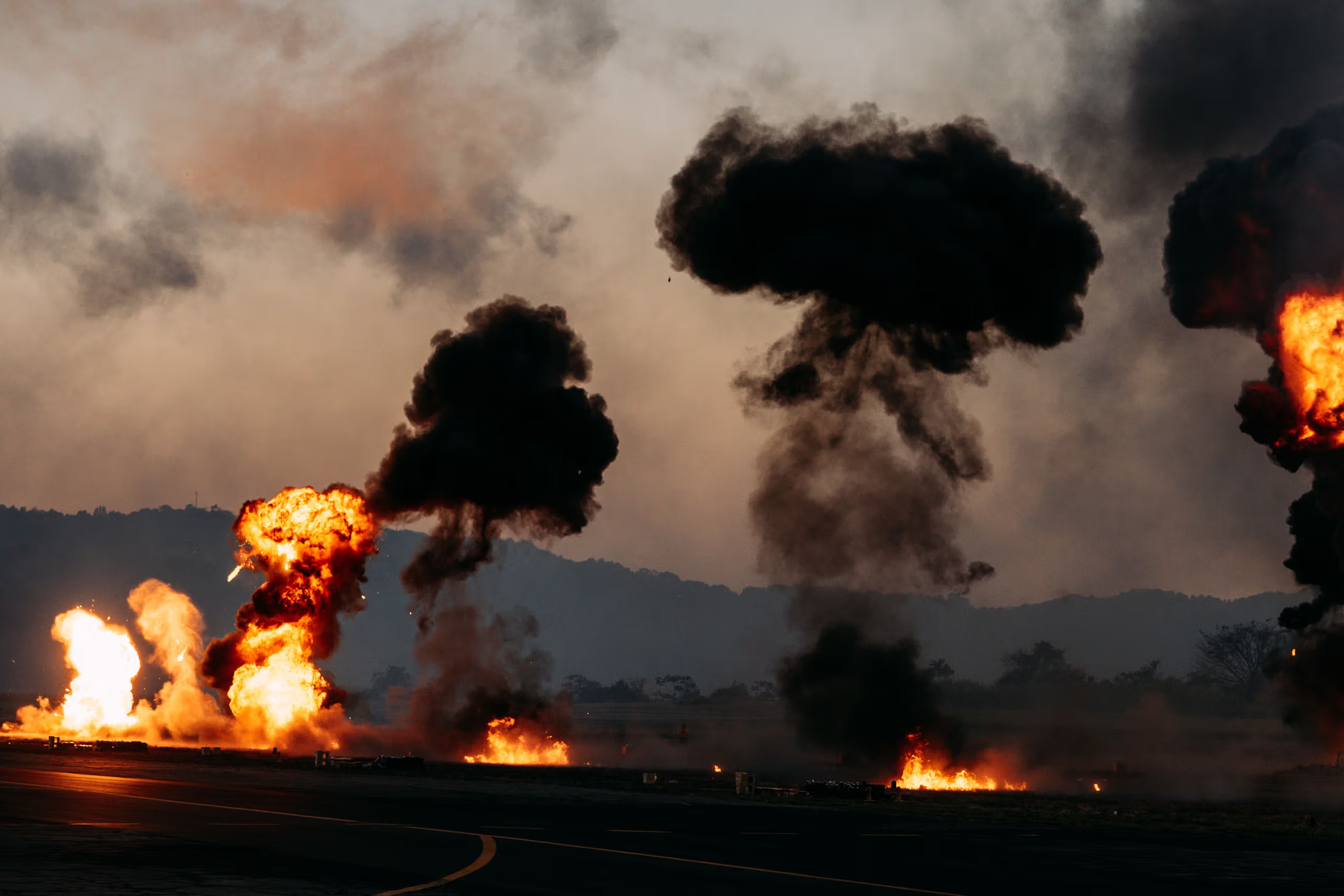
At approximately six in the morning, aircraft fired more than five missiles directly into makeshift prospecting camps and active excavation pits. According to Emergency Lawyers, a rights group operating out of Khartoum, at least 72 civilians died in the strike. Reports from the Paris-based Sudan Tribune suggest the final death toll could be substantially higher, citing survivors who described widespread casualties amidst the destruction of their shelters.
Neither the government in Cairo nor the de facto military authorities in Khartoum have offered an explanation for the strike. This silence is telling for a border area fraught with geopolitical tension. For Khartoum, the incident exposes a complete inability to police or protect its northern borderlands.
For Cairo, the border remains a sensitive zone where informal gold prospecting, drug trafficking, and weapon smuggling blur together. In June, Egyptian security forces launched a sweeping military effort along the frontier, having previously confiscated 86 tonnes of gold ore. Earlier allegations of Egyptian forces using artillery, drones, and live fire to disperse miners have circulated for months, though official investigations promised by Sudanese leaders yielded little clarity.
The economics of the conflict leave little room for ambiguity. Sudan’s ongoing civil war has shattered the formal economy, turning unregulated gold mining into a primary lifeline for desperate citizens—and a lucrative source of financing for armed insurgent groups. Unregulated gold flowing across porous borders does not merely represent lost tax revenue; it threatens to distort adjacent formal markets, including Egypt’s regulated bullion trade.
Emergency Lawyers described the operation starkly in an official statement on Sunday. The deliberate targeting of unarmed civilians violates international humanitarian law and the right to life. These acts may constitute war crimes.
Whether international legal standards carry any weight in a forgotten desert borderland is a question answerable only by the continued silence from both capitals. When violence becomes the primary tool for border management, the line between security operations and state slaughter disappears entirely.
Written by Freya Stensrud freya.stensrud@alpineweekly.com


