Oct 16, 6:01 PM
A Decade After the Calais Jungle, Europe’s Border Paralysis Endures
Ten years after French police cleared the infamous camp, academic debates and policy inertia highlight a continuing failure of migration management.
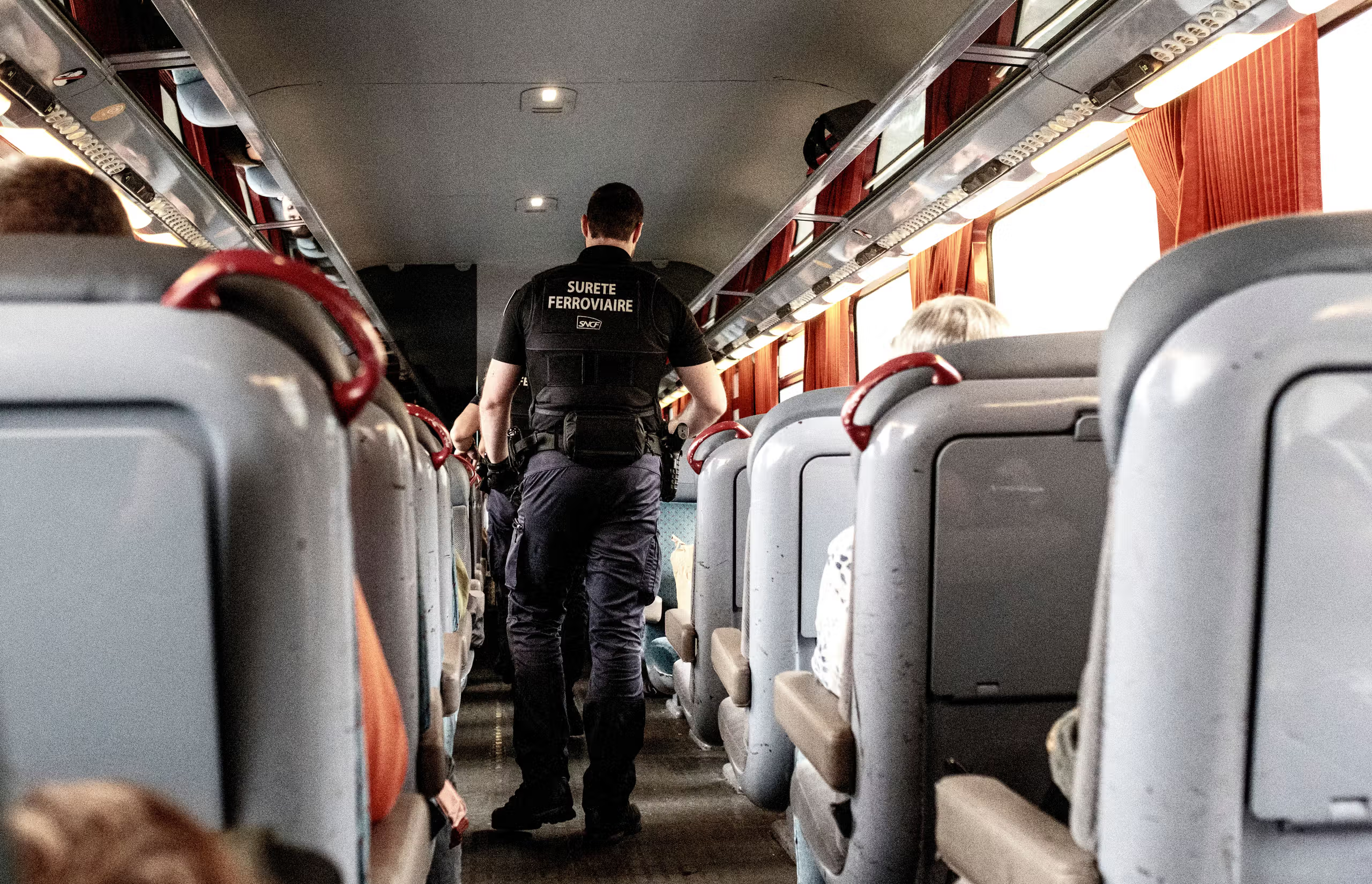
Ten years have passed since French authorities dispatched bulldozers to level the squalid informal settlement in Calais known as the "Jungle." At the time, officialdom promised that dismantling the chaotic canvas city would signal a turning point in managing irregular migration across the English Channel. Yet a decade later, the underlying machinery of European border control remains bogged down in administrative paralysis, leaving the very same human tragedies to replay themselves in perpetuity.
A recent retrospective by France 24, featuring reporter Claire Paccalin alongside Annette Young and Cambridge University academic Dr Marissa Quie, turned the lens back on the region to assess what, if anything, has truly changed. Their discussion focused heavily on the evolving routes utilized by human traffickers and the specific vulnerabilities endured by female migrants attempting the journey. Unsurprisingly, the consensus highlights how migration has metastasized from a localized humanitarian challenge into the central fault line of political debate across the continent.
What television retrospectives and academic commentary rarely articulate, however, is the fundamental policy inertia that permits these conditions to persist. The clearing of the Calais encampment offered a brief illusion of control, but police action alone cannot compensate for a French state crippled by ideological rigidity and an unwillingness to enforce robust border procedures. Rather than fixing the incentives that fuel illicit crossings, authorities routinely substitute public relations displays for structural reform.
Meanwhile, the European Union's broader governance apparatus continues to demonstrate its characteristic inability to deliver meaningful management. As bureaucratic committees in Brussels endlessly debate asylum mechanisms, human smugglers adapt their business models with ease. The debate moves in circles while vulnerable populations bear the risks of a broken system. When a state cannot secure its perimeter or manage its asylum caseload efficiently, the fallout inevitably manifests in lawless border zones and public disenchantment. Looking back at Calais ten years on offers less a celebration of a resolved crisis and more a sober indictment of administrative drift.
Written by Christiane Hofreiter christiane.hofreiter@alpineweekly.com