Oct 12, 12:01 PM
A British Remedy for Spanish Stagnation?
Miriam González launches Democracia21, promising tax cuts and radical administrative reform to break Spain's political duopoly.
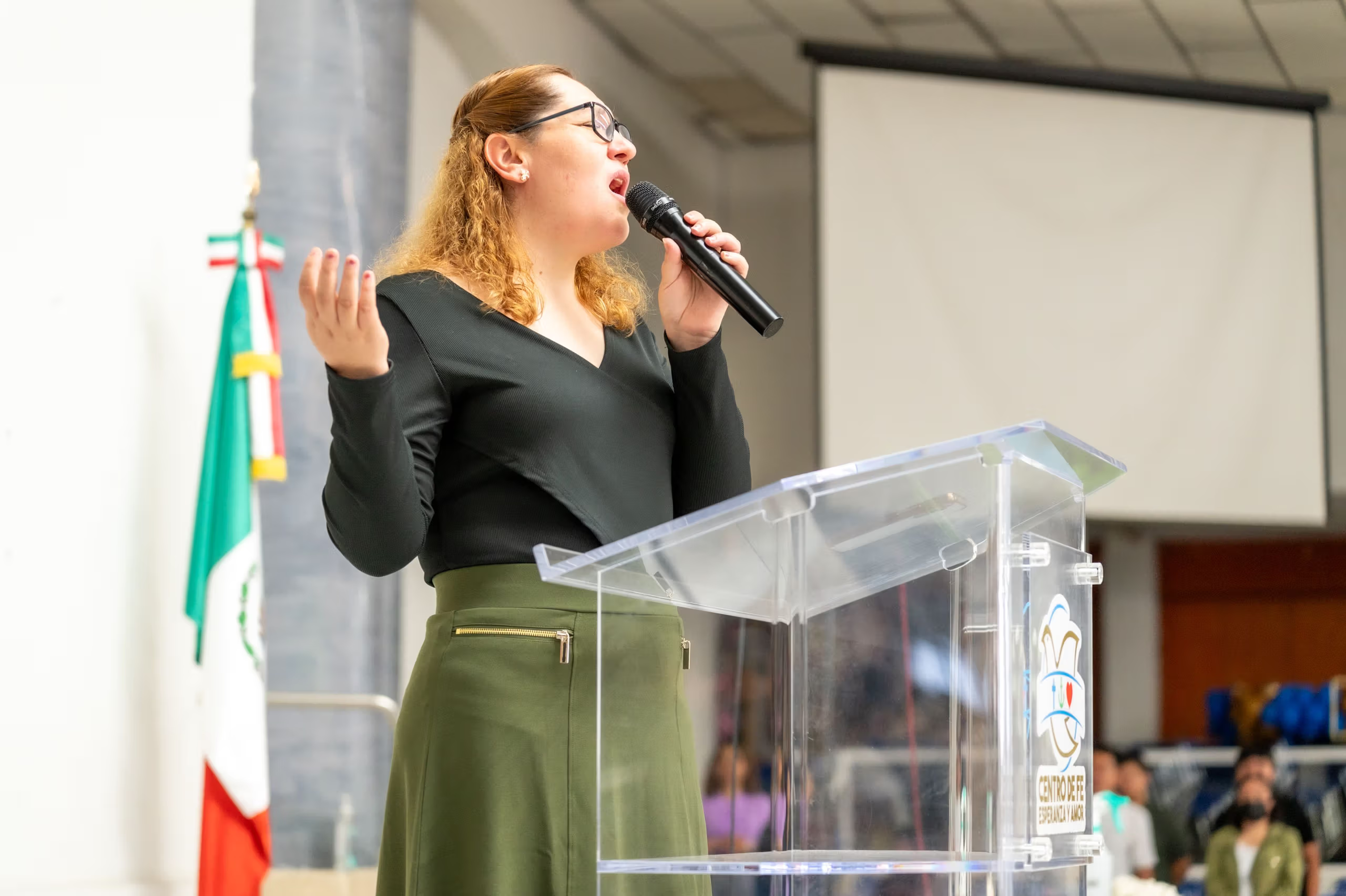
Spain’s political theater has welcomed yet another candidate promising to sweep away institutional decay with moderate technocracy. Miriam González Durántez, an international trade lawyer with deep ties to British liberalism, announced the launch of Democracia21 to contest the general election on 29 November. Yet, in a display of tactical modesty or sheer under-resourcing, the party is limiting its maiden voyage exclusively to the constituencies of Madrid and Barcelona.
The premise is familiar to anyone watching Spain struggle under years of wrong-minded socialist governance and suffocating public administration. González proposes a drastic purge of the state’s political weight: a 90 percent cut in the army of political advisers, a genuine professionalisation of the civil service based on merit, and the abolition of special legal privileges for politicians. To force parliamentarians into actual accountability, she wants to import the British model of regular voter meetings every two weeks. Whether Spanish deputies will tolerate such unaccustomed exposure to their constituents remains open to doubt.
Economic reforms form the other pillar of her manifesto, targeting Spain's crippling housing crisis. Democracia21 advocates scrapping all housing-related taxes for citizens under 35 and establishing ten-year cross-party urban planning agreements. In typical fashion for Spanish political fixes, however, part of the strategy relies on tapping Brussels. González is urging Prime Minister Pedro Sánchez and opposition leader Alberto Núñez Feijóo to unlock 10 billion euros in unspent Next Generation European funds to seed a sovereign fund for affordable housing.
On immigration, the platform attempts a delicate balance: treating legal migration as an economic asset while strictly enforcing state control over borders. González maintains that xenophobic rhetoric must be banished even as the state firmly decides who enters and under what conditions.
The shadow of previous failed centrist experiments inevitably looms over the launch. While observers quickly linked her venture to the collapsed Ciudadanos, González rejects the comparison, describing her outlook as liberal in the British tradition. Her public profile owes much to her years in London alongside her husband, former UK Deputy Prime Minister Nick Clegg, who attended the launch in Madrid alongside veterans from former centrist outfits like Union Progress and Democracy.
For an electorate weary of choosing between two stagnant political monoliths, Democracia21 offers an intellectually coherent critique of state bloat and economic stagnation. Yet, launching a brand-new party from scratch mere weeks before an election—and confining it to two metropolitan hubs—looks less like a revolution and more like a high-minded academic exercise. Spain’s systemic problems are vast, but whether voters in Madrid and Barcelona will embrace market liberalism over well-entrenched patronage systems is a question the ballot box will soon answer.
Written by Freya Stensrud freya.stensrud@alpineweekly.com