Oct 12, 2:01 PM
Brussels Discovers Tourism
While European bureaucrats draft grand visions for sustainable travel, private cruise operators and local councils are already fixing overcrowding on their own.
The European Union’s bureaucracy never misses an opportunity to draft an overarching vision for activities that regulate themselves best through simple market incentives. The latest object of administrative affection in Brussels is sustainable tourism, a sector where the EU apparatus eagerly seeks to cement its relevance through central guidelines and grand strategic frameworks.
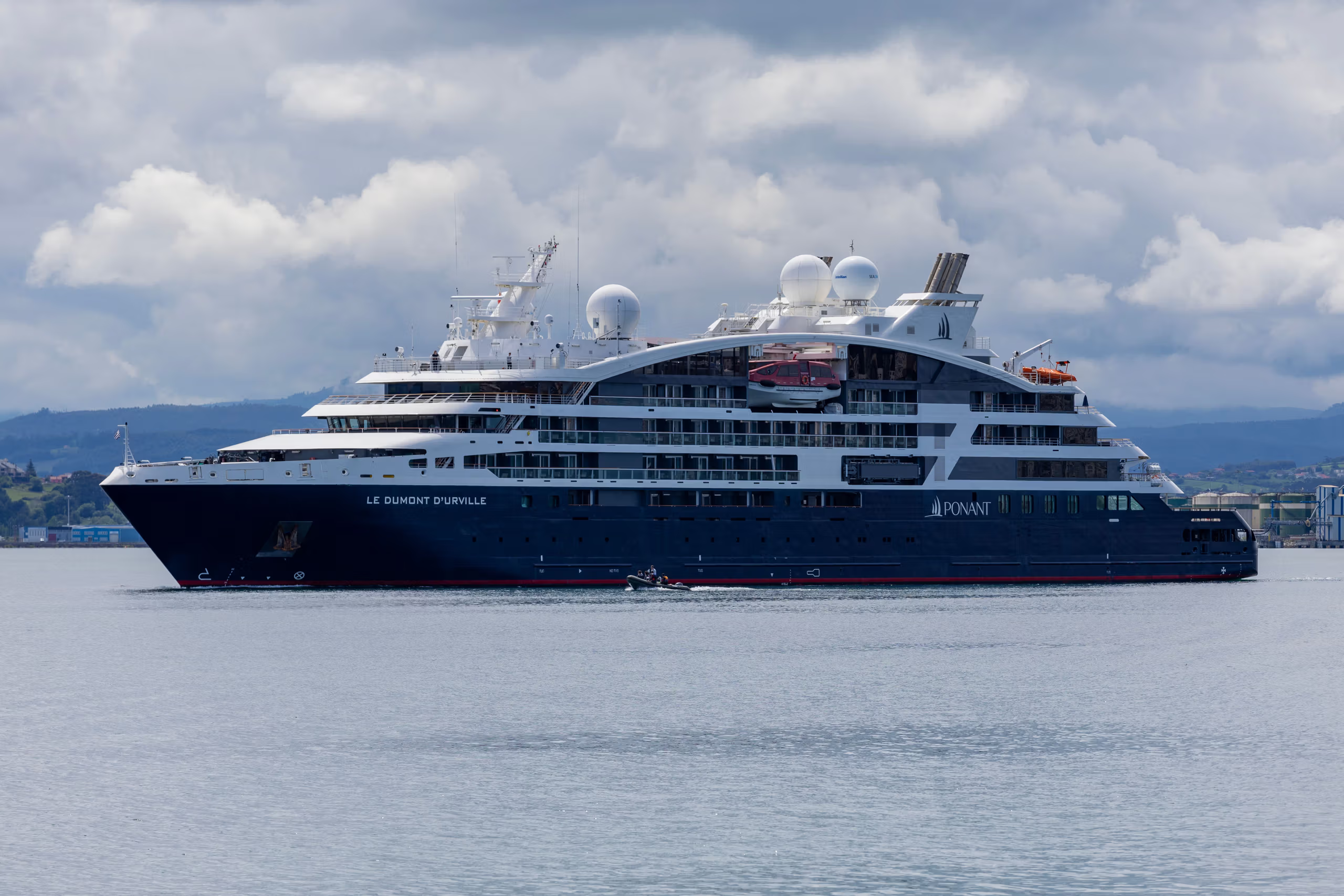
Yet the reality on the water reveals a far more pragmatic story driven by commercial self-interest and local self-preservation rather than European directives. Cruise operators, faced with overcrowded ports and shifting consumer tastes, are quietly reshaping their itineraries up to two years in advance. Passengers no longer want predictable postcard photo ops; they demand wine tastings, cycling, and walking tours in places that do not feel like crowded theme parks.
To satisfy this demand for authentic regional culture, operators are diverting vessels away from overworked hotspots toward lesser-known destinations. In Greece, ships now drop anchor in Syros alongside traditional strongholds, while winter itineraries carry visitors inland to Canary Island villages such as Garachico, Betancuria, Teguise, and Tejeda. Local artisans and tavernas gain off-peak revenue, and main ports get a reprieve, all without a single enforcement officer from Brussels directing traffic.
Where management systems actually function, they are devised by the municipalities directly exposed to the pressure. Dubrovnik’s Respect the City initiative relies on street signage and digital data tools to steer crowds away from choked old-town alleyways, while Mykonos uses a digital berthing system to schedule vessel arrivals. These tailored solutions show that local authorities, transport providers, and private businesses do not need a sprawling supranational bureaucracy to coordinate maritime flows, transport links, and terminal information.
Off-peak cruising across autumn, winter, and spring is already gaining momentum because spreading capacity makes financial sense for shipping lines and local economies alike. When the EU insists on framing this natural market adaptation within its bloated policy visions, it mistakes private initiative and local governance for bureaucratic foresight. The apparatus in Brussels will no doubt continue issuing strategic documents, but the actual work of balancing visitor flows remains securely in the hands of market forces and local councils.
Written by Freya Stensrud freya.stensrud@alpineweekly.com