US and Iran Resume Geneva Talks Amid Military Build-Up and Strike Threats
Third round of indirect negotiations seen as pivotal as Washington signals pressure and Tehran seeks sanctions relief
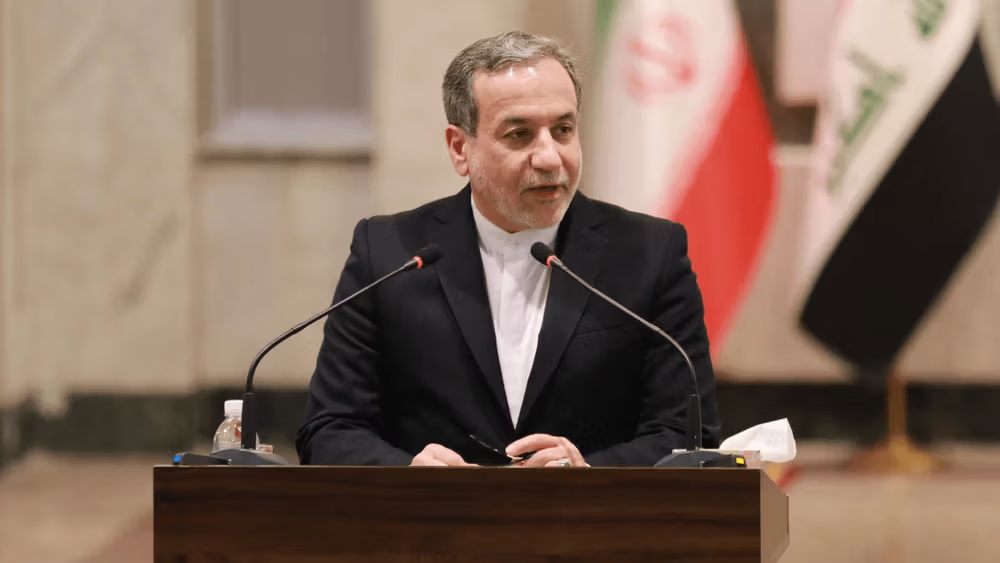
US and Iranian officials have kicked off a third round of indirect talks in Geneva, a juncture many diplomats quietly see as pivotal to averting another spiral of military tensions between the two nations. The setting. Fraught, to put it mildly. President Donald Trump has openly threatened that the US might launch strikes against Iran if there’s no breakthrough on its nuclear ambitions. Tehran hasn’t minced words either, promising a fierce response should it come under attack.
These negotiations aren’t happening in a vacuum; they follow what amounts to the most significant US military surge into the Middle East since 2003’s invasion of Iraq. Lately, Washington has shipped over more troops, dispatched not one, but two aircraft carriers along with a flotilla of support vessels,moves American officials call “precautionary.” Iran begs to differ, labeling these deployments downright provocative. The current dialogue is still playing out indirectly, Oman is mediating again, just as it did earlier this month. Foreign Minister Abbas Araghchi heads up Iran’s team; for the Americans, special envoy Steve Witkoff and senior adviser Jared Kushner are at the table (so to speak). At stake here..
Iran’s nuclear program sits squarely at the heart of it all. For years now,decades even, the US and Israel have pointed fingers at Iran, accusing it of working toward building a nuclear bomb. Tehran pushes back every time: their line is that everything they’re doing with nuclear tech is strictly about energy and scientific research. Still,and this part matters, international inspectors have documented that Iran has enriched uranium alarmingly close to weapons-grade purity levels. No other non-nuclear-armed nation has gone that far.
Trump says he’d rather sort things out diplomatically, but makes no secret that military options are still very much on his radar. In an address before Congress not long ago, he accused Iran of trying to reboot parts of its nuclear program after last year’s US strikes took out three Iranian facilities during clashes involving Israel. According to Trump, those sites were “obliterated”,a claim Iran disputes regarding how much damage was actually done. Iran hasn’t granted full access for International Atomic Energy Agency inspections at those locations yet, they cite security issues and ongoing repairs as reasons for holding back. As for what exactly Washington wants from these talks.
Nobody outside official circles knows all the details just yet; previously though, American demands included stopping any uranium enrichment inside Iranian territory altogether,a red line Tehran refuses but hints there might be room for oversight or certain restrictions instead. Just hours ahead of Trump’s speech in Congress, Araghchi posted online insisting point-blank: under no scenario would Iran ever pursue a nuclear weapon, and he described this moment as ripe for hammering out an agreement both sides could live with. The White House hasn’t commented publicly on his remarks so far. Of course, uranium isn’t where disagreements end,not by a long shot. Washington also wants curbs on Iran's ballistic missile projects plus limits on backing groups like Hamas, Hezbollah, Iraqi militias and Yemen's Houthis, all regional actors with ties back to Tehran's leadership circle.
But Iranian authorities say flat-out: those topics are simply off-limits in these negotiations. Meanwhile,you guessed it, the rumor mill keeps churning stateside: unnamed administration insiders tell reporters limited airstrikes targeting either Revolutionary Guards units or key nuke sites have been floated if diplomacy falters; others whisper about wider-scale options being talked through behind closed doors,but nothing confirmed officially so far. Top brass in America reportedly warned such action could escalate fast into drawn-out conflict territory; Trump counters that top generals believe any operation would remain within manageable bounds (though nobody outside inner circles really knows what assessments look like right now). Plenty riding on all this, for everyone watching from afar too. Israeli Prime Minister Benjamin Netanyahu insists any deal must tackle both missiles and proxy networks linked back to Tehran directly; Gulf allies lining up alongside Washington worry openly about fresh fighting destabilizing an already volatile region further still.
On another front entirely. The sanctions squeeze remains brutal for ordinary Iranians,the country desperately wants relief from measures suffocating its economy day after day. Detractors argue easing sanctions only props up hardliners’ grip on power while Iranian officials fire back that economic recovery is basic groundwork if stability is ever going to return. Back home in DC meanwhile. Secretary of State Marco Rubio recently gave classified briefings behind closed doors while Senate Minority Leader Chuck Schumer came out saying crystal clarity around strategy needs sharing with regular folks, not just politicians huddled away somewhere safe.
With warships parked offshore and rhetoric heating up fast enough you can almost feel it crackle through news wires… well,it doesn’t take much imagination to see why diplomats admit Geneva carries enormous stakes right now.. Whether these sessions yield real de-escalation or leave both camps nursing deeper mistrust, that answer's hanging stubbornly just out of reach.
Written by Thomas Nussbaumer