Tighter ESTA Rules Could Cost the US Tourists, Jobs and Billions in Revenue
Industry research warns expanded social media disclosure for visa-free travellers may deter millions from visiting the United States
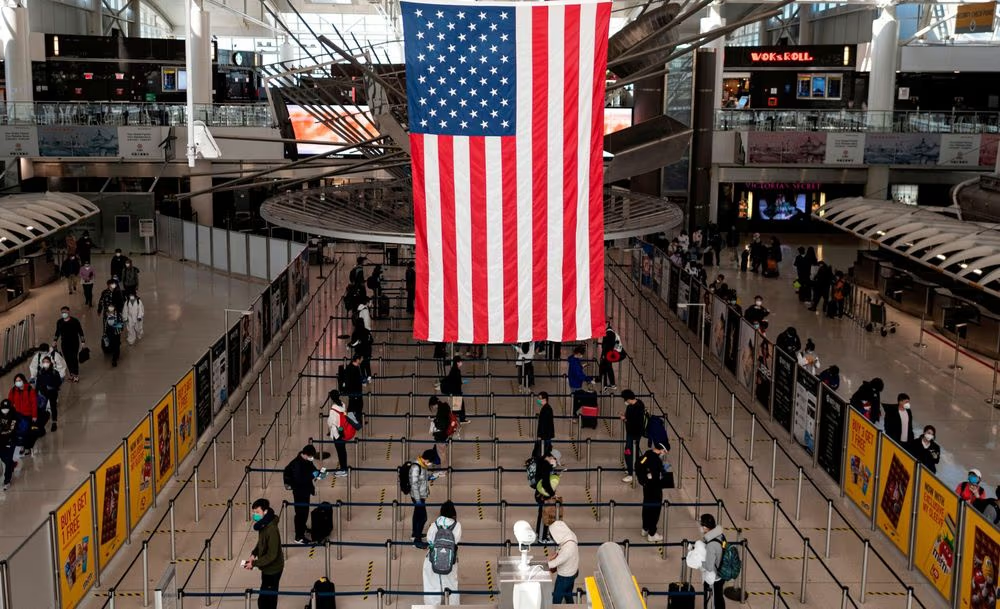
Proposed changes to the United States’ visa waiver programme could carry significant economic risks, with new research suggesting that tougher entry requirements may discourage millions of international visitors and put tens of thousands of jobs at risk.
According to a study commissioned by the World Travel and Tourism Council (WTTC), expanding the ESTA system to require broader disclosure of travellers’ social media activity could reduce international visitor spending by as much as $15.7 billion. The analysis, conducted alongside GSIQ and Oxford Economics, estimates that up to 157,000 jobs across the US economy could be affected if the policy goes ahead.
The findings are based on surveys across multiple countries whose citizens are currently eligible to enter the US without a traditional visa. Around two-thirds of respondents said they were already aware of the proposed changes, suggesting that the policy debate itself may already be shaping travel decisions.
A notable share of travellers indicated they would rethink future trips. Roughly one in three said the new requirements would make them less likely to visit the US within the next two to three years, while only a small minority said the changes would encourage travel. Beyond travel intentions, many respondents reported that the policy would make the US appear less open to both leisure and business visitors, without offering clear security benefits from their perspective.
Using economic modelling, the WTTC outlined a high-impact scenario in which the US could see 4.7 million fewer international arrivals from ESTA countries in 2026 alone. That would represent a decline of nearly a quarter compared with expected visitor numbers under current rules. The broader impact on travel and tourism output could reach $21.5 billion, further straining a sector that remains in recovery mode.
The report also places the proposal in a wider context. The US has already seen international visitor numbers fall sharply since 2019, with an estimated 11 million fewer arrivals recorded between then and 2025. Additional barriers, the study argues, risk weakening the country’s position at a time when global competition for tourists is intensifying.
Compared with destinations such as the UK, Canada, Japan and much of Western Europe, the proposed US entry rules are viewed as more restrictive, potentially pushing travellers toward alternative markets.
The WTTC has urged US policymakers to weigh security considerations against the economic consequences, warning that even modest shifts in traveller behaviour could have outsized effects on employment and growth in the tourism sector. As global travel rebounds unevenly, the organisation cautions that policy choices made now could shape the US’s competitiveness for years to come.