Jan 12, 2:58 PM
Trump Escalates Greenland Rhetoric, Framing Arctic Island as a Strategic Imperative
US president says Washington will secure control “one way or the other,” alarming allies and reviving fears of great-power rivalry in the Arctic
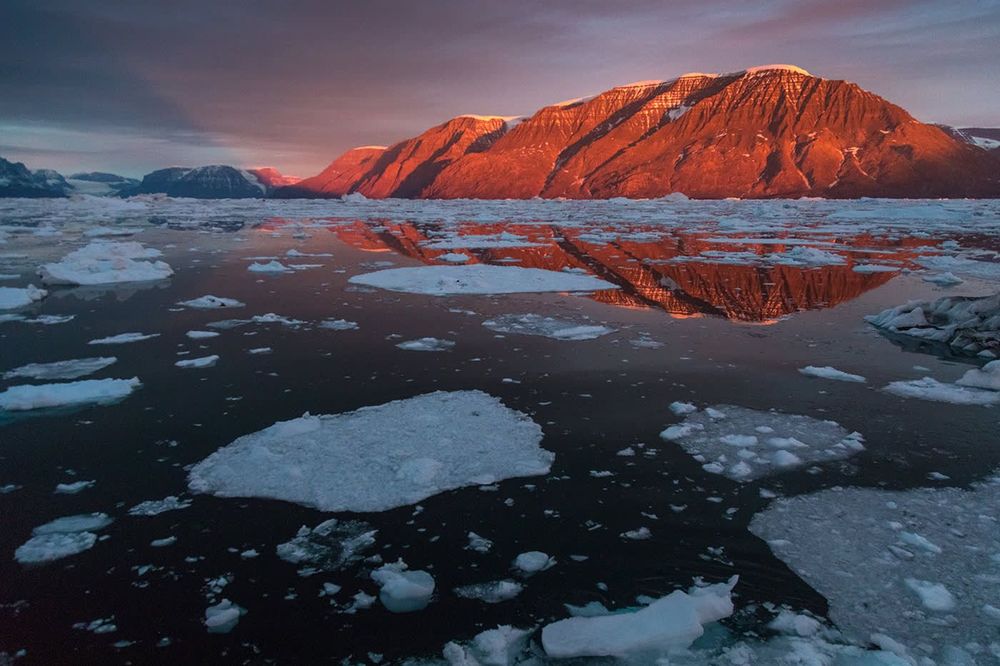
President Donald Trump has once again placed Greenland at the center of global geopolitics, declaring that the United States will take control of the vast Arctic territory “one way or the other.” Framing the issue as a matter of national survival, Trump warned that Russia and China would otherwise “take over” the mineral-rich island — despite neither country making any territorial claim.
Speaking to reporters aboard Air Force One, Trump said Greenland’s strategic position and resource potential made it too important to leave outside US control. According to him, growing Russian and Chinese military activity in the Arctic has turned the island into a frontline asset rather than a distant outpost.
“If we don’t take Greenland, Russia or China will,” Trump said. “And I’m not letting that happen.”
Security argument meets political reality
Trump insisted he remains open to a negotiated arrangement with Greenland’s self-governing authorities but made clear that consent was not, in his view, the decisive factor. “We’re going to have Greenland,” he said, suggesting that strategic necessity overrides political preferences on the island.
Greenland occupies a critical position between North America and the Arctic Ocean and hosts a long-standing US military presence dating back to World War II. The American base there plays a key role in missile warning, space surveillance, and Arctic monitoring. Trump argues that this role must expand as competition in the High North intensifies.
Yet the president’s rhetoric clashes sharply with political sentiment on the island. Most of Greenland’s population and its major political parties have repeatedly stated that they do not want to become part of the United States and insist that Greenlanders alone must decide their future.
Denmark and Europe push back
Denmark, which governed Greenland as a colony until 1953 and still oversees its foreign and defense policy, reacted with alarm. Danish leaders warned that any attempt by Washington to seize Greenland by force would shatter decades of transatlantic trust and undermine NATO cohesion.
The Danish prime minister cautioned last week that such a move would destroy more than 80 years of security cooperation between Europe and the United States. Trump dismissed the concern. “If it affects NATO, it affects NATO,” he said, adding bluntly that Greenland “needs us much more than we need them.”
European officials privately fear that Trump’s language erodes core principles of sovereignty and self-determination — values Western governments often emphasize elsewhere.
Resources, rivalry, and rhetoric
Trump has repeatedly highlighted Greenland’s untapped mineral wealth, including rare earth elements critical for modern technology and defense systems. These resources have gained strategic importance as Western governments seek to reduce dependence on Chinese supply chains.
The president also mocked Greenland’s limited defense capabilities, contrasting what he described as “two dog sleds” with Russian and Chinese destroyers and submarines operating in Arctic waters. His comments were echoed by his son, Eric Trump, who said there were “many hostile operators” around Greenland and urged critics to stop “being babies” about the issue.
A signal beyond Greenland
Analysts say Trump’s remarks are less about an imminent takeover and more about signaling a broader shift in US strategy. By framing Greenland as indispensable, Trump is emphasizing a worldview in which geography, resources, and power politics outweigh legal norms and alliance sensitivities.
Still, the consequences of such rhetoric are real. For Greenlanders, it raises fears of becoming a bargaining chip between great powers. For Europe, it revives doubts about the reliability of US commitments. And for the Arctic, it underscores how a region once seen as remote and cooperative is increasingly treated as a strategic prize.
Whether Trump’s words translate into concrete action remains unclear. What is clear is that Greenland — long on the periphery of global politics — has become a symbol of a harsher, more transactional era in international relations.