Feb 9, 10:06 AM
Nationalists Clinch Upset Win as Thailand’s Conservatives Rewrite the Electoral Script
Prime Minister Anutin Charnvirakul secures a strengthened mandate after early elections reshape parliament and sideline progressive rivals.
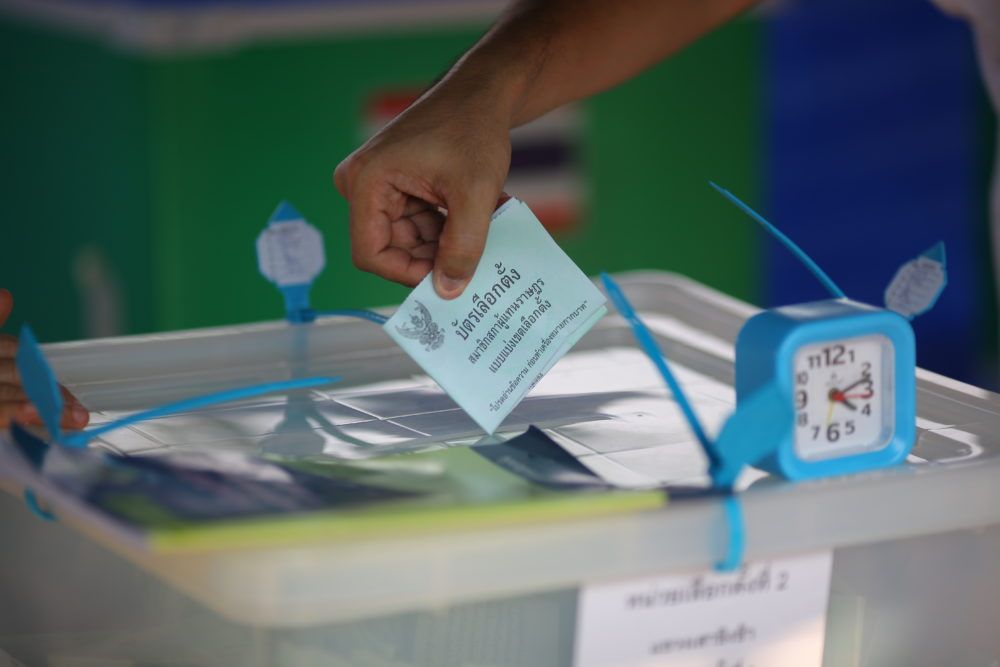
Thailand’s latest general election delivered a result few poll-watchers were ready for. The conservative Bhumjaithai Party, led by Prime Minister Anutin Charnvirakul, emerged as the clear winner, dramatically expanding its presence in parliament and extending Anutin’s grip on power after a risky call for early elections.
With more than 90% of ballots counted, unofficial projections based on figures from the electoral commission show Bhumjaithai on course to secure 194 of the 500 seats in the lower house — nearly triple its previous representation. The outcome follows months of heightened nationalist sentiment, amplified by two rounds of deadly border clashes with Cambodia last year, which became a defining backdrop to the campaign.
The result reshapes Thailand’s political balance once again. The progressive People’s Party, widely expected to perform strongly after leading opinion polls and topping the vote in 2023, fell back sharply. It is projected to win 116 seats, down from its previous total, marking a clear setback for reformist forces that have struggled for years against institutional resistance.
Once-dominant Pheu Thai Party, linked to former prime minister Thaksin Shinawatra, finished a distant third with 76 seats, underscoring how far the political landscape has shifted since its peak influence in the early 2000s.
Beyond the parliamentary arithmetic, voters also approved a referendum opening the door to discussions on replacing Thailand’s current constitution, which dates back to the 2014 military coup. The process is expected to involve lengthy negotiations and further public votes, meaning constitutional change — if it happens at all — will unfold slowly.
The context of the vote matters. Anutin, a wealthy businessman with deep establishment ties, took office only months ago after his predecessor was removed by the Constitutional Court. Calling early elections was widely seen as a gamble. The strategy appears to have paid off, helped by a political climate that favoured parties aligned with Thailand’s military-royalist establishment, which continues to wield decisive influence behind the scenes.
The border clashes with Cambodia also played a role. Analysts say they weakened the People’s Party, which has long criticised the military’s role in politics. Court rulings further constrained the party, forcing it to abandon proposals to reform Thailand’s strict lèse-majesté laws and sidelining several high-profile figures — developments that were court decisions, not electoral choices.
With the results now clear, Anutin has wide latitude to form a governing coalition, though People’s Party leaders have already indicated they intend to remain in opposition. A stronger mandate could bring short-term political stability, something Thailand’s investors have not taken for granted in decades.
Economically, the stakes are high. Thailand’s sluggish growth has been hit by rising debt levels and the impact of US tariffs, even as the country balances its status as a US treaty ally with increasingly close economic ties to China, its largest trading partner. Supporters of the new government argue that political continuity may help restore confidence. Critics counter that stability under conservative dominance often comes at the cost of reform.
For now, one thing is clear: Thailand’s conservatives did not just win — they reset the board. Whether this new alignment delivers calm or simply postpones the next confrontation will become evident well before the next election cycle.