Jan 9, 12:29 PM
Stefan Küng Starts Fresh With Tudor, Questioning Old Habits in Search of a Breakthrough
After seven seasons in France, Switzerland’s leading cyclist of the past decade sees a team change as a chance to reset expectations and methods.
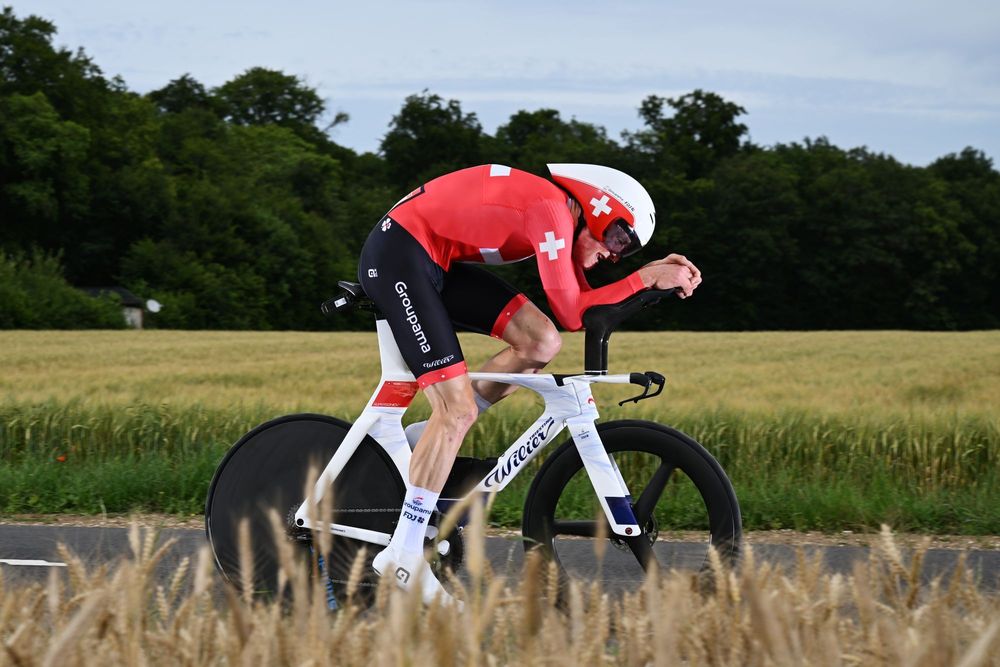
At 32, Stefan Küng is entering a new phase of his career with a mindset that contrasts sharply with his earlier years. A minor illness recently kept him off the bike during a training camp on Gran Canaria, but instead of concern, Küng spoke calmly about resting. He noted that a few years ago, missing training in January would have caused anxiety about falling behind his rivals.
The change in attitude coincides with a significant professional shift. After seven seasons with the French team Groupama–FDJ, Küng has joined the Swiss-based Tudor Pro Cycling Team. Some observers interpreted the move as a comfortable transition toward the later stages of his career. Küng rejects that view, saying the change is meant to challenge him rather than ease the path.
He said he felt the need for new impulses as early as last season and concluded that only a team change could provide them. The Swiss nationality of Tudor and his familiarity with team owners Fabian Cancellara and Raphael Meyer were not decisive factors, according to Küng. He recalled that Cancellara’s first questions were critical rather than flattering, asking why Küng wanted to make the move at all.
Although Tudor recently missed out on a WorldTour licence, the team holds a guaranteed race calendar for the next three seasons. This ensures starts in all WorldTour events, including the five Monuments and the Grand Tours — the Giro d’Italia, Tour de France and Vuelta a España. Küng described the team’s structure as among the best he has experienced, highlighting motivation and realistic goal-setting.
The team’s winter base in Teulada on Spain’s Costa Blanca offers mild conditions for preparation. Küng said Tudor’s approaches to nutrition and altitude training differ slightly from what he knew before, and he welcomes the structured way the staff work without promising unrealistic outcomes.
Küng is familiar with high expectations. He broke through internationally in 2019 by winning bronze in the road race at the World Championships in Yorkshire and later added silver and bronze medals in his specialist discipline, the time trial. He also regularly finished in the top ten of major spring classics, including the Tour of Flanders and Paris–Roubaix, standing on the podium in Roubaix in 2022.
Despite this consistency, the defining victory has remained elusive. Where it was once assumed to be only a matter of time, the narrative has shifted toward urgency. The challenge has grown as races tailored to Küng’s strengths are dominated by riders such as Mathieu van der Poel and Tadej Pogačar, while time trials are led by Remco Evenepoel.
Küng describes his position as a difficult balance: competitive with the world’s best, yet often facing champions operating at a slightly higher level. In the past, he said, this led him to overanalyse details, experiment excessively with equipment and seek repeated mental coaching. Today, he says he trusts that a chance remains, even if it is a small one.
His contract with Tudor runs for three years, a period during which he intends to continue pursuing a major victory. What comes after that remains open. Küng says his decision to continue racing will depend on whether he still feels competitive — a question he is now prepared to confront without fear.