Rolls-Royce Posts 40% Profit Surge as AI Datacentre Demand Accelerates Turnaround
Engineering group lifts long-term targets and unveils £9bn shareholder return plan amid aerospace recovery
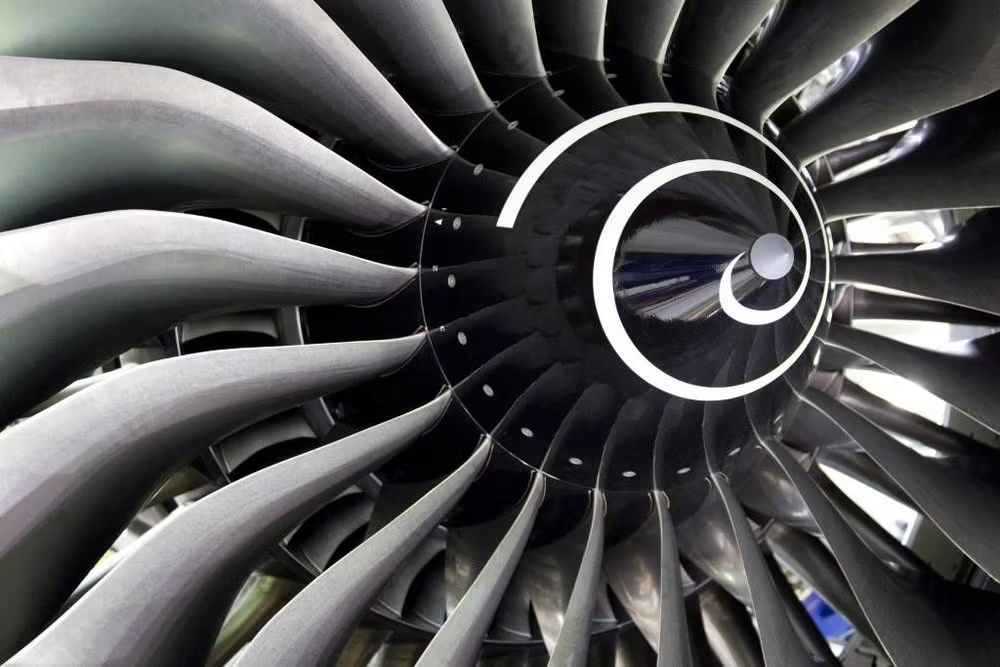
Rolls-Royce Holdings, the renowned British engineering heavyweight, has just posted a striking 40% jump in annual underlying profits, a clear signal that demand for datacentre power and a rebound in civil aviation are breathing new life into its turnaround story.
Underlying operating profit hit £3.5bn in 2025, up from £2.5bn the year before. That’s not pocket change. Alongside these results, management revealed an ambitious plan: they’re set to hand back as much as £9bn to shareholders over the next three years via share buybacks,the biggest capital return initiative Rolls-Royce has mounted in ten years. So what’s fueling this upswing.
It all ties back to sweeping restructuring moves led by CEO Tufan Erginbilgiç, who stepped into the hot seat in January 2023. Back then, he famously called Rolls-Royce a “burning platform,” pointing to chronic underperformance and deep-seated inefficiencies (his words made waves). Since his arrival. The company has slashed costs left and right, hammered out better deals on contracts, and pushed for more favorable terms with airline customers, no stone left unturned. Arguably one of the biggest catalysts has been surging appetite from tech giants racing to build infrastructure for artificial intelligence systems,think massive server farms requiring robust energy solutions.
The Power Systems division, which cranks out generators and related kit for datacentres,delivered standout numbers: profits soared by 60%, landing at £852m. Still, let’s not lose sight of where most of Rolls-Royce’s money comes from: civil aerospace remains kingpin here. Profits from that segment climbed 41% to reach £2.1bn, thanks largely to more engines clocking extra flying hours alongside fatter margins on servicing work.. Here’s something folks sometimes overlook: engine sales aren’t the whole pie; long-term maintenance agreements tied directly to how much those engines get used actually generate steady revenue streams (a business model many rivals envy). Of course, it hasn’t all been smooth sailing, not with trade headwinds blowing through 2025 after tariff measures put forward by US President Donald Trump rattled global supply chains.
Fortunately for Rolls-Royce, engines destined for Boeing's 787 managed to dodge tariffs following a US–UK trade deal struck in May,that move helped sidestep major headaches around exports. Gazing ahead. Management is feeling bullish enough to lift their medium-term outlook, they now anticipate operating profit will land somewhere between £4.9bn and £5.2bn by 2028; that’s about a third higher than earlier estimates suggested (not too shabby). For this year alone. They’ve earmarked £2.5bn for shareholder returns as part of their expansive buyback scheme,and they already completed their first share repurchase since 2014 last year (£1bn went straight back into investors’ pockets).
There’s another layer worth mentioning here: beyond jets and generators, Rolls-Royce is making real moves into nuclear energy too. Last June saw them chosen as lead builder for Britain’s very first small modular nuclear reactors at Wylfa up in north Wales, a project backed by hefty government funding totaling £2.5bn no less. While commercial returns are penciled in within five years according to company guidance (regulatory hurdles still linger), it marks a serious pivot toward next-gen energy solutions. Investors clearly liked what they heard,the stock popped almost 7% right after these results dropped, giving London’s FTSE 100 index an extra push toward record territory. All things considered.
This is quite the turnaround tale compared with pandemic-era lows when international air travel essentially fell off a cliff and financial pressures piled up fast on Rolls-Royce's balance sheet.