Mar 12, 2:08 PM
King Charles Distances Himself From Prince Andrew as Royal Family Faces Fresh Scrutiny
The British monarch has taken unprecedented steps against his brother amid an investigation, but the scandal comes at a delicate moment for public support of the monarchy.
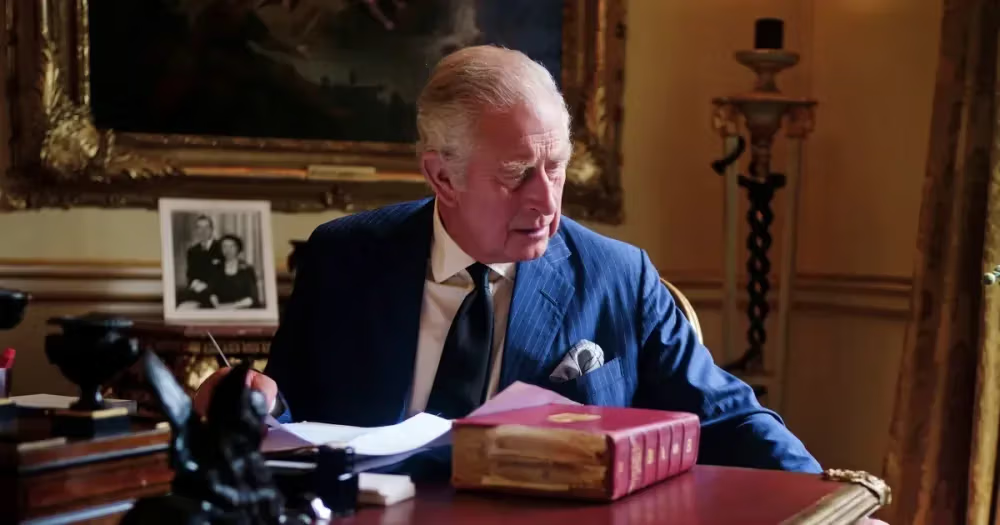
King Charles III has taken a series of increasingly decisive steps to put distance between the British monarchy and his brother, Prince Andrew, as a criminal investigation into the disgraced royal moves forward. The goal here is clearly to safeguard the crown—the institution’s core—but it’s anyone’s guess whether these moves will be enough to protect the king’s own standing in the public eye.
Now widely known by his family name, Andrew Mountbatten-Windsor, Prince Andrew has been under the shadow of controversy for years, mainly due to his ties with convicted sex offender Jeffrey Epstein. He denies any wrongdoing, yet the allegations have done serious damage to his reputation, forcing the royal family to grapple with one of the most persistent scandals in its recent history.
Back when Queen Elizabeth II was on the throne, Andrew was gradually pushed out of the spotlight. The late queen stripped him of military appointments and royal patronages, urging him to withdraw from official duties. Notably, she also footed much of the bill for a financial settlement involving a woman who accused him of sexual abuse—a claim he has always denied.
When Charles ascended the throne in 2022, he took things a step further than his mother had.
By 2024, the king had cut off Andrew’s £1 million annual allowance and stopped paying for his private security. On top of that, Charles began nudging his brother to leave the Royal Lodge, the sizable residence near Windsor Castle where Andrew had lived for over twenty years.
The pressure ramped up even more last year when fresh Epstein-related documents became public. Buckingham Palace announced that Andrew would lose the remaining titles he still used and that he’d no longer be officially called a prince.
Then came a dramatic turn: Andrew’s arrest last month on suspicion of misconduct in public office. This was a landmark moment—the first time in roughly 400 years a senior royal family member faced detention by the authorities.
Following this, King Charles vowed total cooperation with the investigation and voiced strong support for law enforcement’s drive to uncover the truth. Meanwhile, Andrew continues to deny any involvement in Epstein-related wrongdoing.
Buckingham Palace has stayed silent publicly on both the ongoing investigation and the king’s handling of the situation.
This scandal couldn’t have come at a more delicate time for the monarchy. While Britain retains general support for the royal institution, public attitudes have definitely been shifting since Charles took over.
Queen Elizabeth II enjoyed extraordinary personal popularity throughout her 70-year reign. Back in 2012, during her Diamond Jubilee, approval ratings hit around 90 percent and stayed robust until her passing in 2022.
Charles initially inherited much of that goodwill. Early in his reign, polls showed his approval near 70 percent, later settling closer to 60 percent. Yet recent surveys hint at a softening of public confidence.
According to Ipsos, the king’s favorability dropped from 53 percent in late 2025 to roughly 48 percent by early 2026. This slide correlated with renewed scrutiny of Andrew’s Epstein connections.
The controversy has given fuel to Britain’s republican movement. Protesters at some of Charles’s public events have carried signs reading “Not My King.” Advocacy groups opposed to the monarchy have seized on the scandal to push for more accountability within the royal household.
One of the country’s leading anti-monarchy groups, Republic, said it helped trigger police action by filing a complaint and commissioned a poll suggesting waning public support for the monarchy—though other surveys still show stronger backing.
Public opinion on the king’s response is mixed. Some say Charles was slow to distance the monarchy from Andrew, while others see his recent actions as a firm stand to protect the crown’s credibility.
The stakes couldn’t be higher for the royals. Analysts warn that if it emerges the palace knew about Andrew’s conduct earlier and failed to act, King Charles’s own reputation could take a serious hit.
For now, Charles seems determined to spotlight the monarchy’s charitable work. One flagship project, the King’s Trust (once the Prince’s Trust), is celebrating its 50th anniversary this year. Since its start, the charity has supported over 1.3 million young people in building skills and securing jobs.
Festivities will culminate in a gala at London’s Royal Albert Hall in May, bringing together supporters and celebrities connected with the charity.
Another key moment on the horizon is the centenary of Queen Elizabeth II’s birth, commemorated in April. Her legacy still profoundly shapes how the public views the institution she led for seven decades.
As the inquiry into Andrew unfolds, King Charles looks committed to protecting that legacy and shoring up the crown’s stability.
But here’s the thing—the success of this plan may hinge less on palace maneuvers than on whatever facts emerge from the legal process still underway.
Written by Thorben Thiede