Japan Sets 2031 Deadline for Missile Deployment on Island Near Taiwan
Tokyo moves to bolster defences on Yonaguni as tensions with China intensify
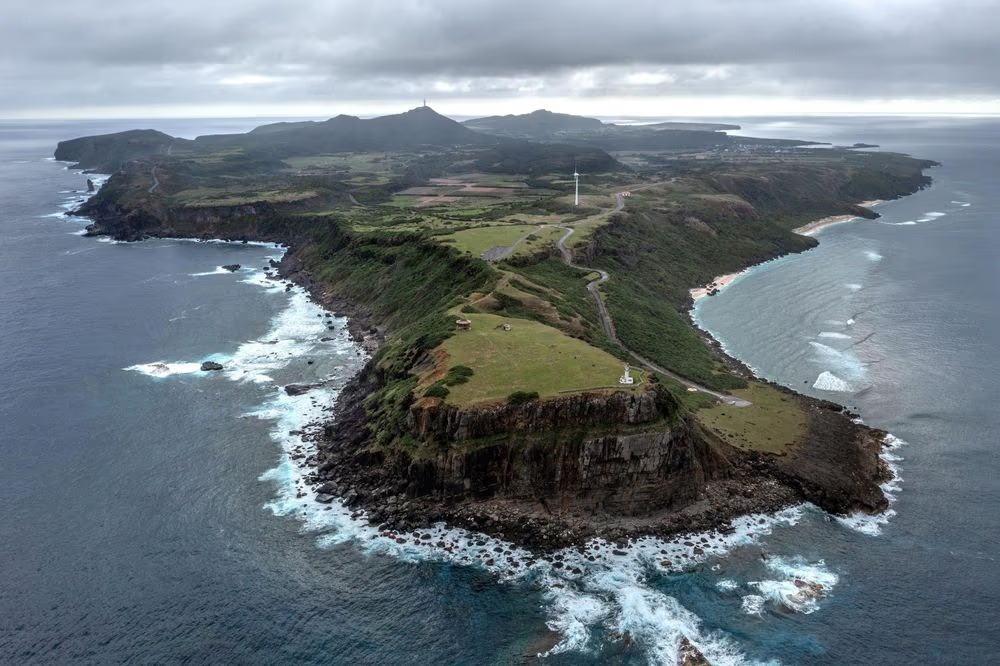
Japan has set March 2031 as the target date to deploy surface-to-air missiles on its westernmost island of Yonaguni, a small but strategically sensitive outpost just 110 kilometres from Taiwan.
Defence Minister Shinjiro Koizumi confirmed the timeline this week, marking the first time Tokyo has provided a concrete schedule since the plan was first announced in 2022. The move comes amid heightened tensions between Japan and China over Taiwan and broader regional security.
Yonaguni, part of Okinawa Prefecture, lies so close to Taiwan that its mountains are visible from the island’s shores on a clear day. China considers Taiwan part of its territory and has not ruled out the use of force to bring the self-governed island under its control. Any conflict over Taiwan could draw in the United States — and potentially regional allies such as Japan.
Relations between Tokyo and Beijing have deteriorated sharply in recent months. In November, Prime Minister Sanae Takaichi suggested that Japan could activate its Self-Defense Forces if Taiwan were attacked, remarks that triggered a strong reaction from China. Since then, Beijing has stepped up pressure through military drills, economic measures and diplomatic protests.
Koizumi’s announcement came a day after China imposed export restrictions on 20 Japanese companies and entities, citing national security concerns. While Beijing has not yet formally responded to the missile deployment timeline, it previously accused Japan of fuelling regional tensions when Koizumi visited Yonaguni late last year.
The planned missile unit will be equipped with medium-range surface-to-air systems capable of intercepting aircraft and incoming missiles. According to the defence ministry, the domestically produced system has a range of around 50 kilometres, 360-degree coverage and the ability to track up to 100 targets simultaneously while engaging multiple threats at once.
Yonaguni has gradually transformed from a quiet island community into a frontline military outpost over the past decade. Around 160 members of Japan’s Self-Defense Forces are already stationed there for coastal surveillance operations. An electronic warfare unit designed to disrupt enemy communications and radar is scheduled to be installed during the 2026 fiscal year.
Koizumi noted that the missile deployment timeline could shift depending on construction and infrastructure progress, but fiscal year 2030 remains the current target.
The announcement follows Takaichi’s recent landslide parliamentary victory, which has strengthened her mandate to expand Japan’s defence capabilities. Observers say the decision signals a more assertive posture from Tokyo and underlines how central the Taiwan Strait has become to Japan’s security calculations.
As geopolitical rivalry between China and the United States deepens, Yonaguni is emerging as a visible symbol of where Japan believes its defensive perimeter begins — and how far it is prepared to go to protect it.