Italian Prosecutors Investigate €17 Million Loss of Military Aircraft Components
Thousands of avionics parts for Tornado, AMX and C-130 aircraft missing from Brindisi Air Force depot
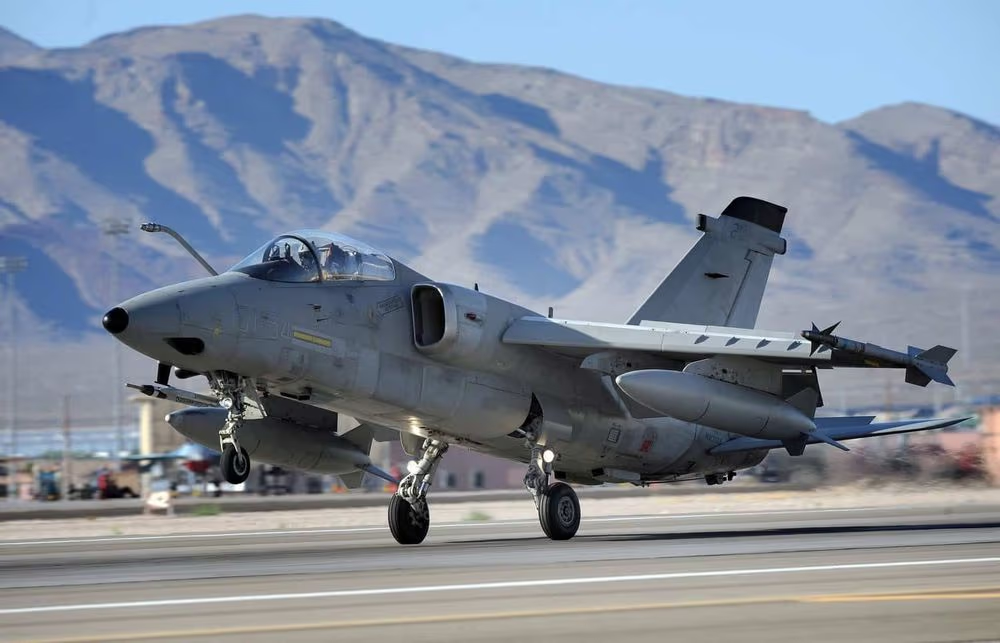
Italian prosecutors have launched an investigation into the disappearance of nearly 2,500 aircraft components valued at approximately €17 million from an Air Force depot in the southern city of Brindisi, in a case that is raising serious questions about oversight and internal controls.
The missing items reportedly include electronic modules and avionics systems used in Panavia Tornado and AMX fighter-bombers, as well as the Lockheed C-130 Hercules transport aircraft. These are not minor spare parts but critical systems required for the safe operation of military planes.
The Rome Public Prosecutor’s Office and the Military Public Prosecutor have placed around a dozen individuals under investigation on suspicion of embezzlement. Those named reportedly include senior Air Force logistics officials, generals and executives from an external company responsible for maintaining materials at the Brindisi facility.
According to investigators, such components are normally subject to rigorous tracking procedures. Military registers, inventory codes and NATO protocols are designed to ensure full traceability. The central question now is how parts that should have been tightly monitored were removed from official records before physically disappearing from the warehouse.
A focal point of the inquiry concerns “out-of-use” certifications issued for certain components after they had already gone missing. If parts that were still operational were retroactively classified as worn out, prosecutors believe it could indicate an organised effort to remove them from traceable systems before resale.
One line of inquiry — not yet confirmed — is examining whether some of the parts were diverted to South America, particularly Brazil. The AMX aircraft was developed through cooperation between Italy and Brazil and remains in service with the Brazilian Air Force, potentially creating a market for original spare parts. As production lines for older aircraft models have been discontinued, certified components can be difficult to source, increasing their value in secondary markets.
Legitimate resale and exchange markets for military aircraft components do exist between allied countries, but they operate under strict regulatory frameworks to prevent sensitive systems from entering unauthorized channels. The practice of “cannibalisation,” in which parts from one aircraft are used to keep another operational, is also permitted under defined procedures. However, it requires formal documentation, technical oversight and clear accountability.
Judicial authorities have commissioned a technical assessment to determine the actual condition of the missing components and whether they were genuinely destined for disposal or remained fully functional at the time they vanished.
The Italian Air Force has confirmed that it has established its own internal technical commission to review the matter. Beyond that, officials have declined to provide additional details while the investigation is ongoing.
For now, the case has exposed what appears to be a significant breakdown in inventory control within a sensitive military supply chain. Whether it proves to be administrative negligence or a coordinated scheme will depend on the findings of the parallel civilian and military probes.