On-Air Kiss by Italian Coach Raises Questions About Consent
A live TV moment involving Juventus coach Luciano Spalletti and a journalist has reignited debate in Italy over consent, power and what still passes as humor in football culture.
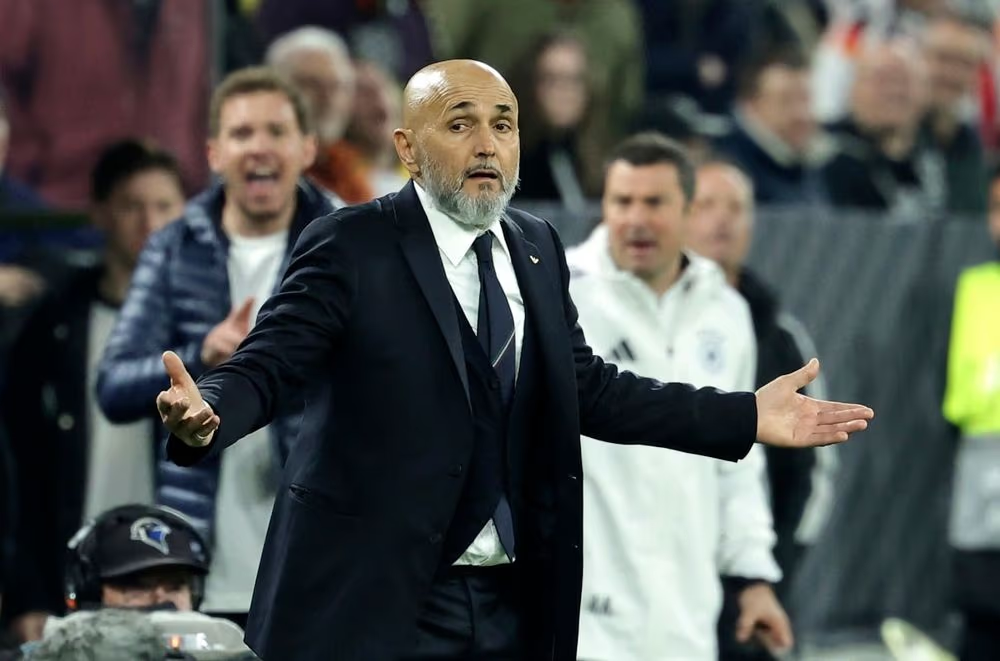
What began as a tense post-match interview in Italian football ended with an unscripted gesture that has since travelled far beyond the pitch. During a live television segment following Juventus’ 2–2 draw with Lazio, head coach Luciano Spalletti unexpectedly leaned in and kissed journalist Federica Zille on the shoulder, turning a discussion about refereeing decisions into a national conversation about boundaries.
The exchange took place during a broadcast on DAZN, where Zille was interviewing Spalletti after a match that left him visibly irritated. While explaining what he considered a foul worthy of a penalty, the coach shifted the conversation toward the idea of “contact” in football. He then asked the journalist if he could kiss her. Before any response could be given, the gesture had already happened. Zille laughed awkwardly, the studio reacted with amusement, and the interview moved on.
The clip quickly circulated online, prompting sharply divided reactions. Some Italian commentators framed the moment as clumsy but harmless, a misunderstanding amplified by social media. Others questioned whether it was appropriate for a senior male coach, speaking from a position of authority on live television, to initiate physical contact with a journalist without clear consent.
Comparisons inevitably followed with earlier high-profile incidents in European sport, where unsolicited kisses have led to serious professional consequences. In this case, however, the immediate institutional response was notably muted. No disciplinary measures were announced, and criticism in parts of the Italian press was brushed aside as overreaction, with some outlets dismissing the debate as an example of excessive “political correctness.”
The episode exposed familiar fault lines in Italy’s public discussion of gender and power in sport. Football remains a deeply male-dominated space, particularly at elite levels, and gestures that might be unthinkable in other professional settings are still sometimes defended as jokes or expressions of temperament. The fact that a similar act by a female coach toward a male journalist is almost impossible to imagine speaks volumes about the imbalance.
Several days later, Zille herself addressed the incident, downplaying its seriousness and saying she did not view the kiss as disrespectful or abusive. Her reaction has been cited by defenders of Spalletti as proof that no harm was done. Yet observers note that personal comfort does not automatically resolve the broader question of norms, especially when actions occur in public and are broadcast to millions.
Spalletti, for his part, continued to frame the gesture as part of his demonstration about “contact,” seemingly unaware that this explanation only underlined the criticism. In an era when sports organisations insist they are modernising, the incident suggested that cultural change often lags behind official rhetoric.
No formal case has been opened, and Italian football will move on to the next matchday. But the brief, uncomfortable moment has left a lingering impression. It illustrated how easily boundaries can be crossed, how quickly such acts are normalised, and how selective outrage can be depending on where—and by whom—a gesture is made.