May 19, 1:02 PM
Reports of Secret Israeli Bases in Iraq Add New Layer to Regional Tensions
American and Iraqi media reports claim Israel established covert desert outposts ahead of the conflict with Iran, while Baghdad publicly denies authorising any foreign military presence.
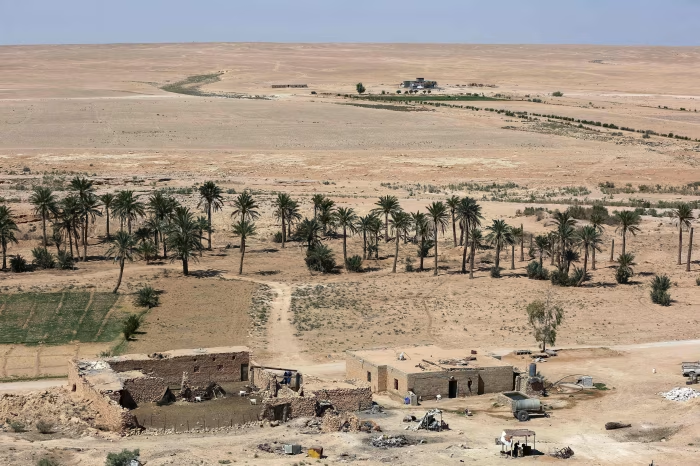
As tensions between Israel, Iran and the United States continue to reshape the Middle East, fresh reports about alleged covert Israeli military activity inside Iraq are placing Baghdad in an increasingly uncomfortable position.
According to reports published by The New York Times and earlier by The Wall Street Journal, Israel allegedly established two covert military sites in Iraq’s western desert ahead of the US-Israeli confrontation with Iran. The claims, based on unnamed Iraqi, regional and US officials, suggest the facilities were intended to support Israeli military operations connected to the wider regional conflict.
The reported existence of Israeli-operated positions inside Iraq — a country that publicly insists it has not authorised any such foreign presence — threatens to further complicate relations between Baghdad, Washington and Tehran. As if Iraq needed another geopolitical headache.
The New York Times reported that Iraqi officials and lawmakers identified two suspected Israeli outposts in remote desert areas in western Iraq. One of the sites was allegedly under preparation since late 2024, according to a regional official cited by the newspaper.
Earlier reporting from The Wall Street Journal claimed one of the bases became operational shortly before the war with Iran escalated. According to that report, the facility was used by Israeli special forces and functioned as a logistical centre supporting air operations, including potential rescue missions for downed pilots.
The same report alleged Israeli forces launched attacks against Iraqi units that approached the area in early March after coming close to uncovering the installation. Open-source analysts reportedly used satellite imagery to identify a suspected location near Iraq’s border with Saudi Arabia.
Neither Israel nor the United States has officially confirmed the existence of such bases.
The reports emerged alongside a growing number of conflicting statements from Iraqi officials over unusual military activity in desert regions southwest of Baghdad.
Last week, Iraq’s deputy commander of joint operations, Lieutenant-General Qais al-Muhammadawi, acknowledged authorities had received reports about unidentified movements in the Najaf desert near Karbala. However, he stressed there was no agreement permitting foreign forces to operate there.
Despite those public denials, The Wall Street Journal reported that Iraqi officials privately protested to Washington in late March over suspected covert military operations, describing them as a violation of Iraqi sovereignty.
US officials quoted by the newspaper insisted Washington was not involved in the alleged operation.
On Sunday, another Iraqi security official rejected claims that Israel had established a military base in the region, speaking to Turkey’s Anadolu Agency. Yet only days earlier, the commander of Iraq’s Karbala operations reportedly told Al Jazeera that an Israeli military group had indeed been detected in the Najaf desert in March, although he claimed it remained there for less than 48 hours.
The contradictory messaging highlights the delicate balancing act facing Iraq’s government, which remains caught between Iranian influence, American military pressure and growing regional instability.
The allegations gained further attention after comments made earlier this year by former Israeli air force chief Tomer Bar. Speaking in March, Bar referred to “extraordinary” operations carried out by Israeli special forces during the conflict with Iran, though he did not specify where those missions took place.
The reports arrive at a particularly tense moment for Iraq. Washington has repeatedly pushed Baghdad to limit the power of Iran-backed armed factions operating inside the country, while Iranian officials continue accusing Israel of expanding covert operations across the region.
In March, US forces carried out strikes against Iraq’s Popular Mobilisation Forces after attacks targeting American diplomatic and logistical facilities near Baghdad airport.
Iran has now formally reacted to the latest allegations. Iranian Foreign Ministry spokesperson Esmaeil Baghaei said Tehran intended to raise the issue with Iraqi authorities and accused Israel of seeking to destabilise the wider Middle East.
According to Baghaei, Israel’s regional actions demonstrate a willingness to ignore political and military boundaries.
Whether the alleged desert facilities were temporary forward positions, intelligence hubs or something more substantial remains unclear. Satellite images, unnamed officials and selective denials have created a picture that is still incomplete — a familiar pattern in the region’s shadow conflicts.
What is increasingly evident, however, is that Iraq once again risks becoming a battleground for rival powers operating above, below and occasionally outside official diplomacy.