Feb 9, 12:08 PM
Europe’s Energy Reckoning: Why Cheaper Power Isn’t Fixing the Real Problem
As factories close and heavy industry retreats, critics warn the EU is misreading the true costs of its energy transition — and paying the price in competitiveness.
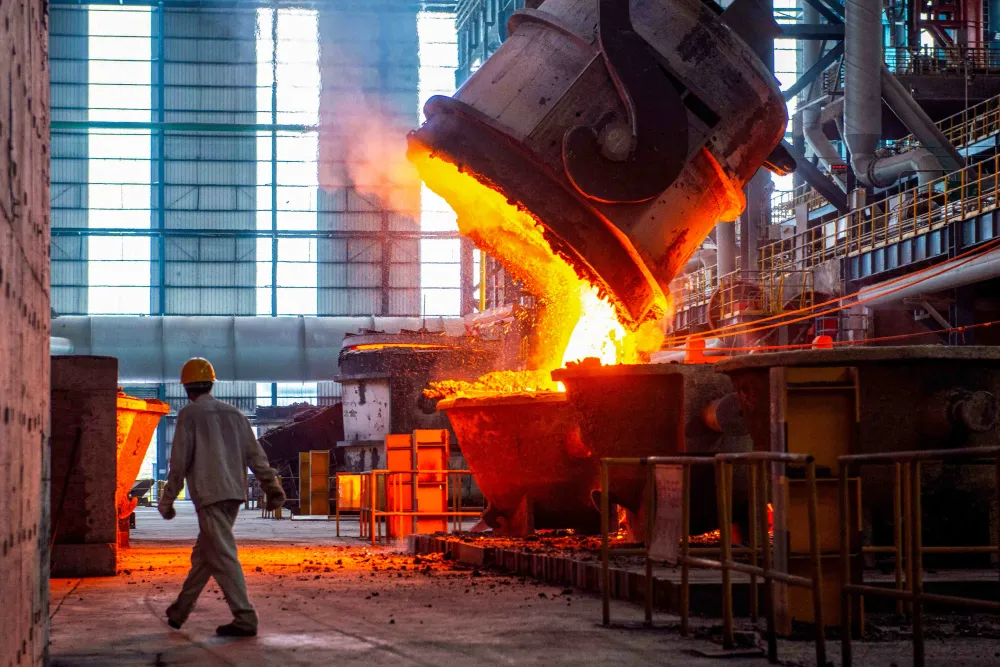
Across the European Union, the warning signs are no longer subtle. Energy-intensive industries — from chemicals and steel to fertilizers — are scaling back operations, moving production abroad or shutting down entirely. What was initially framed as a short-term shock following the 2022 energy crisis is increasingly looking like a structural shift with lasting consequences.
Despite repeated policy interventions, Europe has yet to recover its previous industrial momentum. Energy costs remain high, investment is cautious, and manufacturers are quietly rethinking whether the continent can still support large-scale production. The deeper issue, critics argue, is not a lack of awareness among policymakers — but a fundamental misunderstanding of how the energy economy actually functions.
A narrow focus on prices
European leaders frequently acknowledge the loss of competitiveness and regularly promise relief through regulatory tweaks, subsidies or market reforms designed to bring energy prices down. What tends to receive less attention is the broader system cost of producing that energy in the first place.
Instead of expanding overall energy supply at low cost, many policies effectively reshuffle expenses within the system. Lower prices for some users are offset by higher public spending, heavier regulation or rising costs elsewhere. The result is not cheaper energy, but a redistribution of scarcity — dressed up as reform.
This approach reflects a belief that policy can override physical and economic constraints. According to critics, it cannot. Energy transitions, they argue, are not just political projects but material ones, governed by infrastructure, resource availability and efficiency.
Lessons not learned
Recent comments by Slovakia’s prime minister, who described the EU’s plan to fully end Russian gas imports as “energy suicide,” have reignited debate over Europe’s strategic direction. His remarks reflect a broader concern that the bloc has failed to absorb the lessons of recent years.
Since 2022, Europe has replaced large volumes of cheap pipeline gas with more expensive alternatives, while simultaneously accelerating its shift toward renewables. The strategy has been framed as both a security necessity and a climate imperative. Critics counter that the economic consequences are being underestimated — or ignored.
Public support for cutting Russian gas has largely held, and political momentum behind the green transition remains strong. Yet the industrial fallout suggests that the adjustment costs are far higher than initially advertised.
The hidden foundation of the transition
The years of greatest enthusiasm for Europe’s green agenda coincided with peak access to inexpensive Russian gas. That overlap, analysts say, was not accidental. The financial and industrial flexibility needed to subsidize renewables was underpinned by a surplus of cheap energy powering traditional industry.
Germany is often cited as a case in point. Its ability to invest heavily in renewable technologies over the past two decades rested on the stability and affordability of its gas supply. Once that foundation disappeared, the economic model became far more fragile.
In this view, renewables were never a substitute for cheap energy — they were a supplement, made viable by it. Removing the latter while expecting the former to seamlessly take over has exposed a structural gap.
A longer-term risk
What worries critics most is not just the current wave of factory closures, but the long-term implications. Once industrial capacity leaves, it is difficult to bring back. Skills erode, supply chains relocate and investment follows opportunity elsewhere.
Europe’s challenge, they argue, is not simply to make energy greener or marginally cheaper, but to ensure that the overall system can sustain a modern industrial economy. Without addressing that question, policy adjustments may continue — but so will the decline.
For now, the continent finds itself in an uncomfortable position: committed to an energy transition that is proving more expensive than expected, while discovering that prosperity itself may have been one of the prerequisites for making that transition work in the first place.