EU Farm Subsidies Under Fire as Report Shows Disproportionate Support for Meat and Dairy
New analysis finds livestock production receives vast majority of CAP funding, reigniting debate over climate and food policy
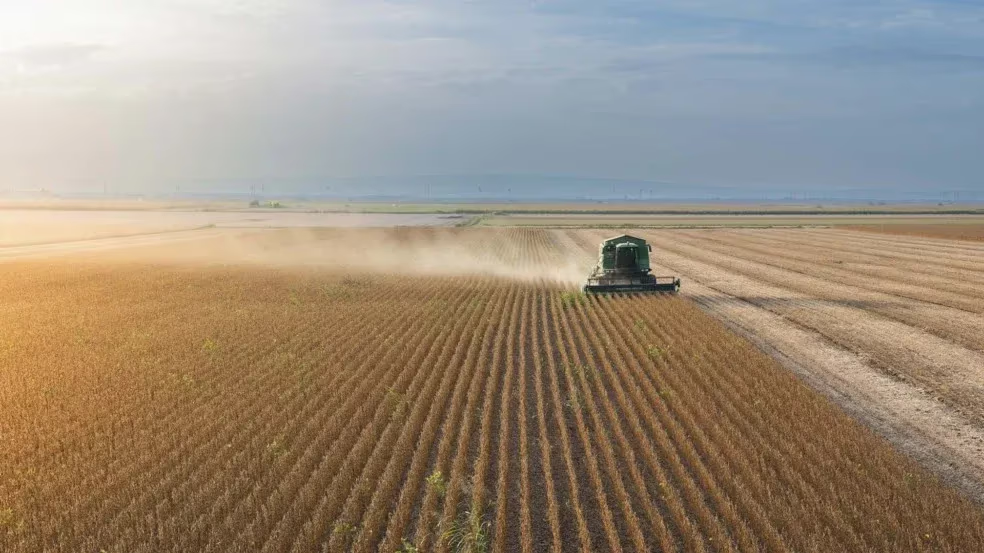
A fresh analysis of European Union farm spending has reignited debate over how public money is shaping the continent’s food system — and its climate footprint.
According to a report by the charity Foodrise, the EU’s Common Agricultural Policy (CAP) allocated a substantial majority of its 2020 budget to animal-based food production. Of the €51 billion distributed that year, approximately €39 billion — or 77 percent — went toward supporting livestock and related products. Plant-based foods received a comparatively small share.
The imbalance becomes starker when looking at individual categories. The study found that beef and lamb production received around 580 times more subsidies than legumes such as beans and lentils. Dairy funding was estimated to be roughly 554 times higher than support for nuts and seeds. Taken together, meat and dairy production obtained more than ten times the level of subsidies directed toward fruit and vegetable farming.
This funding pattern stands in contrast to the environmental impact associated with food production. Animal-based products account for between 81 and 86 percent of greenhouse gas emissions linked to EU food systems, while supplying an estimated 32 percent of calories and 64 percent of protein, according to the report’s findings.
The broader context is equally significant. Globally, agriculture and food production are responsible for roughly one-third of greenhouse gas emissions, second only to fossil fuel combustion. Data from the carbon calculator CO2 Everything indicates that producing a 100-gram portion of beef generates emissions comparable to driving nearly 79 kilometers, amounting to about 15.5 kilograms of CO2 equivalent.
Environmental organizations have long highlighted the scale of livestock production worldwide. Greenpeace estimates that livestock now make up about 60 percent of all mammals on Earth, compared with just 4 percent that remain wild; humans account for the rest. Farmed poultry represents roughly 70 percent of all birds globally.
Livestock farming requires vast quantities of feed and land. Conservation groups have repeatedly pointed to deforestation in regions such as the Amazon, where forests are cleared to grow soy. Contrary to common assumptions, most soy production is not destined for supermarket shelves. The World Wide Fund for Nature (WWF) reports that nearly 80 percent of global soybean harvests are used as animal feed, and overall production has doubled in the past two decades.
Critics argue that feeding crops to animals before they reach consumers introduces significant inefficiencies. Research by Compassion in World Farming suggests that from every 100 calories of crops used as animal feed, about 40 calories are returned in milk, 12 in chicken meat, and only three in beef.
Martin Bowman of Foodrise described the current allocation of EU subsidies as a misuse of taxpayer funds and said it conflicts with the bloc’s stated climate and public health objectives. He has called for the introduction of a Plant-Based Action Plan at the EU level, alongside financial mechanisms to support farmers who wish to shift from livestock production to plant-based agriculture. According to Bowman, such a transition could improve farmer incomes, reduce reliance on imports, and contribute to climate mitigation and public health goals.
The idea of strengthening plant-based supply chains has also appeared in official EU discussions. In 2024, the European Commission published a report following its Strategic Dialogue on the future of EU agriculture. The document concluded that supporting consumers in moving toward more plant-based diets is crucial and recommended that the Commission develop an EU Action Plan for plant-based foods by 2026.
The European Commission has been approached for comment on the findings of the Foodrise report.
As policymakers weigh the future direction of European agriculture, the numbers suggest the debate is no longer simply about what ends up on dinner plates — but about how billions in public funds shape the environmental and economic landscape behind them.