Denmark’s Mette Frederiksen Calls Snap Election as Voters Weigh Security and Social Strains
Prime minister seeks renewed mandate amid defence buildup, Ukraine support and domestic discontent
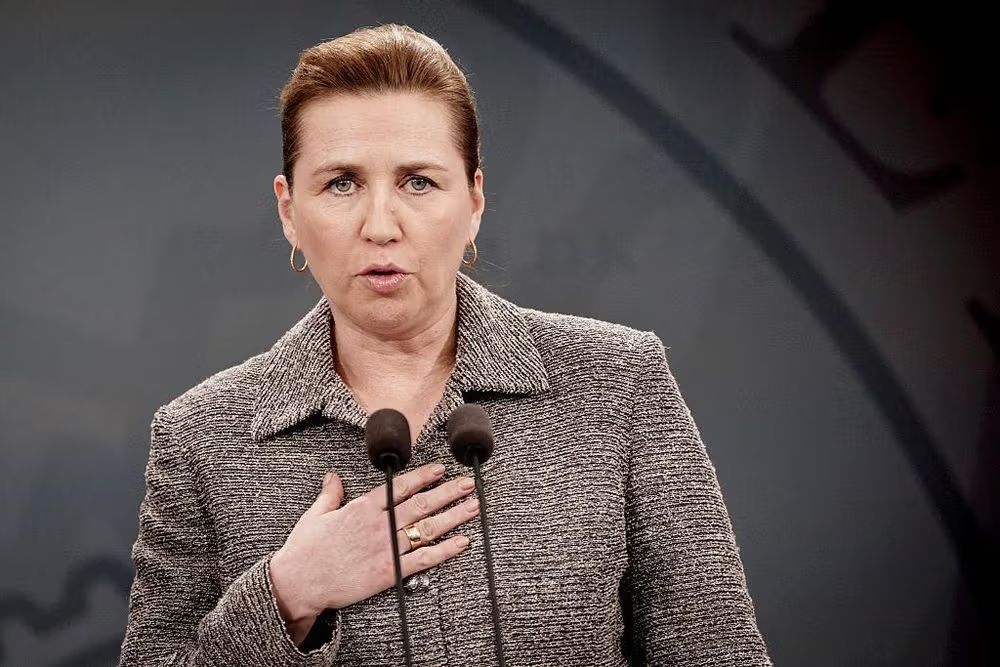
Denmark’s Prime Minister, Mette Frederiksen, has just thrown down the gauntlet by announcing a snap general election for March, months before anyone expected it.
For political observers, this isn’t just another trip to the polls; they’re calling it one of those rare moments that could reshape Denmark’s path for years to come. Frederiksen addressed parliament on Thursday with her trademark directness, insisting that Denmark is navigating an increasingly unpredictable global landscape and needs a clear political mandate to move forward. “In the next four years, we as Danes and as Europeans must truly stand on our own feet,” she emphasized, alluding to mounting security threats and growing doubts about old international alliances. The timing is striking. This vote follows three-and-a-half turbulent years under what’s often described (even by Frederiksen herself) as an unconventional coalition,a curious mix forged in December 2022 between the Social Democrats, Liberalsand Moderates. She’s famously labeled it a “strange government.” That label fits: these parties weren’t exactly best friends before teaming up. At first blush, some analysts saw promise here, a shot at breaking gridlock through cross-party collaboration on tough national issues.
Reality bit early on. Take one of their headline moves: scrapping Great Prayer Day as a public holiday so funds could be funneled into beefing up defence budgets instead. This wasn’t met with polite applause,far from it. Protests erupted across Copenhagen; trade unions voiced sharp disapproval; approval ratings took a noticeable hit almost overnight. Since then. Foreign policy has pretty much muscled its way to the top of Denmark’s agenda, and stayed there. The government hasn’t been shy about throwing its weight behind Ukraine after Russia’s invasion; in fact, relative to GDP, Denmark has ponied up considerable military aid and cash support while also inviting Ukrainian defence companies onto Danish soil,the first EU country willing to go that far. Meanwhile (and here’s where things get even more interesting), Copenhagen keeps bumping heads with Washington over Greenland. Trump once floated buying Greenland outright, not something Danish officials found amusing or reassuring,and though he left office ages ago now, unease lingers around future American intentions toward this autonomous territory. No one in Danish politics seems ready to say those ambitions are dead for good; if anything, there’s still plenty of strategic anxiety swirling beneath the surface. And let’s not forget home turf headaches either, security concerns have cropped up right inside Danish borders too. Last autumn saw mysterious drones disrupting airport operations over several days running,not your everyday hiccup, and while authorities haven’t fingered any culprits publicly yet, rumor mills inside parliament keep circling back to possible foreign interference..
Despite solid popular backing for supporting Ukraine abroad, domestic troubles are piling up fast: housing shortages gnaw away at urban centers; social inequality keeps widening; retirement age is inching higher every year,with rural regions (the so-called “rotten banana” areas) feeling especially squeezed by these shifts. Back in May, lawmakers signed off on gradually raising retirement age targets, to hit 70 by 2040,in line with life expectancy trends. Still (and Frederiksen herself admits this), you can only push such increases so far before hitting a wall, but no comprehensive alternative plan has emerged yet from her team. Political fallout hasn’t been kind lately either: last autumn brought major setbacks for the Social Democrats during local elections,sparking fresh worries about their standing nationally going into this high-stakes vote cycle.. Yet polling now hints at a modest comeback for them, thanks largely to Frederiksen doubling down on hardline foreign policy positions when others hesitated.
So what happens next. No one can say if this oddball coalition will stick together after ballots are counted, or if new alliances will emerge entirely out of left field,because Frederiksen pointedly refuses to rule anything out these days (which probably says plenty about how fluid things really are).
Bottom line: As Danes gear up for election day amid all manner of uncertainty, from war clouds abroad to fraying safety nets closer to home,the real question hovering over everything is whether Denmark can juggle rising defence obligations without letting social cohesion unravel along the way.