
Feb 6, 12:23 PM
Urban Snowboarding Takes Over Budapest as European Street Cup Debuts
Athletes from eight countries compete in Hungary’s first major international street snowboarding event, turning a city park into a winter sports arena.
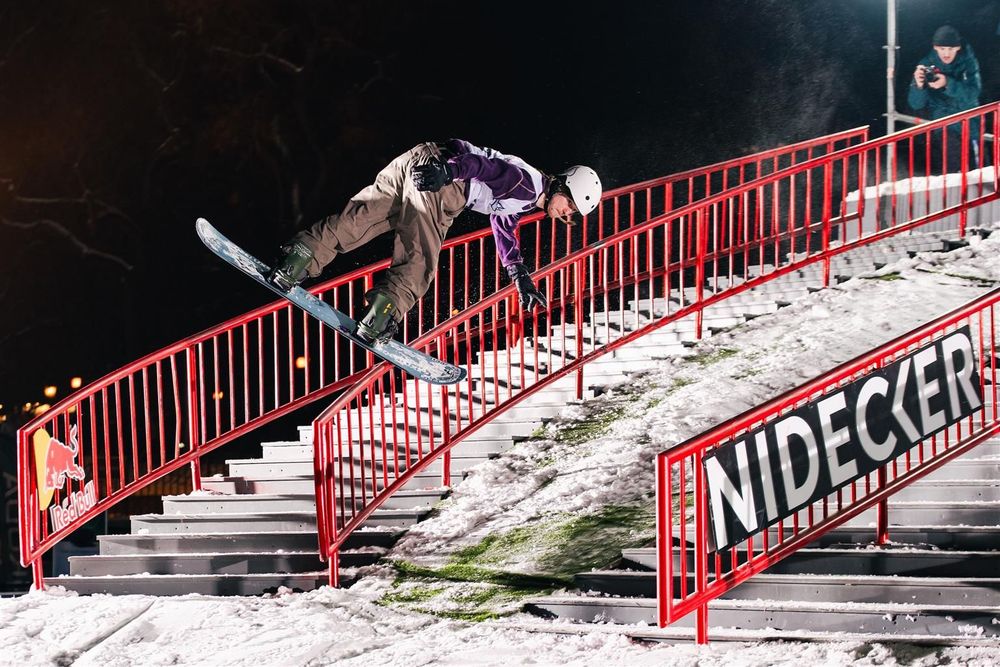
Budapest briefly swapped traffic noise for the scrape of boards on metal as the Hungarian capital hosted its first large-scale international street snowboarding competition. With a light dusting of snow, a compact course and a handful of carefully placed obstacles, the European Street Cup transformed Varosliget Park into an unlikely stage for a growing winter discipline.
The event brought together riders from eight countries, proving that snowboarding does not always require alpine slopes or remote resorts. Street snowboarding, which borrows much of its visual language and technique from skateboarding, focuses on technical tricks performed on rails, stairs and urban-style features. In Budapest, the setup was installed next to an artificial ice rink, reinforcing the sport’s ability to adapt to city environments.
Hungary’s snowboarding community has been working toward moments like this for several years. Since 2019, local organisers have aimed to bring European and World Cup-level events to the country, betting on the idea that accessibility and visibility matter as much as altitude. That strategy received a boost in 2025, when the International Ski and Snowboard Federation officially added street snowboarding competitions to its calendar — a move widely seen as recognition of the discipline’s growing appeal.
Supporters of the sport hope this momentum could eventually lead to inclusion in the Winter Olympics, with 2030 often mentioned as a realistic target. Beyond medals and rankings, street snowboarding is also seen as a way to attract new audiences who may feel more at home in city parks than mountain resorts. Fewer travel costs and urban locations make the competitions easier to attend, both for athletes and spectators.
Budapest’s crowd did not have to look far for local heroes. Several Hungarian riders reached the finals, giving fans homegrown talent to cheer in both the men’s and women’s events. In the women’s competition, Britain’s Mia Langridge claimed victory, while Hungarian finalist Lili Tóth finished fifth as she continues her push toward qualifying for the world championships.
The men’s podium featured strong performances from the Netherlands, with Tom Vogel and Tom Wijnstra taking the top two spots. Hungarian rider Botond Fritsch secured third place, adding another result to his résumé after winning a previous World Cup stage.
For a sport built on creativity, proximity and a touch of improvisation, the Budapest event offered a clear message: street snowboarding is no longer just a niche offshoot, but a discipline confident enough to take over the heart of a European capital — even if only for a weekend.