
Feb 5, 2:01 PM
Arsenal Break the Cycle and Book Long-Awaited Return to a Cup Final
After years of near misses under Mikel Arteta, Arsenal’s Carabao Cup semi-final win offers a chance to turn progress into silverware.
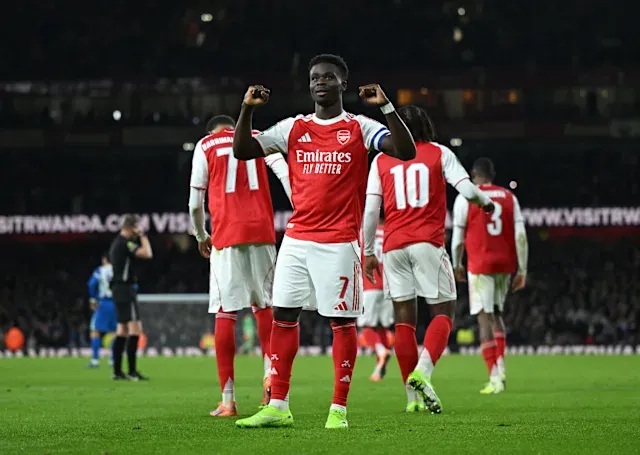
Arsenal are heading back to a major final, and for a club that has spent several seasons hovering just short of tangible success, that alone marks a notable shift.
The victory over Chelsea in the Carabao Cup semi-finals ended a long run of frustration in knockout competitions and secured a place at Wembley for the first time since Mikel Arteta lifted the FA Cup in 2020. The tie itself was not remembered for spectacle, but Arsenal’s control and composure suggested a team that has learned how to manage high-pressure moments rather than simply survive them.
Across two legs, chances were scarce and momentum was fragile. Yet Arsenal rarely appeared vulnerable, limiting Chelsea’s threat and waiting patiently for the decisive moment. When the late goal arrived to confirm qualification, the reaction inside the Emirates Stadium reflected more than just relief. It felt like validation after years of coming close without crossing the line.
This will be Arsenal’s ninth appearance in an EFL Cup final, where they will face either Manchester City or Newcastle. A potential meeting with City would revive memories of the 2018 final, while also highlighting how far Arteta has travelled since his time on Pep Guardiola’s coaching staff. Regardless of the opponent, the final represents a clear opportunity to challenge long-standing doubts about Arsenal’s ability to deliver trophies.
Since their last silverware in 2020, Arsenal have consistently positioned themselves among England’s top sides without adding to the honours list. Four lost semi-finals, along with late-season stumbles in the Premier League, have shaped a narrative of a team that builds well but finishes second best. Breaking that pattern could carry consequences beyond a single competition.
The timing strengthens that sense of possibility. Arsenal lead the Premier League, remain active in Europe, and continue their FA Cup campaign. History suggests that early domestic trophies can inject confidence into squads chasing bigger goals, and recent League Cup winners have often gone on to claim additional honours in the same season.
That said, ambition comes with caution. English football is filled with examples of promising campaigns undone by fine margins, injuries or fixture congestion. Even dominant teams have found that chasing multiple trophies can quickly expose depth and discipline.
For now, Arsenal’s achievement is more modest but no less meaningful. They have cleared a psychological barrier, navigated a knockout tie without drama, and earned a genuine shot at ending a prolonged wait for silverware. Whether this marks the moment they shed the “nearly-men” label will be decided at Wembley. But for the first time in years, the conversation is no longer about what Arsenal might become — it is about what they can realistically win.