Feb 11, 7:14 AM
Washington Expands Military Training Mission in Nigeria Amid Renewed Counterterrorism Push
Two hundred U.S. troops will deploy to support Nigerian forces with training and coordination, as both governments signal deeper cooperation against Islamist militants.
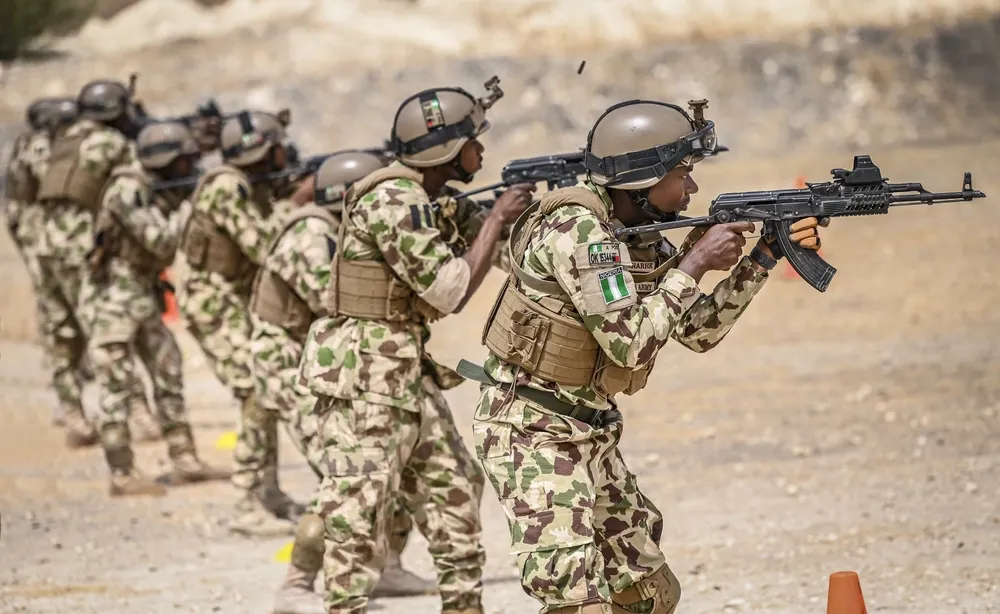
The United States is preparing to send around 200 military personnel to Nigeria as part of an expanded effort to support the country’s fight against Islamist insurgent groups. According to officials from both countries, the deployment will focus on training and technical assistance rather than frontline combat.
The incoming troops will reinforce a small U.S. military presence already operating in Nigeria, where American personnel have been assisting local forces with intelligence-related tasks. The new contingent is expected to arrive over the next several weeks and will be spread across multiple locations, reflecting a nationwide advisory role rather than a single base-centric mission.
U.S. officials say the objective is to improve how Nigerian units plan and carry out complex operations, including coordination between air power and ground forces. Such joint maneuvers are considered operationally risky and require a high degree of synchronization—an area where external training support is often requested.
Nigerian military representatives have stated that the request for additional U.S. assistance came from Abuja. They also emphasized that American troops will not participate directly in combat operations, a position confirmed by U.S. defense officials. In other words, the mission is designed to stay firmly in the “support” column, even if the surroundings are anything but calm.
The decision follows a period of heightened political tension between Washington and Abuja. In late 2025, President Donald Trump publicly accused Nigerian authorities of failing to protect Christian communities from militant violence. He described the situation as catastrophic and threatened punitive measures, including cuts to U.S. aid and even unilateral military action. Nigerian President Bola Ahmed Tinubu rejected those accusations, and Nigerian officials have not accepted the characterization of events as deliberate government inaction. These claims, it should be noted, remain political statements rather than independently verified conclusions.
Despite the sharp rhetoric, U.S. military officials say cooperation has intensified since those remarks. They report greater openness from Nigeria to coordinate counterterrorism efforts and to escalate pressure on armed groups operating in the country.
Nigeria has been battling Boko Haram and its offshoot, the Islamic State in West Africa Province, for more than a decade. Violence has been concentrated largely in the north, a region with a predominantly Muslim population, while Christians are more numerous in the south. Both communities, however, have been victims of militant attacks. Estimates from nongovernmental organizations suggest that tens of thousands of Christians and Muslims were killed between 2009 and 2021, though these figures are based on reported incidents and should be treated as compiled assessments rather than precise counts.
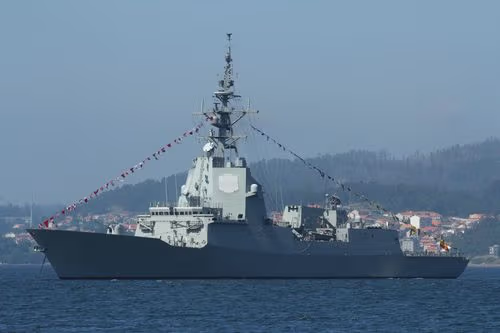
U.S. involvement has already gone beyond training support. With Nigerian approval, a U.S. naval vessel launched missile strikes on two suspected Islamic State camps on Christmas Day. Nigerian officials confirmed the operation but declined to provide casualty figures, stating only that the intended objectives were met.
The growing American role also reflects domestic political pressure in the United States. Prominent figures on the Christian political right, including Senator Ted Cruz, have criticized Nigeria’s handling of religiously motivated violence. Nigeria, Africa’s most populous country with an estimated 237 million people, occupies an outsized role in both regional security and international diplomacy—making it a frequent subject of such scrutiny.
For Washington, the latest deployment underscores a familiar balancing act: expanding counterterrorism partnerships without becoming directly entangled in another long-running conflict. For Nigeria, the arrival of additional foreign trainers signals both international backing and a reminder that global attention tends to sharpen when instability refuses to fade quietly into the background.