Feb 10, 5:54 AM
Trump Attacks Bad Bunny’s Spanish-Language Super Bowl Show
The former president denounced the halftime performance as “un-American” after Bad Bunny delivered a message of unity to a record-setting global audience.
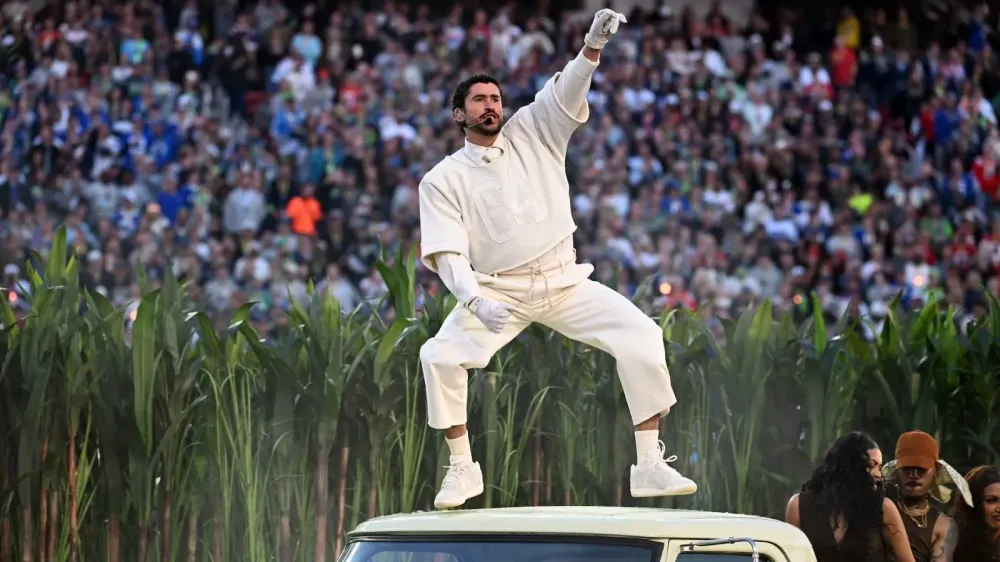
Bad Bunny’s Super Bowl halftime performance was designed as a celebration of music, language and shared identity across the Americas. Within hours, it had also become the latest flashpoint in the United States’ ongoing culture wars.
The Puerto Rican artist made history by becoming the first male solo Latin performer to headline the halftime show, delivering an energetic set entirely in Spanish. Drawing from reggaeton, salsa and Latin trap, the performance featured high-profile guest appearances and cinematic cameos, turning the Super Bowl stage into a showcase of Latin pop culture at its most mainstream.
Rather than tailoring his message to a U.S.-only audience, Bad Bunny framed the show around a broader vision of the Americas. In a closing moment that drew widespread attention online, he expanded the idea of “God bless America” to include countries across North, Central and South America, ending with a visual call for unity and a message emphasizing solidarity over division.
That message quickly drew sharp criticism from Donald Trump and his supporters. The former president, who did not attend the game and instead watched from Florida, used his social media platform to denounce the performance in sweeping terms. Trump described the show as offensive to American values, criticized its use of Spanish and claimed it failed to meet what he described as national standards of excellence and inspiration. These comments echoed months of criticism from parts of the conservative movement that had opposed Bad Bunny’s selection as halftime headliner.
Much of that opposition predates the Super Bowl. Bad Bunny has previously spoken out against U.S. immigration enforcement policies, including remarks made during a major awards ceremony that condemned the treatment of migrants. Those statements have made him a frequent target of right-wing commentators, who portray the artist as politically hostile to Trump and his immigration agenda.
While Trump’s criticism dominated conservative media, audience numbers told a different story. The Super Bowl typically draws more than 120 million viewers, making it one of the most-watched television events in the world. Preliminary industry estimates suggest that Bad Bunny’s halftime show may rival or exceed last year’s record-setting viewership, though official figures have yet to be released.
By contrast, an alternative pro-Trump livestreamed halftime event organized by conservative activists attracted a significantly smaller audience, despite peaking at several million online views. The gap underscored the difference in reach between the Super Bowl’s global broadcast and parallel political counterprogramming.
Reaction from public figures leaned sharply in the opposite direction from Trump’s response. Several prominent Democrats and entertainers praised the performance as a reflection of modern American identity, while others highlighted the symbolic importance of hearing Spanish take center stage at one of the country’s most iconic cultural events.
Notably, the show largely avoided direct political statements beyond its emphasis on unity. Even artists known for outspoken political messaging kept their performances restrained, a choice that disappointed some fans but reinforced the halftime show’s broader, inclusive tone.
Whether viewed as a cultural milestone or a political provocation, Bad Bunny’s Super Bowl appearance demonstrated how entertainment, identity and politics increasingly collide on America’s largest stages. What was meant as a celebration of music quickly became a referendum on language, belonging and who gets to define what “America” looks like in front of a global audience.