Mar 4, 7:46 AM
Nepal Votes After Protests That Toppled Government as Young Voters Demand Change
Migration, jobs and corruption dominate election debate after last year’s deadly youth uprising
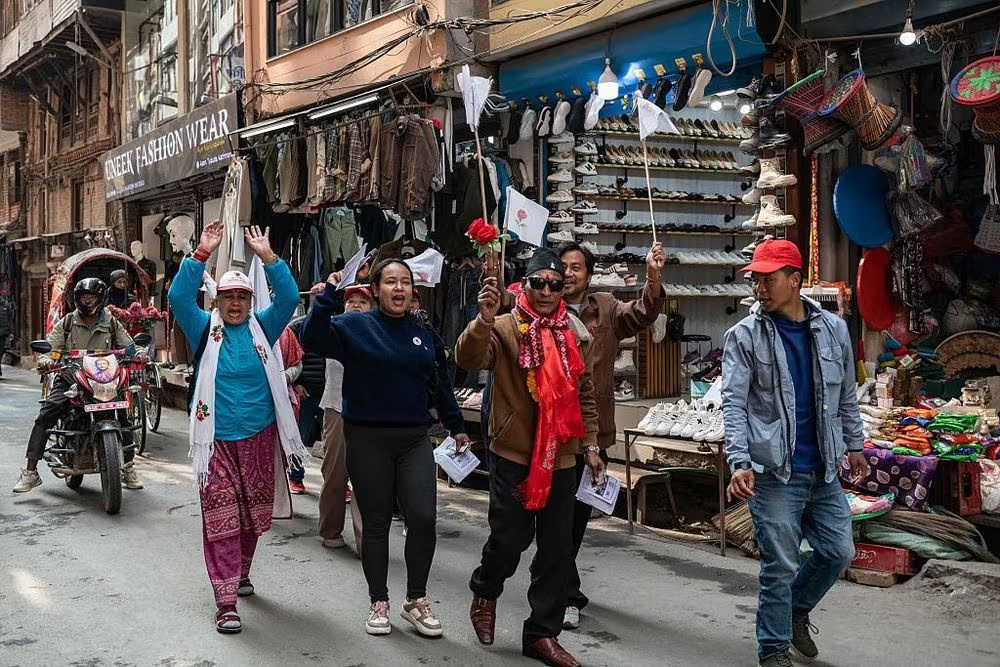
Nepal is heading to the polls for the first time since mass protests last September toppled the country’s government, with many young voters hoping the election could mark a turning point for a nation struggling with corruption, unemployment and a growing exodus of its youth.
For 23-year-old Manas Mudvari, however, the future still seems to lie abroad. Sitting in a café in Kathmandu, he says he dreams of studying cybersecurity in Germany.
“The language might be difficult, but the universities are free,” he says. In Nepal, he believes opportunities are too limited. According to Mudvari, long-entrenched political leaders have done little for ordinary citizens while allowing corruption to flourish.
Still, he says the upcoming vote could change things — especially if one candidate performs well: Balendra Shah, widely known as Balen.
The 35-year-old former mayor of Kathmandu is running as the leading candidate for the Rastriya Swatantra Party (RSP), a movement founded only three years ago that has quickly gained support among younger voters.
A rapper and engineer known for wearing a black suit and sunglasses, Balen has cultivated an image closer to that of a celebrity than a traditional politician. He rarely gives interviews and keeps speeches brief, instead relying heavily on social media platforms such as TikTok and Facebook.
Despite his somewhat mysterious political agenda, supporters greet him like a pop star at campaign appearances.
The election comes months after violent protests shook Nepal and forced the collapse of the previous government. Demonstrations initially erupted after authorities banned major social media platforms, a move widely seen as an attempt to silence criticism over corruption.
When crowds marched on parliament, police opened fire. Nineteen protesters — many of them students — were killed, triggering a wave of unrest that saw mobs set fire to government buildings, party headquarters and police stations across the capital.
The upheaval eventually led to the formation of a transitional administration headed by former chief justice Sushila Karki, tasked with organising new elections.
For many voters, the central issue now is jobs.
Around 1,700 Nepalis leave the country every day in search of work abroad. Remittances from workers overseas have become a crucial pillar of the economy, but the outflow of young talent poses a long-term challenge for development.
Some young activists argue the country’s constitution is not the problem — political culture is.
“The constitution is progressive,” says Yadav Aryal, a 23-year-old activist who took part in last year’s demonstrations. “But the way politics functions has to change.”
Aryal believes Nepal must combine the energy of its younger generation with the experience of established parties rather than rejecting them entirely.
Others are less patient. Entrepreneur Asheem Man Singh Basnyat, founder of the ride-hailing platform Pathao in Nepal, is running as an independent candidate in Kathmandu. His campaign centres almost entirely on job creation.
“If people have work, everything else improves,” he says, arguing that the government should reduce bureaucracy and make it easier to start small businesses.
For entrepreneurs like Presha Shrestha, who launched an electric-vehicle charging startup after studying abroad, navigating government approvals remains a challenge. She says many officials expect bribes before issuing permits.
Not all civil servants are corrupt, she adds, but the system often makes progress painfully slow.
As Nepal prepares to vote, many citizens say replacing a few political faces will not be enough.
Activists argue the country needs stronger institutions and a new political culture if it is to tackle corruption, create jobs and convince young people that their future lies at home rather than overseas.