Feb 10, 1:04 PM
Protests Greet Opening of Milan-Cortina Winter Olympics Over Cost and Environmental Impact
Demonstrators in Milan accuse the 2026 Winter Games of draining public funds and causing long-term environmental damage, as clashes briefly break out with police.
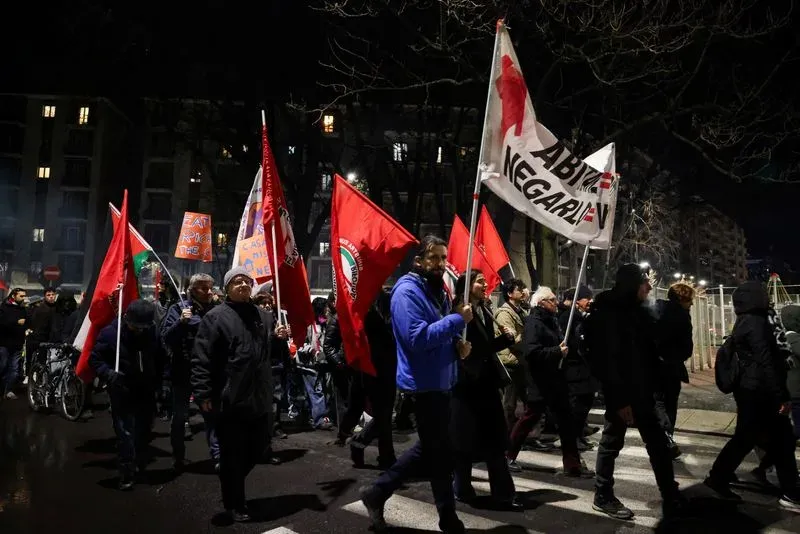
As the 2026 Milan-Cortina Winter Olympics officially got underway, celebrations inside the stadium were mirrored by dissent on the streets outside. While the opening ceremony highlighted Italian culture and promoted themes of harmony and unity, protests across Milan underscored growing unease about the economic and environmental consequences of hosting the Games.
On the day of the opening ceremony, demonstrators gathered in different parts of the city to voice opposition to what they see as an unsustainable mega-event. Activists, students and union-backed groups marched through central Milan, including areas near the newly opened Olympic Village, which is housing around 1,500 athletes. Protest banners criticised the national government led by Prime Minister Giorgia Meloni, Milan mayor Beppe Sala, and the broader political priorities tied to the Games. Some slogans also targeted immigration enforcement policies, reflecting wider political grievances beyond the Olympics themselves.
The majority of the demonstrations were peaceful, attracting families, students and workers. However, tensions escalated later in the day when a smaller group attempted to approach a highway near one of the Olympic venues. Italian police responded with tear gas and water cannons after protesters threw firecrackers and attempted to breach restricted areas. Authorities said the confrontation was brief, and the larger protest had already dispersed by the time clashes occurred.
Earlier in the day, masked protesters set off smoke bombs and fireworks from a bridge overlooking a construction site close to the Olympic Village. No serious injuries were reported, but the incidents added to an already charged atmosphere surrounding the Games’ opening weekend.
At the heart of the protests was criticism of how public money has been used. Demonstrators argued that funds allocated to Olympic infrastructure would have been better spent on healthcare, education and social services. Several protesters described the Games as a costly “showcase” that offers little lasting benefit to local residents, particularly at a time of budget pressure and rising living costs.
Environmental concerns were also central to the demonstrations. Protesters accused both the national government and local authorities of pushing through construction projects that they say will leave long-term ecological damage in Lombardy and surrounding regions. According to critics, the environmental footprint of new venues and transport projects outweighs the short-term visibility gained from hosting the Games.
Despite the protests, Olympic organisers and government officials have defended the event as an investment in regional development, tourism and international prestige. They argue that infrastructure upgrades and global exposure will deliver long-term economic benefits.
As competitions begin across northern Italy, the demonstrations highlight a familiar tension faced by host cities: balancing the global appeal of the Olympics with local concerns about cost, sustainability and social priorities. For Milan, the opening weekend made clear that the Winter Games are as much a political and economic issue as a sporting one.