Mar 12, 12:41 PM
Middle East Faces Growing Water Risks as War Threatens Desalination Infrastructure
Strikes on oil facilities and desalination plants raise fears of pollution, water shortages and wider environmental fallout across the region.
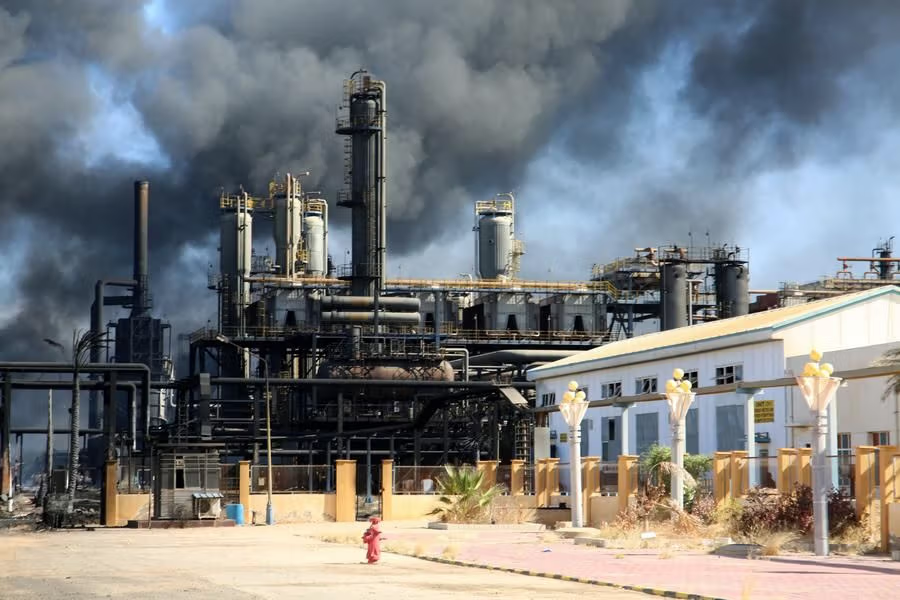
Environmental experts are raising alarms that the ongoing turmoil involving Iran and its neighbors might spark a serious water crisis across the Middle East. Pollution and attacks targeting desalination infrastructure are jeopardizing supplies in one of the planet’s driest regions.
Just recently, there have been reports of dark, polluted rain falling in parts of Iran after weekend strikes hit oil depots. Gabriel da Silva, an associate professor of chemical engineering at the University of Melbourne, points out that the smoke from burning fuel facilities likely carries a complicated blend of contaminants.
Among these emissions, you might find sulphur dioxide and nitrogen dioxide—chemicals linked to acid rain—alongside hydrocarbons, fine particulates known as PM2.5, and possibly carcinogenic substances. Heavy metals and other toxic materials released from damaged industrial sites could also be lingering in the environment.
Locals in impacted areas have complained about breathing troubles and irritation in their eyes and throats. Scientists warn that over time, these conditions could lead to heightened chances of respiratory diseases, heart problems, neurological issues, and even certain cancers.
But it’s not just human health on the line. When such pollutants settle into land and water bodies, they tend to persist in ecosystems, posing risks to marine creatures already struggling in parts of the Gulf.
Zooming out, analysts highlight a deeper fragility exposed by the conflict: the Middle East’s heavy dependence on desalination plants for drinking water.
A number of Gulf countries lean heavily on these facilities to keep their cities running. Michael Christopher Low, director of the Middle East Center at the University of Utah, calls these economies “saltwater kingdoms,” referring to their vast seawater-to-freshwater infrastructure.
While desalination has enabled cities to flourish in harsh desert climates, these systems are energy-hungry and rely on complex setups, which makes them vulnerable during times of war.
Iran recently reported that an airstrike damaged one of its desalination plants, cutting water access for about 30 villages. Meanwhile, Iran faces accusations of hitting a desalination facility in Bahrain—showing just how intertwined water infrastructure has become in the conflict.
Many desalination operations in the Gulf are integrated with power plants, producing electricity and fresh water in tandem. So, even if the desalination equipment itself isn’t harmed, attacks on the energy grid could reduce water output indirectly.
Though Iran relies less on desalination than some of its neighbors, its freshwater resources are also under considerable strain. The country depends on rivers, reservoirs, and underground aquifers, many of which have been severely drained by years of drought.
Iran is trying to boost desalination along its southern shores and pipe water inland, but these plans face steep hurdles—including logistical complications, high energy demands, and international sanctions restricting resources.
Water experts warn that these factors might leave Iran especially exposed if hostilities drag on through the scorching summer months.
Ed Cullinane, Middle East editor at Global Water Intelligence, notes that worries about water shortages were already bubbling before the recent flare-up. Last year’s extreme heatwaves and shortages sparked talks about possibly relocating parts of Tehran’s population to ease pressure on water supplies.
Beyond water, the conflict threatens to shake global energy and food systems. Disruptions to oil flows and shipping routes have rattled transport and fuel markets. With Iran closing off the Strait of Hormuz—a key maritime chokepoint that handles about 20 percent of global oil shipments—tankers must now detour around Africa.
These longer voyages gobble more fuel, pump out extra emissions, and heighten the risk of accidents in crowded shipping lanes. Plus, the closure hits agriculture hard: roughly a third of the world’s fertilizer trade passes through the Strait, so blockages could drive up farming and food distribution costs.
In light of this growing fossil fuel turmoil, some policymakers are redoubling efforts to boost local renewable energy production. United Nations Secretary-General António Guterres has recently argued that generating clean power domestically could shield countries from geopolitical shocks.
He points out that the materials needed for renewables can’t be embargoed or weaponized the way traditional fuels have been.
Still, experts warn the environmental toll of war itself often dwarfs any long-term green shifts. Military operations produce vast amounts of greenhouse gases—impacts that are undeniably significant.
Research from Brown University’s Costs of War project estimates that Russia’s invasion of Ukraine has already emitted over 311 million tonnes of CO2 equivalent since it began.
Globally, military activity accounts for roughly 5.5 percent of greenhouse gas emissions each year—more than most countries’ total output.
Neta Crawford, co-founder of that project, explains the fuel burn of military jets is just one slice of the environmental cost modern warfare racks up.
In Crawford’s view, the climate footprint of large-scale conflicts frequently outweighs any temporary emissions drops seen elsewhere.
Still, for the Middle East, the pressing threat remains water itself. In a place where fresh water is already scarce, destruction of desalination plants, pollution from industrial blazes, and long-term drought could come together to spark a crisis touching millions.