
Feb 9, 7:47 AM
From Hotel Room Injury to Olympic Gold: Max Langenhan’s Unlikely Triumph in Cortina
After injuring his neck on the eve of competition, Germany’s Max Langenhan delivered a flawless luge performance to claim the nation’s first gold of the Games.
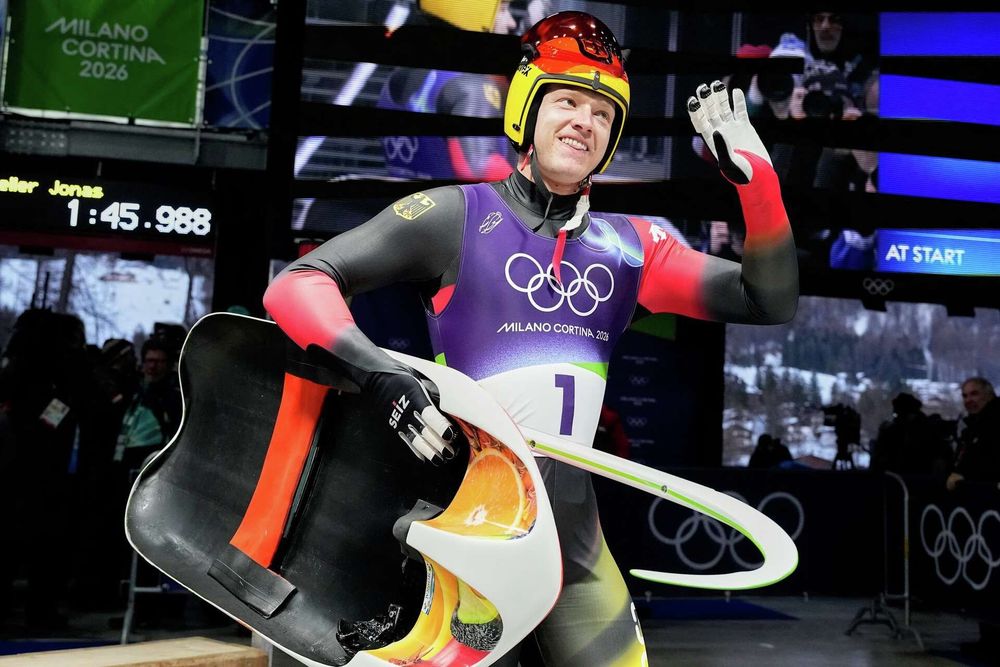
On the surface, Max Langenhan’s Olympic gold in Cortina d’Ampezzo looked like a masterclass in control: four runs, four track records, and a commanding victory margin. What spectators did not see was that, less than 24 hours earlier, the German luge racer believed his Games were already over — not because of the ice, but because of a hotel mattress.
The 26-year-old world champion from Erfurt injured his neck on the eve of the competition while adjusting his bed. By the early hours of the morning, he reportedly could not move his head and assumed he would be forced to withdraw. Medical staff intervened, working intensively over the following days to restore his mobility and keep him race-ready. Their efforts proved decisive.
When competition began, Langenhan showed no visible signs of limitation. Across two days and four runs, he consistently pushed the limits of the new Cortina track, setting a record each time he descended the course. His final margin of victory — nearly six-tenths of a second ahead of Austria’s Jonas Müller — underlined the scale of his dominance.
The finish area became an emotional crossroads for German luge on Sunday evening. Veteran Felix Loch, long considered the favourite after a strong winter season, ended the competition in sixth place after a series of driving errors. At 36, Loch had been aiming for a fourth Olympic gold, but repeated mistakes early in his runs ended that ambition. He later acknowledged his disappointment while publicly congratulating his younger teammate, stressing the broader importance of medals for the sport’s support and visibility in Germany.
For Langenhan, the moment of victory was initially quiet. He remained seated on his sled for several seconds after his final run, taking time to absorb the result. The celebrations came later, joined by family, his partner, and long-time supporters. He also dedicated the achievement to his first coach, who died in a climbing accident and did not live to see his former pupil reach the Olympic summit.
While this gold marked Langenhan’s Olympic breakthrough, it was not an isolated success. Prior to Cortina, he had already accumulated multiple World Cup victories, overall titles, and world championship medals. Ironically, this season’s World Cup circuit had not delivered a win for him, despite frequent podium finishes — a reminder that form does not always follow tidy narratives.
The competition also highlighted a shift within German luge. As Loch’s era edges toward its final chapters, Langenhan’s performance signals a new leading figure capable of carrying expectations on the sport’s biggest stage.
Cortina, however, is not done with him yet. Langenhan is scheduled to compete again in the team event later this week, where Germany traditionally excels. This time, he will do so not as a hopeful contender, but as the reigning Olympic champion — neck injury, mattress mishap and all.