Lagarde Said to Weigh Early ECB Departure as Political Clock Ticks in Paris
Reports suggest the ECB president may step aside before 2027 to lock in a successor ahead of France’s next election cycle
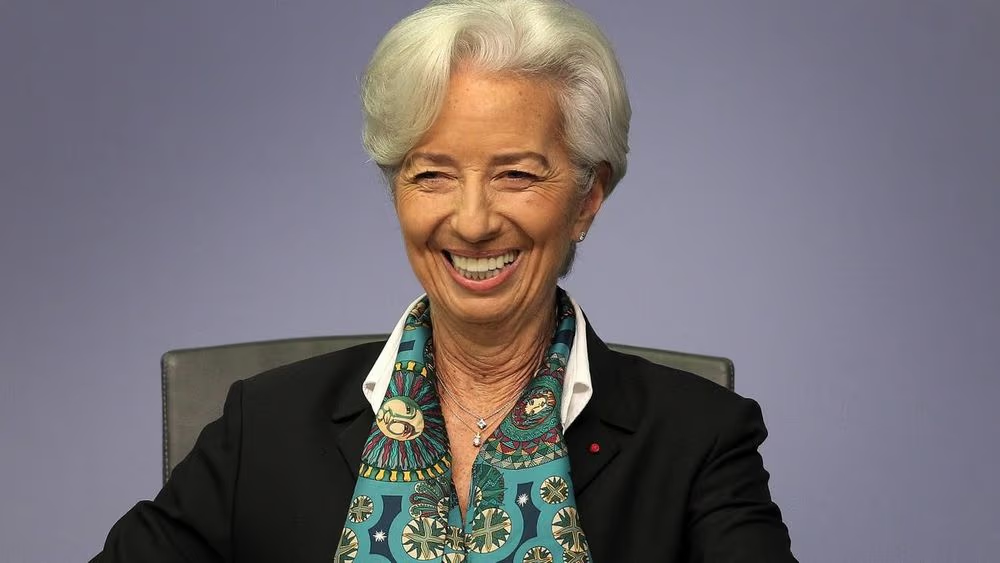
Christine Lagarde is reportedly considering leaving her post at the European Central Bank before the formal end of her mandate, a move that could reshape the balance of power over Europe’s future monetary leadership.
According to media reports citing sources familiar with the matter, Lagarde may step down several months ahead of schedule, potentially before France’s presidential election in April 2027. Her current term as ECB president is set to expire in October of that year.
The timing is widely seen as politically significant. An early departure would give current leaders in Paris and Berlin a decisive role in selecting her successor, rather than leaving the decision to a potentially very different political landscape after the French vote. With President Emmanuel Macron barred from seeking another term, uncertainty over who will occupy the Élysée Palace has become a growing concern within European institutions.
In Brussels and other EU capitals, there is unease about the strong polling performance of far-right and Eurosceptic parties in both France and Germany. A shift in political control could complicate — or even stall — agreement on senior EU appointments, including the top job at the ECB, which requires broad consensus among member states.
Speculation around Lagarde’s intentions intensified following the recent announcement by the head of France’s central bank that he would also leave his post earlier than expected. While the ECB has publicly pushed back against claims of an imminent exit, insisting that its president remains fully focused on her role, the reports have already sparked quiet jockeying among potential successors.
Attention is now turning to who could eventually take over in Frankfurt. Analysts and economists frequently point to two leading figures: a former Dutch central bank chief seen as a pragmatic consensus-builder, and a former Spanish central bank governor currently heading a major international financial institution. Both are regarded as experienced, technically strong candidates capable of navigating the ECB through an era of inflation pressures, fiscal strain and geopolitical uncertainty.
For now, Lagarde has made no public comment indicating a change of plans. But even the possibility of an early exit has revived an old truth of European politics: leadership transitions at key institutions are rarely just about economics — timing, alliances and elections matter just as much.