Bronze, Then a Bombshell: Norwegian Biathlete Turns Olympic Moment Into Personal Confession
Moments after winning bronze at the Milan–Cortina Winter Games, Sturla Holm Laegreid used live television to admit to an affair, drawing attention away from the podium and sparking debate over timing and judgment.
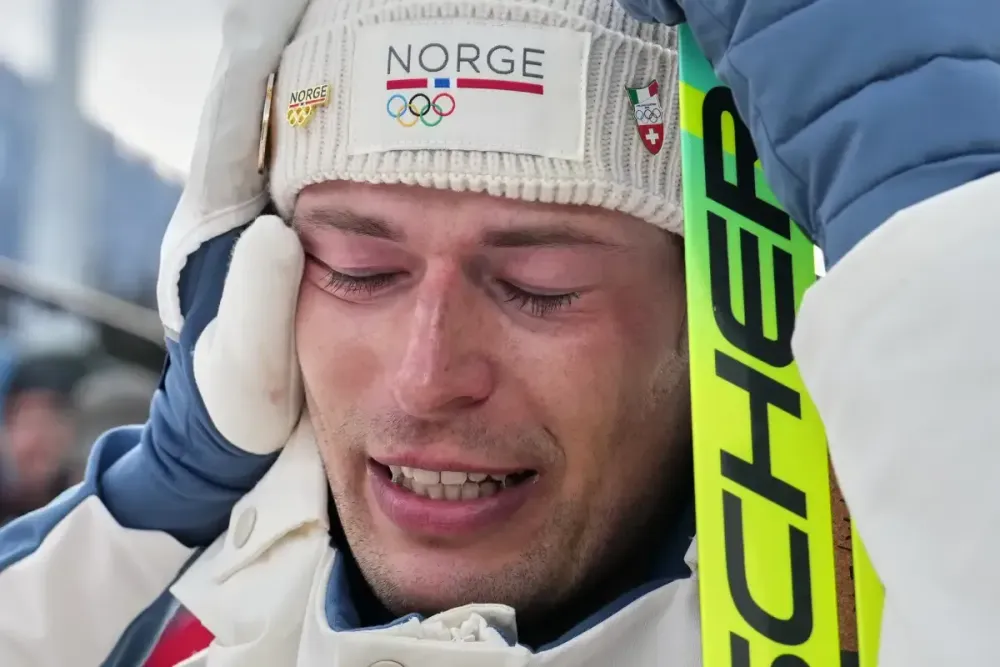
Norwegian biathlete Sturla Holm Laegreid secured a long-sought Olympic milestone in Milan–Cortina by winning bronze in the men’s 20km individual biathlon. Minutes later, he delivered a moment few Olympic broadcasts are designed to accommodate: a live on-air confession of infidelity, offered not to a court or a confessor, but to a national television audience.
Speaking to Norway’s public broadcaster NRK, the 28-year-old said he had cheated on his girlfriend three months earlier, describing it as the worst mistake of his life. He said the days since telling her had been emotionally devastating and made clear that, for him, the race had become secondary to a personal reckoning. The interview, broadcast shortly after his medal-winning performance, blended Olympic triumph with private remorse in a way that left viewers—and fellow athletes—visibly unsettled.
Laegreid framed the confession as an attempt at total honesty, saying he had nothing to gain by staying silent and little to lose by speaking publicly. He later repeated that rationale in interviews with Norwegian media, presenting the disclosure as a final effort to demonstrate sincerity and accountability. These statements reflect Laegreid’s own account; the reaction of the person at the center of his apology has not been made public.
On the track, the result itself was notable. The bronze marked Laegreid’s first individual Olympic medal, adding to the relay gold he won at the 2022 Winter Games. The race was won by fellow Norwegian Johan-Olav Botn, with France’s Eric Perrot taking silver. Botn’s victory carried additional emotional weight: as he crossed the finish line, he shouted the name of former teammate Sivert Guttorm Bakken, who was found dead in Italy in December, weeks before the Games.
Against that backdrop, Laegreid’s decision to go public with a personal failing drew mixed reactions. Asked later whether he regretted the timing, he acknowledged uncertainty and expressed hope that his comments would not overshadow Botn’s achievement. Still, the confession had already done what few athletes manage at the Olympics: redirect headlines away from medals and toward moral judgment.
Former teammate Johannes Thingnes Bø, now working as a biathlon analyst, questioned the choice of moment. He described Laegreid as remorseful but said the setting was ill-chosen, suggesting that the Olympic spotlight was an awkward place for personal atonement.
For Laegreid, the explanation was simple, if not universally persuasive. He said he wanted to be a role model, but one who admits mistakes rather than conceals them. Whether that ambition sits comfortably alongside the unspoken Olympic code—celebrate the sport, not yourself—remains open to debate.
What is clear is that the bronze medal will be recorded in the results, while the confession has already entered Olympic folklore. In a Games meant to honor discipline, control and precision, Laegreid delivered something far less rehearsed: a reminder that athletes, even on the biggest stage, sometimes choose confession over choreography.