Feb 9, 12:41 PM
Jimmy Lai Sentenced to 20 Years as Hong Kong Case Reverberates Far Beyond the City
The jailing of the veteran media tycoon under Hong Kong’s national security law sharpens international criticism and risks becoming a new fault line in U.S.–China relations.
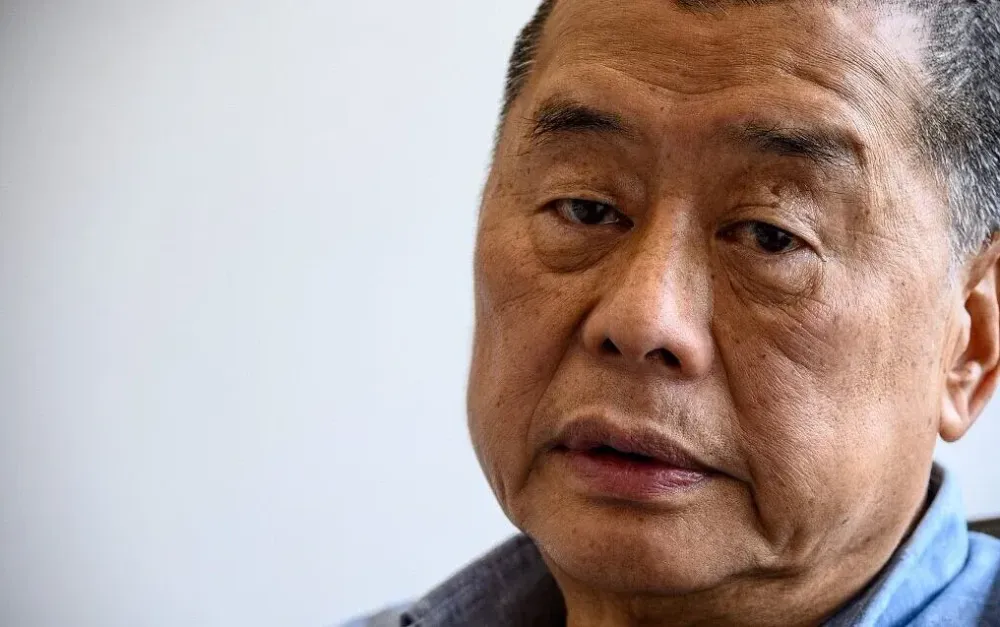
A Hong Kong court has sentenced Jimmy Lai, the outspoken media founder and long-time critic of Beijing, to 20 years in prison, marking the harshest punishment yet imposed under the city’s national security law and reigniting international concern over the erosion of civil liberties in the former British colony.
Lai, 78, has been in custody since 2020 and was convicted in December after a trial that stretched over two years. The court found him guilty of publishing seditious material and breaching national security legislation by advocating international sanctions against Hong Kong and Chinese officials. Prosecutors argued that his now-defunct newspaper, Apple Daily, played a central role in mobilising opposition during the mass pro-democracy protests of 2019. Judges rejected Lai’s claim that he was a political prisoner, ruling that the case concerned criminal actions rather than protected speech.
The sentence sets a new benchmark under the security law introduced in 2020, surpassing previous penalties handed down in similar cases. Eight co-defendants were also sentenced, receiving prison terms ranging from just over six years to a decade, with several having cooperated with prosecutors during the trial. Observers say the ruling sends a clear signal about the consequences of challenging Beijing’s authority in Hong Kong.
The verdict has drawn swift reactions from Western governments and is likely to complicate already strained relations between Washington and Beijing. U.S. President Donald Trump has previously said he raised Lai’s case with Chinese leader Xi Jinping, urging his release on humanitarian grounds. Trump is expected to travel to China in April, and analysts note that Lai’s imprisonment could become an additional point of tension in talks between the world’s two largest economies.
Lai’s case has also been raised by the United Kingdom, as he holds British citizenship. Prime Minister Keir Starmer discussed the issue with Chinese officials during a recent visit to Beijing, while Lai’s family has pressed London to take a more forceful stance. Chinese authorities, however, have consistently dismissed foreign criticism, framing calls for Lai’s release as interference in domestic judicial matters. Hong Kong’s senior judiciary has echoed that view, warning that external pressure undermines the rule of law.
The sentence caps a dramatic reversal of fortune for a man whose life once embodied Hong Kong’s rise as a global commercial hub. Lai arrived in the city as a child after fleeing famine in mainland China, worked his way up from factory labourer to successful garment manufacturer, and later built a retail and media empire. After the 1989 Tiananmen Square crackdown, he entered publishing, convinced that independent media could help advance political reform in China and Hong Kong. Over the years, he became a major financial supporter of pro-democracy movements, donating tens of millions of dollars to political causes, according to public estimates.
Since his arrest, Lai has been convicted in several separate cases related to unauthorised protests and a fraud charge linked to a property lease. His lawyers say he suffers from chronic health problems and has spent long periods in solitary confinement, which they say he requested for personal safety. Authorities insist his medical care has been adequate. Supporters who have visited him describe a man who has turned increasingly to religion, spending his time reading, praying and drawing.
As the political temperature around Hong Kong continues to rise, Lai’s fate has come to symbolise the broader transformation of the city’s legal and political landscape. For critics, the 20-year sentence underscores how sharply the space for dissent has narrowed. For Beijing, it reinforces a message of zero tolerance toward challenges to state authority. Either way, the case is unlikely to fade quietly, with its implications now firmly embedded in the wider geopolitics shaping relations between China and the West.