Mar 4, 11:19 AM
Germany Warns of Possible Iranian Sleeper Cell Attacks After Fatwa
Security experts fear heightened risk in Europe following Tehran’s religious ruling after the killing of Iran’s supreme leader
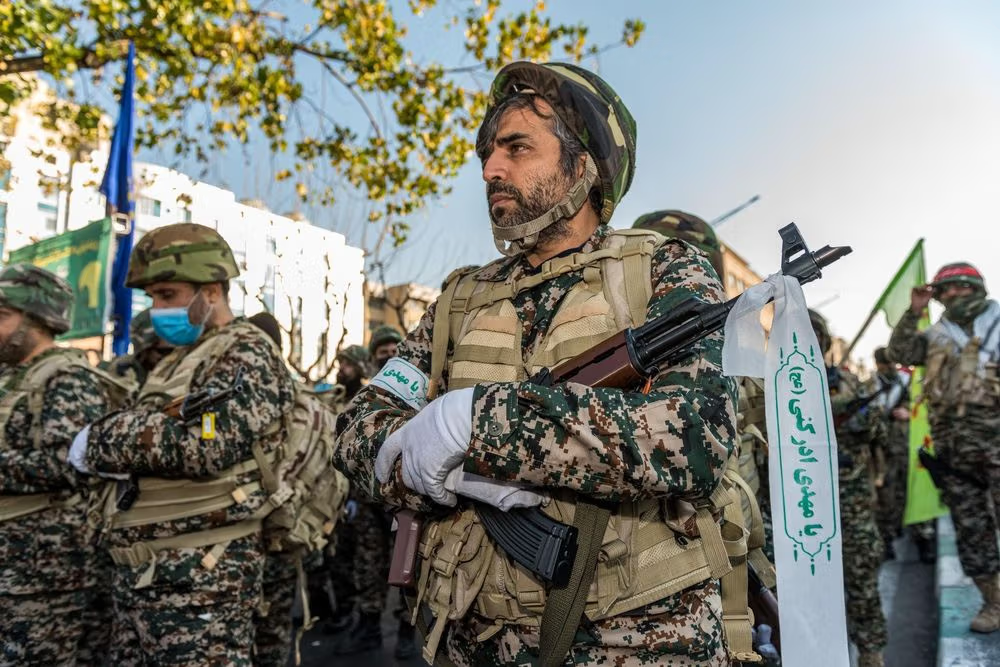
German security officials and counterterrorism experts are warning of a potential rise in attacks across Europe after a fatwa issued in Iran called for retaliation following the killing of the country’s supreme leader.
The religious ruling was issued on 1 March by Nasser Makarem Shirazi after the death of Ali Khamenei in joint US–Israeli strikes. According to Iran’s state-run Tasnim News Agency, the decree urged Muslims to avenge what it described as the “blood of the martyr” and identified the United States and Israel as responsible.
A fatwa is a religious ruling issued by an Islamic authority and is binding on followers who recognise that authority. Historically, such decrees have sometimes been linked to acts of violence.
In 1989, Iran’s revolutionary leader Ruhollah Khomeini issued a fatwa against writer Salman Rushdie after the publication of The Satanic Verses. The ruling triggered worldwide protests and violent attacks against translators and publishers and culminated decades later in a knife attack on Rushdie in 2022.
Security analysts say the latest ruling could encourage extremist activity.
Extremism expert Heiko Heinisch told Euronews that the risk of spontaneous attacks or the activation of sleeper cells in Europe is “relatively high.” Terrorism researcher Nicolas Stockhammer described the fatwa as “an accelerant” that could mobilise sympathisers and networks already operating in Western countries. German authorities have responded by raising vigilance levels while stressing that no specific attack plans have been identified.
Officials from the Interior Ministry of the German state of North Rhine-Westphalia said there are currently “no findings or indications” of an imminent threat, though they acknowledged that the situation could change quickly.
Interior Minister Herbert Reul said authorities would react immediately if new intelligence emerged. Bavaria’s interior minister Joachim Herrmann also confirmed that German security agencies are closely monitoring developments.
Germany hosts several networks suspected of ties to the Islamic Revolutionary Guard Corps (IRGC), which Western intelligence services have accused of supporting operations abroad. Recent incidents linked to Iranian networks include a 2022 Molotov cocktail attack on a synagogue in Bochum and gunfire targeting a rabbi’s home in Essen, both allegedly connected to IRGC-linked individuals.
Authorities in North America are also investigating potential attacks tied to the current tensions. A shooting in Austin, Texas, that left two people dead and more than a dozen injured is being examined as possible terrorism, though officials say the suspect’s motives remain unclear.
Security experts note that Iran has historically been linked to numerous attempted attacks in Europe. According to analysts, more than 100 plots connected to Tehran have been executed or foiled on the continent since the 1979 Islamic Revolution.
German officials say security services remain on high alert as the conflict in the Middle East continues to evolve.