Jan 13, 8:14 AM
EU freezes sensitive Hungary files ahead of pivotal April election
Brussels delays legal, financial and investigative decisions to avoid fueling Viktor Orbán’s anti-EU campaign — critics warn of a strategic miscalculation
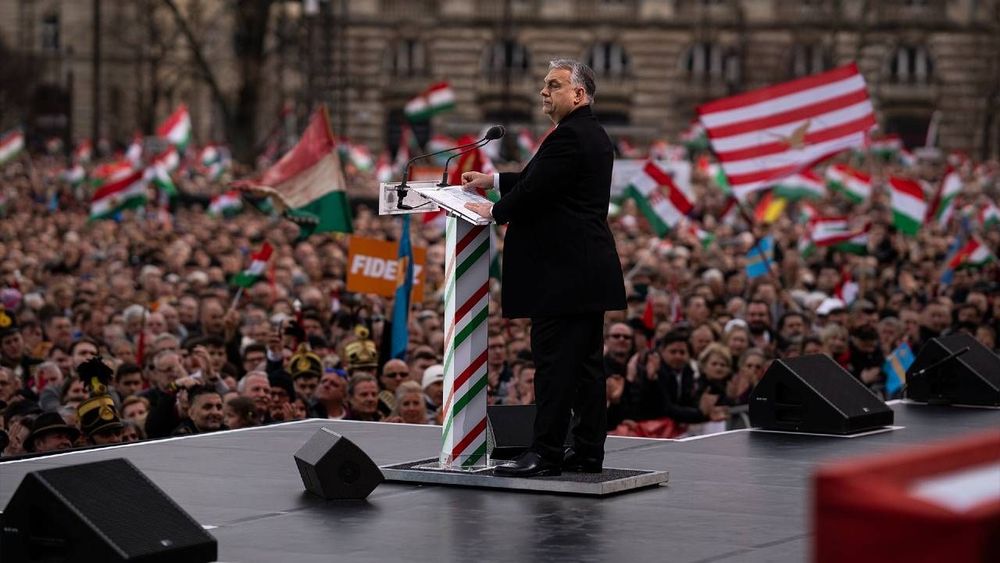
The European Commission has quietly put a series of politically sensitive Hungary-related decisions on hold, opting to wait until after the country’s parliamentary election in April. According to officials familiar with the matter, the pause reflects concern in Brussels that fresh legal or financial action could strengthen Prime Minister Viktor Orbán’s long-running narrative of EU interference.
The result is an unusual standstill affecting everything from frozen EU funds and rule-of-law procedures to a stalled investigation into alleged espionage inside EU institutions.
Brussels hits pause to avoid election backlash
At the heart of the delay is political timing. With Hungarian voters heading to the polls in mid-April, Commission officials are wary of being drawn into Orbán’s campaign rhetoric, which routinely depicts European Commission officials as unelected bureaucrats attacking Hungary’s sovereignty.
Diplomats describe the situation as a deliberate freeze: files are neither advanced nor closed, and infringement procedures that could provoke headlines are being kept in reserve. Brussels is closely watching opinion polls, where the opposition Tisza Party, led by Péter Magyar, has at times overtaken Orbán’s governing coalition.
The calculation is simple: any aggressive move now could hand Orbán fresh material for Brussels-bashing at a critical moment.
Pride ban and spying probe left in limbo
One of the most controversial delays concerns Hungary’s legislation restricting participation in Budapest Pride. Despite public support for LGBTQ+ rights voiced by Commission President Ursula von der Leyen, no formal legal action has yet followed the law’s adoption.
The hesitation has drawn criticism from Budapest’s mayor Gergely Karácsony, who argues the incompatibility with EU law was obvious from the outset and that inaction is political, not legal.
Similarly stalled is an internal inquiry into allegations that Hungarian officials used their permanent representation in Brussels to gather intelligence on EU decision-making. The probe touches on former Hungarian EU ambassador and current commissioner Olivér Várhelyi, who denies any wrongdoing. Findings initially expected months ago remain unpublished.
Billions in EU funds also on hold
Financial decisions are another casualty of the freeze. Hungary has sought to reorganize access to billions of euros under the Recovery and Resilience Facility, attempting to prevent further losses after missing earlier deadlines tied to rule-of-law conditions.
While the EU has already withheld more than €1 billion from Hungary, further determinations — including whether proposed restructuring complies with EU rules — are being deferred. The European Parliament has pushed for tougher measures, including expanded sanctions and even voting-rights suspension, but momentum has slowed ahead of the election.
Critics warn silence carries its own risks
Not everyone in Brussels agrees with the strategy. German MEP Daniel Freund argues that delaying enforcement undermines the credibility of EU law itself.
From this perspective, avoiding confrontation does not neutralize Orbán’s rhetoric — it merely signals hesitation. Supporters of this view warn that postponing action could repeat past mistakes, where non-interference ultimately weakened European institutions rather than protected them.
Waiting for a political reset?
Behind the caution lies a broader hope in some EU circles: that a change in leadership could reset relations. Péter Magyar, a former Orbán ally now aligned with the European People’s Party, is widely seen as more open to cooperation with Brussels. His rise has fueled speculation that EU funding and frozen dossiers could move quickly if Hungary’s political direction shifts — echoing the rapid thaw that followed leadership change in Poland.
For now, Brussels appears to be betting that restraint will do less damage than confrontation. Whether that calculation pays off — or simply reinforces Orbán’s narrative of selective EU pressure — will become clearer once Hungarian voters have had their say in April.