Albanese Apologises After Calling Abuse Survivor Grace Tame “Difficult”
Prime minister says remark referred to hardships she endured, as Tame and critics reject explanation
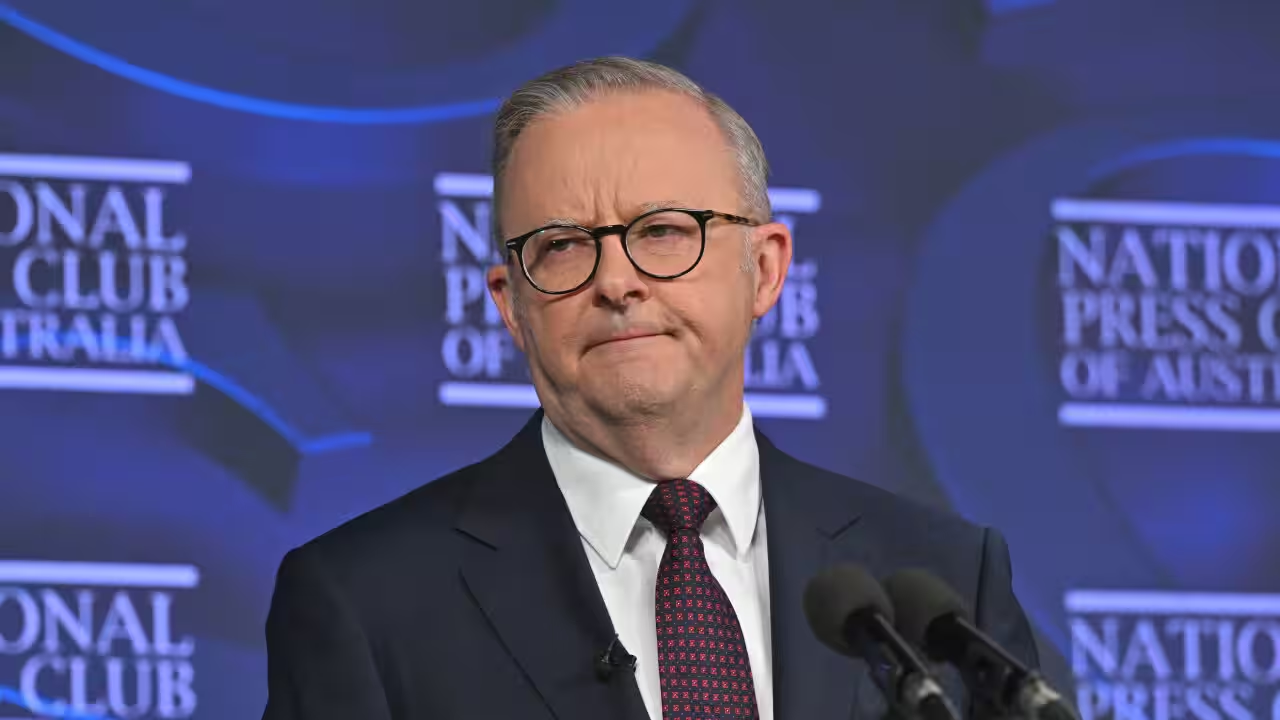
Australian Prime Minister Anthony Albanese has apologised after describing former Australian of the Year Grace Tame as “difficult” during a public appearance, prompting criticism from political opponents and Tame herself.
The remark came during a rapid-response word association segment on Wednesday, in which Albanese was asked to describe public figures with a single word. When prompted with Tame’s name, he responded “difficult.” The comment quickly drew attention given Tame’s high profile as a survivor of child sexual abuse and an advocate for legislative reform.
Tame, 31, who was named Australian of the Year in 2021 for her campaign to overturn Tasmania’s gag laws preventing abuse survivors from speaking publicly, responded on social media. She wrote that the label was “misogynist’s code for a woman who won’t comply” and added: “History tends to call her ‘courageous’.”
In a statement issued afterward, Albanese said he apologised “if there was any misinterpretation” and clarified that he had been referring to the challenges Tame had faced in her life. “Grace Tame has had a very difficult life, but she deserves great credit for turning that into a benefit for others,” he said.
Tame later rejected the apology, posting on Instagram: “Spare me the condescension, old man. We all know what you meant.”
The episode has sparked wider political reaction. Greens leader Larissa Waters wrote on X that the description was “completely unwarranted,” adding that labelling women as difficult would not silence them.
Albanese’s other responses during the segment included describing US President Donald Trump as “president,” opposition leader Angus Taylor as “leader,” and One Nation’s Pauline Hanson as “divisive.” When asked about Andrew Mountbatten-Windsor, he used the word “grub,” drawing applause from the audience.
Tame has remained a prominent and sometimes polarising public figure since receiving the national honour. She was recognised for campaigning to change Tasmanian laws that once prohibited sexual abuse survivors from identifying themselves publicly. As a teenager, she was groomed and sexually abused by her former teacher, who was later convicted and imprisoned.
In 2022, images of Tame declining to smile at an official event with then-prime minister Scott Morrison circulated widely. She had been publicly critical of Morrison’s government over its handling of sexual assault allegations and workplace culture issues in Parliament.
More recently, Tame faced criticism after speaking at a pro-Palestinian rally where she used the phrase “globalise the intifada.” The expression has been interpreted by some as a call for violence, while others describe it as a slogan advocating resistance. Australian lawmakers are currently considering new legislation aimed at restricting certain slogans deemed hateful, and the phrase has been cited in those discussions. Some politicians have called for Tame to be stripped of her Australian of the Year title over the remarks, though no formal action has been taken.
The prime minister’s comment has added to ongoing debate in Australia about political rhetoric, public accountability and the language used to describe women in public life.
Written by Freya Stensrud