Mar 4, 12:34 PM
US Faces Up to €110bn in Tariff Refunds After Court Rejects Trump Delay
Appeals court fast-tracks repayment process after Supreme Court ruled president lacked authority to impose sweeping tariffs
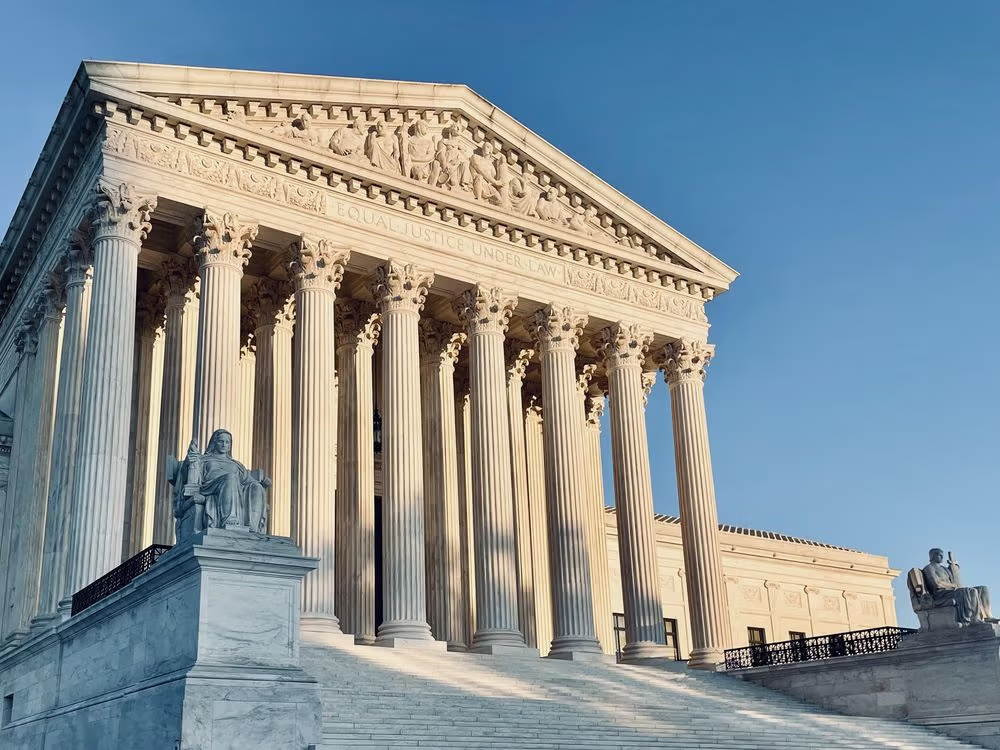
The United States could be forced to refund more than €110 billion in tariffs after a federal appeals court rejected an attempt by President Donald Trump’s administration to delay proceedings following a landmark Supreme Court ruling.
In a brief order issued Monday, the US Court of Appeals for the Federal Circuit sent the case back to the US Court of International Trade, rejecting the Justice Department’s request to pause the process for up to four months.
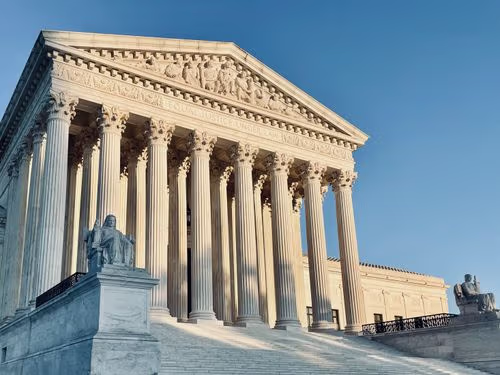
The decision accelerates the legal process that could lead to one of the largest tariff refund operations in US history. At the centre of the dispute is a February ruling by the Supreme Court of the United States, which determined in a 6–3 decision that the International Emergency Economic Powers Act does not give the president authority to impose broad tariffs.
The ruling invalidated sweeping duties introduced in 2025 under Donald Trump, including a baseline 10% “reciprocal” tariff applied to imports from most US trading partners. Additional duties targeted certain countries and sectors, including 25% tariffs on some goods from Canada and Mexico and 10% on Chinese imports.
Tariff collections under the measure stopped on 24 February following the court’s decision.
However, the Supreme Court did not specify how refunds should be handled, leaving it to the Court of International Trade to determine how repayments should be processed and whether interest should be included.
Estimates suggest between $130 billion (€111 billion) and $175 billion (€150 billion) in tariffs could ultimately be refunded to importers. The ruling has already triggered a wave of litigation. Around 2,000 importers have filed lawsuits seeking repayment of duties they paid under the now-invalid tariffs.
Major corporations including FedEx, Revlon, Costco and Reebok have joined hundreds of smaller firms pursuing claims.
Under US customs law, companies typically have 180 days after import entries are finalised to protest duties, prompting a rush of filings to preserve legal rights. The original legal challenge was brought by small businesses, including educational toy maker Learning Resources.
While the ruling offers relief for US importers, European exporters will not receive direct refunds. Duties were paid by American importers, meaning any repayments will come from the US Treasury to those companies rather than foreign suppliers.
Still, the removal of the tariffs provides indirect benefits to European firms whose products had become more expensive for American buyers.
Despite the court defeat, the US administration has already introduced new tariffs under a different legal authority, signalling that trade tensions could continue.
Legal experts say the refund process is likely to be complex and could take years to resolve as courts establish procedures for claims involving billions of dollars in disputed duties.