Feb 2, 11:56 AM
Tesla Ends Model S and X Production as Company Bets on Humanoid Robots
Elon Musk signals a strategic pivot toward artificial intelligence and robotics, with the Optimus robot expected to enter production before 2026 ends.
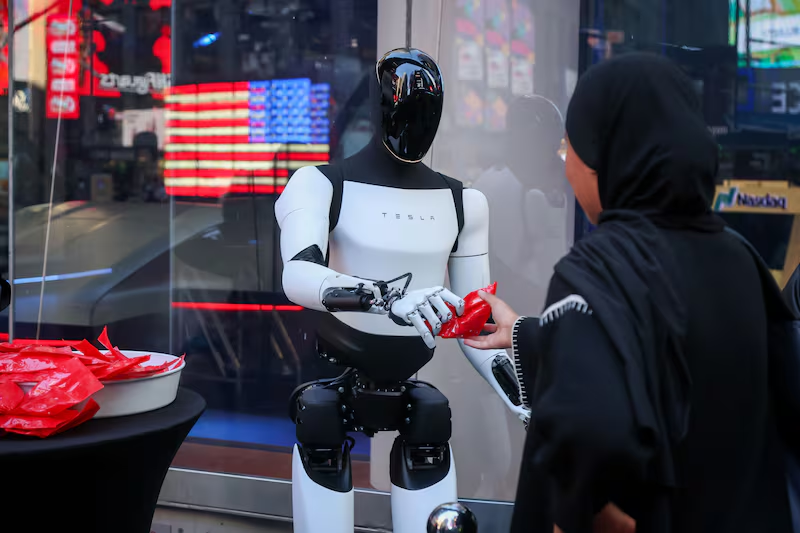
Tesla is preparing for a significant shift in direction, announcing plans to discontinue two of its longest-running electric vehicle models while accelerating development of a humanoid robot that executives believe could redefine the company’s future.
During a recent earnings call, CEO Elon Musk confirmed that production of the Model S sedan and Model X SUV will be phased out, with manufacturing expected to wind down next quarter. The decision marks one of the clearest signals yet that the company is expanding beyond its automotive roots and investing heavily in artificial intelligence-driven robotics.
Tesla has been developing its Optimus humanoid robot for several years. Advances in what is often described as physical AI — technology that allows machines to interact with the real world — have contributed to faster progress on the project. Earlier this month, the company also disclosed a $2 billion investment in xAI, Musk’s artificial intelligence venture, reinforcing its commitment to the sector.
Musk has previously described the robot as potentially the company’s most significant product, even suggesting it could surpass anything Tesla has built so far. Speaking at the World Economic Forum in Davos last week, he argued that widespread access to AI and robotics could dramatically improve global living standards and expand economic output on an unprecedented scale — a projection that remains aspirational rather than guaranteed.
Despite the headline-grabbing pivot, analysts caution against interpreting the move as an exit from the electric vehicle market. According to Dan Coatsworth of investment platform AJ Bell, Tesla still relies on its core automotive business to generate the revenue needed to support its longer-term robotics ambitions.
Tesla says it plans to begin producing Optimus before the end of 2026, with a commercial launch targeted for 2027. The timeline has shifted before, however, making the schedule one investors are likely to watch closely.
Originally designed to operate inside Tesla factories and assist with production tasks, the robot stands roughly 170 centimeters tall and weighs about 56 kilograms. Musk has indicated that large-scale manufacturing is a priority and has set a tentative price goal below $20,000 per unit — a figure that, if achieved, could position the robot for broader adoption beyond industrial settings.
For a company once synonymous with reshaping transportation, Tesla now appears equally focused on reshaping the workforce itself. Whether humanoid robots become as commonplace as electric cars remains uncertain, but one thing is clear: Tesla is no longer content to stay in a single lane.
Latest news