Mar 3, 5:34 AM
Orbán Raises Terror Alert as Iran Conflict Shakes Energy Markets
Hungary tightens security and renews pressure on Kyiv over Russian oil transit amid rising global prices
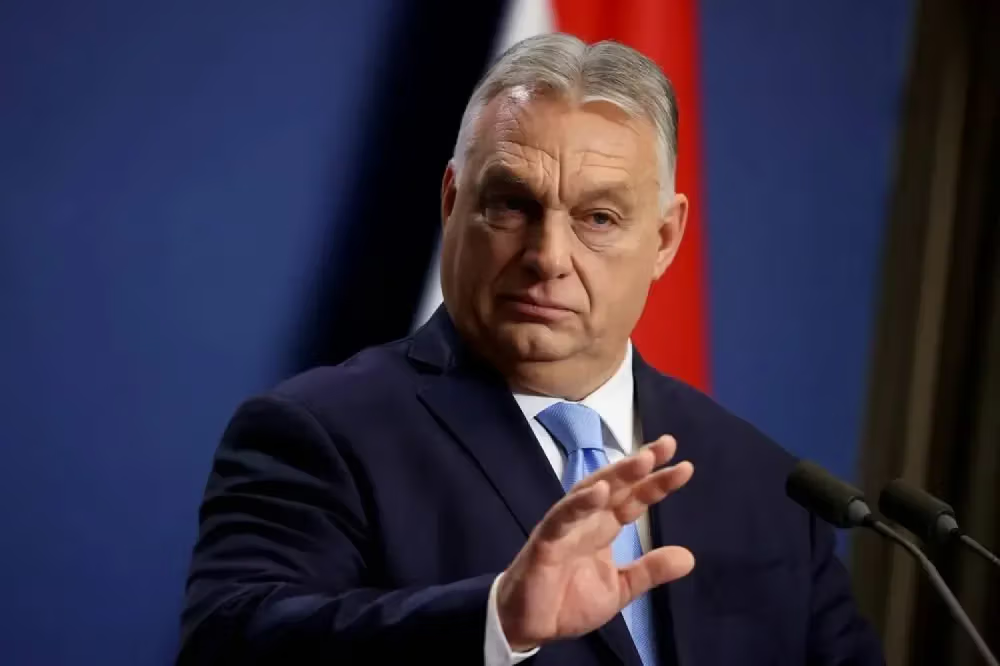
Hungary has raised its national terror alert level and intensified its dispute with Ukraine over oil transit, as escalating conflict involving Iran sends tremors through global energy markets.
Prime Minister Viktor Orbán convened a national security meeting following reports of US and Israeli strikes on Iranian targets. After the meeting, authorities increased Hungary’s terror threat level by one step, citing concerns about possible retaliatory actions by Tehran and the broader risk of attacks in Europe.
Orbán said the likelihood of terrorist acts could rise across the continent, particularly in countries with large migrant populations. While he described Hungary as comparatively secure, he justified the precautionary increase in alert status.
At the same time, the Hungarian leader renewed calls for Ukraine to allow Russian oil to resume flowing through the Druzhba pipeline toward Hungary and Slovakia. The pipeline was damaged in a Russian air attack at the end of January, disrupting supplies.
Budapest and Bratislava have accused Kyiv of delaying repairs and using the situation as political leverage. Ukraine has argued that repair work would be too dangerous under current conditions and has denied access to a joint Hungarian-Slovak expert group set up to assess the damage.
The dispute has already had consequences within the European Union. Hungary blocked a €90 billion EU loan package for Ukraine and withheld support for the latest round of sanctions against Russia, moves that have drawn criticism from other member states.
Orbán said the escalating conflict in the Middle East is likely to push global energy prices higher, increasing pressure on Hungary’s economy. In that context, he described the oil transit issue as a matter of national energy security and indicated that Hungary would maintain countermeasures against Ukraine in the coming weeks.
Hungary has also deployed soldiers to guard key energy infrastructure, underscoring the government’s focus on security.
Analysts say the developments may have domestic political implications. Dániel Hegedűs, deputy director of the Institute for European Politics, told that the situation provides an opportunity for the governing party to reinforce a narrative of external threat and to argue that Hungary risks being drawn into wider conflicts.
According to Hegedűs, Orbán could seek to present himself as a defender of national interests in a volatile international environment. However, he cautioned that it remains uncertain how the conflict and energy concerns will ultimately shape voter sentiment.
As oil markets react to instability in the Middle East, Hungary’s government appears determined to frame the crisis as both a security challenge and a strategic opening — one that may influence its stance in Brussels as well as its campaign messaging at home.